 (source: nps.gov)
Compare · National Parks
Yellowstone vs Grand Teton
Two legendary parks, very different trips. Here's what each is actually best at — and how to combine them without burning out.
Yellowstone National Park
The world's first national park (1872) sits on top of an active supervolcano. Geysers, hot springs, mud pots, the largest bison herd on Earth, and 2.2 million acres of wilderness. Unique on the planet.
- Old Faithful, Grand Prismatic, Mammoth Hot Springs
- Highest wildlife density in the lower 48
- 1,000+ miles of trails, multi-day backcountry
- Needs 3–5 days minimum to see well
Grand Teton National Park
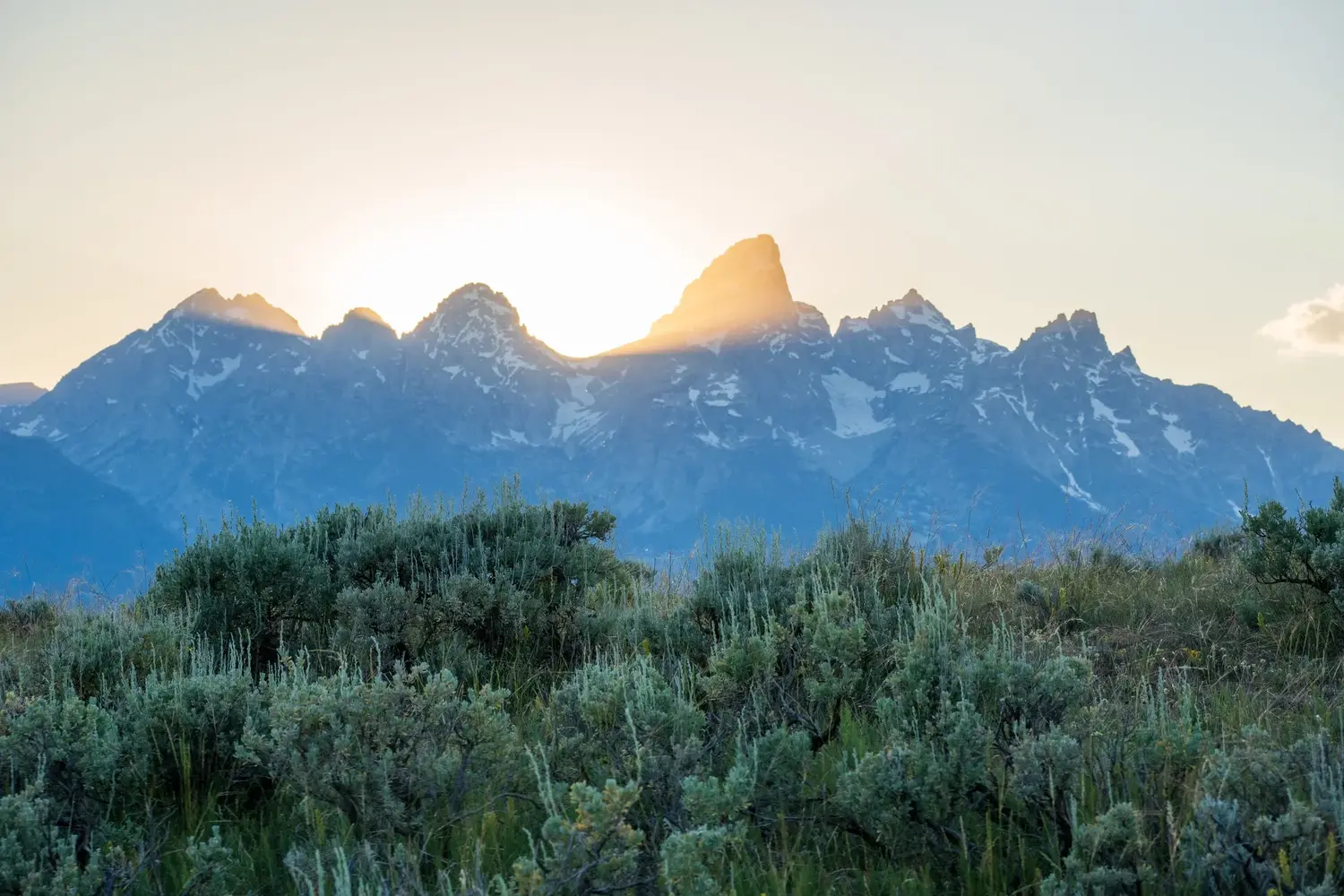
A jagged granite range that rises 7,000 feet straight out of Jackson Hole with no foothills. Smaller than Yellowstone but visually arresting, with the best alpine day hiking in the Greater Yellowstone Ecosystem.
- Cascade Canyon, Jenny Lake, Inspiration Point
- Iconic photography: Mormon Row, Snake River Overlook
- Moose, elk, and resident grizzlies
- Not enough on its own — pair with Yellowstone
Side-by-Side Comparison
Stats, recommended days, and driving times — confirm fees and seasonal road access before booking.
| Factor | Yellowstone | Grand Teton |
|---|---|---|
| Park size | 2.2 million acres (3,471 sq mi) | 310,000 acres (484 sq mi) |
| Founded | 1872 — world's first national park | 1929 (expanded 1950) |
| Signature feature | Geysers, hot springs, supervolcano | Jagged 13,000 ft granite peaks rising 7,000 ft from valley floor |
| Iconic sights | Old Faithful, Grand Prismatic, Mammoth, Lamar Valley | Grand Teton, Jenny Lake, Mormon Row, Snake River Overlook |
| Wildlife density | Highest in lower 48 — bison, wolves, grizzlies | Excellent — moose, elk, bears, but smaller herds |
| Hiking | 1,000+ miles, mostly rolling forest & meadow | 200+ miles, dramatic alpine — Cascade Canyon, Paintbrush Divide |
| Best for first-timers | Yes — thermal features are unique on Earth | Pair with Yellowstone; not usually a standalone trip |
| Recommended days | 3–5 full days minimum | 1.5–2 days (or 3+ if hiking) |
| Driving the loop | Grand Loop ~142 mi, full day | Teton Park Loop ~42 mi, half day |
| Crowds (summer) | Very high at boardwalks; spread out elsewhere | Concentrated at Jenny Lake & String Lake |
| Entrance fee | $35/vehicle (7 days) | $35/vehicle (7 days) — or combined $70 covers both |
| From Island Park cabin | 30 min to West Entrance | ~2 hours (typically 2h 20m) via Ashton-Flagg Ranch Rd (summer) |
| Best season | May–Oct; winter for solitude + wolves | Jun–Sep; fall is peak photography |
| Photography highlight | Sunrise at Grand Prismatic, wolves in Lamar | Sunrise at Schwabacher Landing, Mormon Row barns |
Entrance fees and combined-pass pricing reflect NPS rates as of 2025; confirm at nps.gov before travel.
The Verdict
Prioritize Yellowstone if…
- It's your first trip to the region
- You want geysers, hot springs, supervolcano
- Wildlife is your main goal — wolves, bison, grizzlies
- You have 3+ days available
- You're traveling with kids — boardwalks beat alpine climbs
Add Grand Teton if…
- You have 5+ total days
- You're a serious day-hiker (Cascade Canyon, Paintbrush)
- Landscape photography matters more than wildlife
- You want a Jackson Hole evening or fly-in via JAC
- You've already done Yellowstone before
Suggested 1-Day Yellowstone + Grand Teton Itinerary
A tight but honest plan for travelers who only have one day to taste both parks. Distances assume a summer start from Island Park, ID; expect long driving stretches and limited stops. Pack food and a full tank — gas inside both parks is scarce and expensive.
5:30 AM · Depart Island Park → West Yellowstone
30-minute drive. Hit the West Entrance at opening to beat the geyser-basin crowds. Pre-pay your park pass online to skip the line.
7:00 AM – 9:30 AM · Old Faithful + Upper Geyser Basin
Catch one Old Faithful eruption, then walk the boardwalk loop to Morning Glory Pool. Coffee + breakfast at Old Faithful Snow Lodge.
10:00 AM – 11:00 AM · Midway Geyser Basin (Grand Prismatic)
Quick boardwalk plus the Fairy Falls Overlook trail (1.6 mi RT) for the postcard view from above.
11:30 AM – 1:30 PM · Drive south to Grand Teton
Via West Thumb → South Entrance → John D. Rockefeller Jr. Pkwy (~75 mi, ~2h with stops). Lunch picnic at Lewis Lake or Colter Bay.
2:00 PM – 4:00 PM · Jenny Lake + Hidden Falls
Shuttle boat across Jenny Lake, hike to Hidden Falls + Inspiration Point (1.8 mi RT from the boat dock). The single best 2-hour taste of the Tetons.
4:30 PM – 6:30 PM · Mormon Row + Snake River Overlook
Drive Antelope Flats Rd to the Moulton Barn for the iconic Teton-backdrop shot, then golden-hour at Snake River Overlook (Ansel Adams' frame).
7:00 PM · Dinner in Jackson → return drive
Eat in Jackson (Snake River Brewing, Persephone). Return to Island Park is ~2.5 hours; plan for wildlife on the road after dark.
Downloadable 1-Day Checklist
Printable packing list, timing, fuel stops, and wildlife-safety reminders.
Park hours, shuttle schedules, and road status change seasonally — verify on nps.gov within 48 hours of travel.
Frequently Asked Questions
Should I visit Yellowstone or Grand Teton if I only have time for one?
If it's your first trip and you can only visit one, choose Yellowstone. The geysers, hot springs, and supervolcano features are unique on Earth and need at least 3–5 days to see properly. Grand Teton is spectacular but smaller and visually similar to other alpine ranges — most travelers pair it as a 1–2 day add-on after Yellowstone rather than visiting alone.
How many days do I need for Yellowstone and Grand Teton together?
Plan 5–7 days minimum to do both parks justice: 3–4 days for Yellowstone (Upper/Lower Geyser Basins, Grand Canyon of the Yellowstone, Lamar Valley) and 1.5–2 days for Grand Teton (Jenny Lake, Mormon Row, a Cascade Canyon hike). A 7-day trip gives you breathing room and a fishing or rest day in between.
Are Yellowstone and Grand Teton close to each other?
Yes — they share a border via the John D. Rockefeller Jr. Memorial Parkway. From Yellowstone's South Entrance it's about 8 miles to Grand Teton's north boundary and roughly 50 miles (1h 15m) to Jackson. From an Island Park cabin, Grand Teton is at least 2 hours (typically 2h 20m) via Ashton-Flagg Ranch Road in summer, so most guests treat it as a day trip or a 1-night add-on.
Which park has better wildlife — Yellowstone or Grand Teton?
Yellowstone wins on volume and variety — it has the largest concentration of mammals in the lower 48, including roughly 5,000 bison, all major Yellowstone wolf packs, and the highest grizzly density. Grand Teton is excellent for moose (especially around Oxbow Bend and Moose Junction) and has resident black and grizzly bears, but herds are smaller and predator sightings are less reliable.
Is the hiking better in Yellowstone or Grand Teton?
Grand Teton has dramatically better day hiking. Cascade Canyon, Paintbrush Divide, Hidden Falls/Inspiration Point, and Delta Lake are world-class alpine routes that climb fast into granite cirques. Yellowstone's trails are longer and gentler, focused on geyser basins, canyon rims, and backcountry mileage rather than dramatic ascents.
Do I need a separate entrance pass for each park?
No. The $70 combined Yellowstone + Grand Teton pass covers both parks for 7 days, and the $80 America the Beautiful annual pass covers both plus all other US national parks for a full year. Individual park passes are $35/vehicle each, so the combo or annual pass pays for itself if you're visiting both.
Where should first-time visitors stay to see both Yellowstone and Grand Teton?
For a first trip covering both parks, Island Park, Idaho is the most balanced base camp: 30 minutes to Yellowstone's West Entrance (the closest gate to Old Faithful and Grand Prismatic) and roughly 2 hours (typically 2h 20m) to Grand Teton via the Ashton-Flagg Ranch Road in summer. Cabins sleep larger groups for less than a Jackson or West Yellowstone hotel, and you avoid the inside-the-park lottery for Old Faithful Inn or Jackson Lake Lodge. If you're focused mostly on Grand Teton, stay in Jackson; if you're mostly on Yellowstone's north loop, stay in Gardiner.
Which Yellowstone entrance is best for first-time visitors doing both parks?
The West Entrance (West Yellowstone, MT) is best for first-timers. It's the closest gate to Old Faithful, Grand Prismatic Spring, and the Lower/Midway Geyser Basins — the must-see thermal features. If you're combining with Grand Teton, drive in through the West Entrance, exit south through the South Entrance into Grand Teton, then loop back via Ashton or Jackson. The North (Gardiner) and Northeast (Cooke City) entrances are better for a wildlife-focused trip into Lamar Valley.
What can first-time visitors do in Yellowstone or Grand Teton on a rainy day?
Rain actually improves several experiences: thermal features at Norris and Upper Geyser Basin steam dramatically in cool wet weather, wildlife in Lamar and Hayden Valleys is more active, and Grand Prismatic's colors pop harder under overcast skies. Indoor options include the Old Faithful Visitor Education Center, Albright Visitor Center at Mammoth, Craig Thomas Discovery Center in Grand Teton, the Museum of the National Park Ranger, and Jackson's National Museum of Wildlife Art. Avoid alpine hikes in the Tetons during thunderstorms (above-treeline lightning risk) and stay off boardwalks if there's hail.
Plan the Rest of Your Trip
More Comparisons
Other head-to-head decisions for Greater Yellowstone trip planning.