Big Springs — The Crystal Headwaters
Before we talk about the cabin, you need to understand the place.
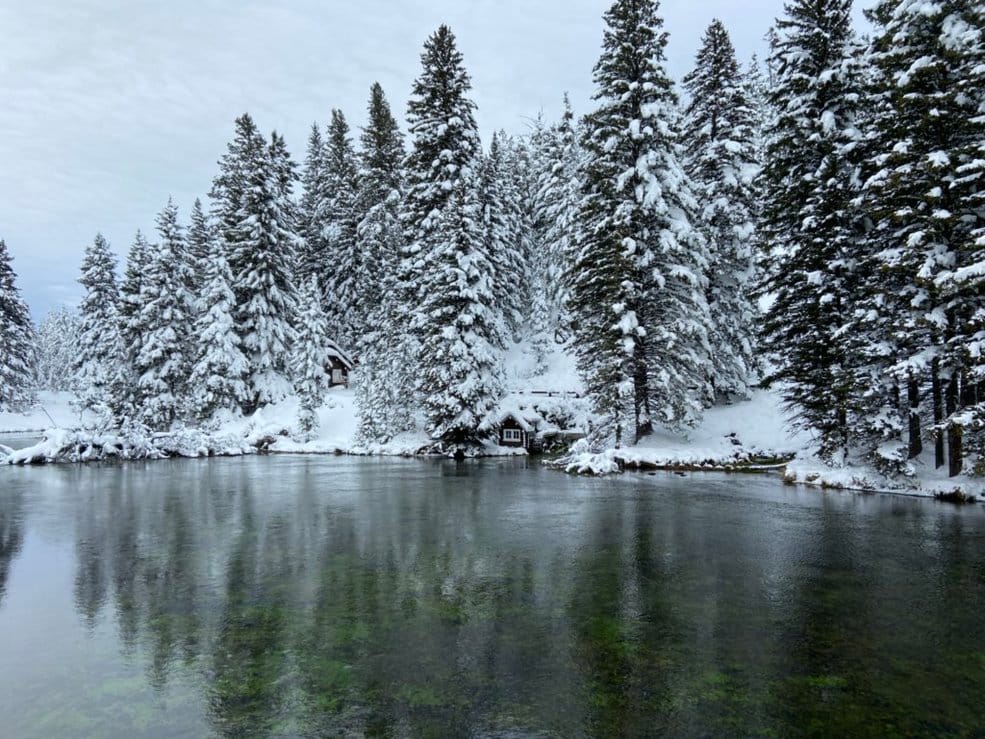
Big Springs is one of the largest natural springs in the United States — and certainly one of the most beautiful. At a constant 52°F year-round, approximately 120 million gallons of water bubble up from underground aquifers every single day, forming the true headwaters of the Henry's Fork of the Snake River.
The water is so clear you can see rainbow and brook trout swimming in the pools. The spring run is short — just a few hundred feet — before it widens into the Henry's Fork proper. Indigenous peoples knew this place for millennia. Early trappers called it "The Fountain."
And in 1909, a quiet German craftsman decided to build his home right next to it.
Who Was Johnny Sack?
John "Johnny" Sack (birth name uncertain, likely Johann or Johannes Sack) was born in Germany in the mid-1800s. He trained as a carpenter and millwright — skills that would define his entire legacy in Island Park.
Little is known about his early life in Europe, but by the late 1800s he had emigrated to the United States. He worked briefly in the Midwest before moving west, likely drawn by the promise of land and timber in the remote Idaho Territory.
By all accounts, Johnny was a quiet, meticulous craftsman. He spoke German-accented English, kept to himself, and was known for his extraordinary woodworking skills. Neighbors described him as "a man who built things to last forever."
Arrival in Island Park (1909)
Johnny Sack arrived at Big Springs around 1909, staking a homestead claim on the banks of the spring. At that time, Island Park was still wild — no highway, no electricity, no neighbors for miles.
He chose the site for two reasons:
- The spring itself — a year-round water source that never froze, even in -40°F winters.
- Abundant lodgepole pine — the perfect building material, growing thick and straight all around him.
This wasn't just a cabin site. It was a perfect self-sufficient homestead for a man with his skills.
Building the Cabin (1909-1910)
Johnny Sack built his cabin entirely by hand. No sawmill. No power tools. Just an axe, a drawknife, an adze, and endless patience.
The logs were hand-hewn from local lodgepole pine — each one shaped, notched, and fitted with dovetail joinery so precise that you can barely slip a knife blade between them. The cabin measures approximately 16 feet by 20 feet — small by modern standards, but masterfully constructed.
The walls are chinked with moss and clay. The roof was originally split-shake cedar, later replaced with milled lumber. The floor is hand-planed pine planks, still solid more than a century later.
🪵 Dovetail Corner Notching
Johnny used full-scribe dovetail notching — one of the most difficult and weather-tight methods of log construction. Each log was custom-fitted to the one below it, creating a structural bond that has lasted over 115 years without nails or spikes.
The Ingenious Water Wheel
Johnny's crowning achievement wasn't just the cabin — it was the water wheel he built in the spring run itself.
Using the constant flow of Big Springs, he constructed a hand-built wooden waterwheel that powered a small sawmill and lathe. This allowed him to mill lumber, turn spindles, and create furniture — all using nothing but water power.
The wheel is long gone, but the stone foundation and wooden sluice remnants are still visible in the spring channel today.
Interior Craftsmanship
Step inside the cabin (when it's open for tours), and you'll see Johnny's real artistry:
- Hand-carved furniture — a table, chairs, and bed frame, all made from local pine.
- Built-in shelving — dovetail-jointed and fitted into the log walls.
- Hand-forged hinges and latches — likely made by Johnny himself or bartered from a local blacksmith.
- A stone fireplace — river rock mortared with clay, still standing solid.
Everything in the cabin was made on-site, by hand, using materials found within a few hundred yards.
Life at Big Springs
Johnny Sack lived at Big Springs for over 30 years, from around 1909 until the late 1930s. He supplemented his homestead income by:
- Selling hand-milled lumber to settlers and the railroad.
- Building cabins and furniture for neighbors.
- Fishing and trapping along the Henry's Fork.
- Hosting occasional travelers and fishermen.
By all accounts, he was a solitary but respected figure in the early Island Park community. When he eventually left (or passed away — records are unclear), the cabin was abandoned but never forgotten.
Preservation & National Register Listing
In the 1970s, the U.S. Forest Service recognized the cabin's historical and architectural significance. It was added to the National Register of Historic Places in 1979.
Since then, the cabin has undergone careful restoration to preserve Johnny's original craftsmanship. The Forest Service maintains the site, and interpretive signs tell Johnny's story to visitors walking the Big Springs boardwalk.
Visiting Today
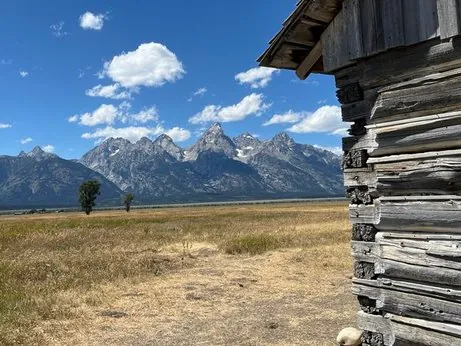
Today, the Big Springs National Water Trail features a scenic 0.5-mile boardwalk loop that takes you right past Johnny Sack's cabin. Along the way, you'll see:
- The crystal-clear spring pools
- Massive rainbow and brook trout
- The Henry's Fork headwaters
- Wildlife (moose, eagles, osprey)
- Interpretive signs about Johnny Sack and the spring's ecology
The boardwalk is wheelchair-accessible and family-friendly. It's one of the most popular short walks in Island Park — and one of the most beautiful.
📍 Visiting Info
Location: Big Springs Road, Island Park, ID (off US-20)
Admission: Free
Season: Year-round (winter access via snowmobile or cross-country skis)
Time Needed: 30-45 minutes for the full boardwalk loop
Wildlife at Big Springs
Because the spring never freezes, it's a wildlife magnet year-round:
- Moose — frequent visitors, especially in early morning and evening
- Trumpeter swans — winter residents on the open water
- Bald eagles and ospreys — fish the spring pools in summer
- River otters — playful and occasionally visible in the spring run
- Trout — rainbow and brook trout, some over 20 inches
Bring binoculars and a camera. You'll want both.
Getting There from Our Cabin
Big Springs is just a 15-minute drive from Lodgepole Pines Retreat. Head east on US-20, turn north on Big Springs Road (Forest Road 059), and follow the signs. The parking area is small, so arrive early in summer.
We include Big Springs on our wildlife viewing itinerary and our Island Park summer guide. It's an absolute must-see during your stay.
Stay Near Johnny Sack's Legacy
Lodgepole Pines Retreat is 15 minutes from Big Springs and the historic Johnny Sack Cabin. Book your Island Park getaway today.
Check Availability