Wildlife Conservation in Yellowstone
From predator extermination and bison near-extinction to the triumphant return of the gray wolf — Yellowstone's wildlife conservation story is one of the most dramatic in American history.
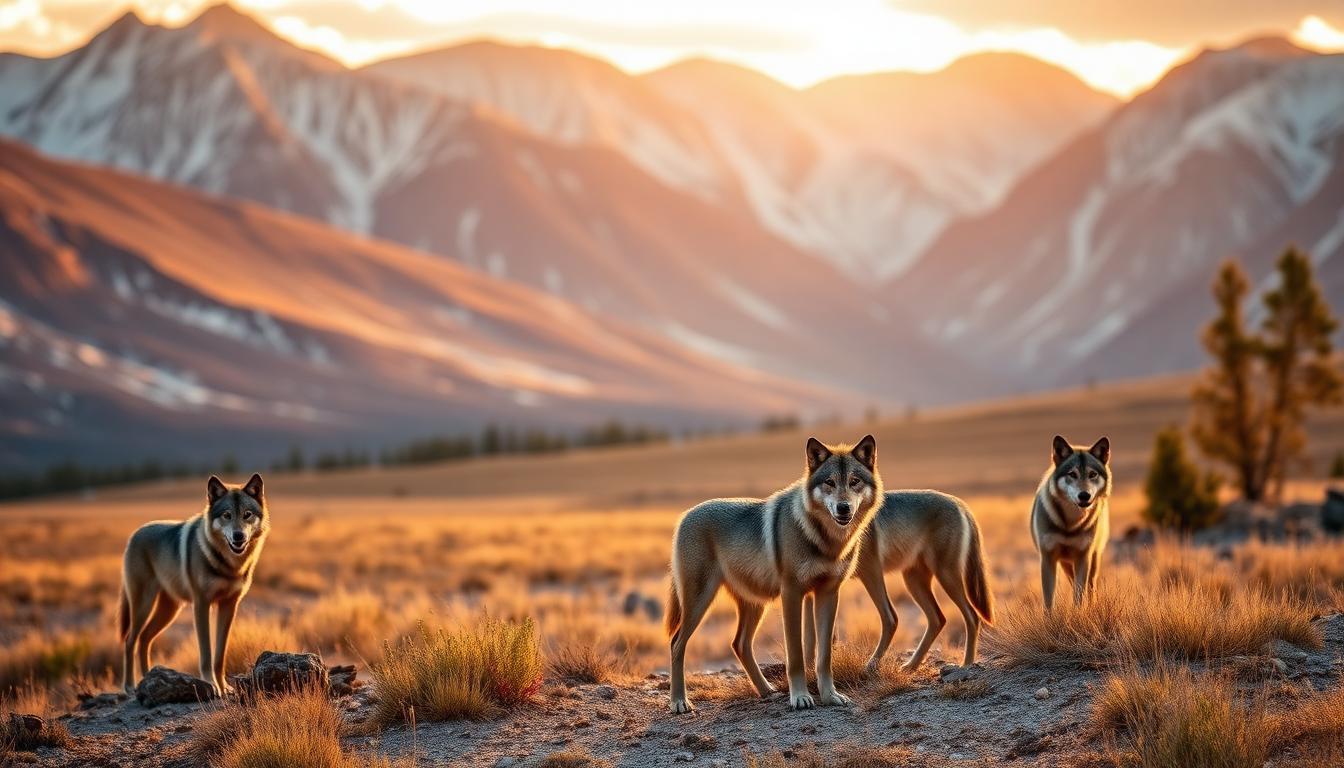
From predator extermination and bison near-extinction to the triumphant return of the gray wolf — Yellowstone's wildlife conservation story is one of the most dramatic in American history.
When the Yellowstone region was set aside as the world's first national park in 1872, it teemed with wildlife on a scale that is difficult to imagine today. Enormous herds of bison and elk grazed the valleys. Grizzly bears, black bears, wolves, mountain lions, and wolverines roamed freely.
But "protection" in 1872 was a vague concept. The Yellowstone Act said nothing about wildlife — it protected the land's geothermal features and scenery, not its animals. There were no rangers, no budget, and no management plan.
The story of wildlife conservation in Yellowstone is not a simple arc of progress. It is a story of near-catastrophic mistakes, painful lessons, dramatic reversals, and — eventually — one of the greatest ecological recoveries in history.
In the late 1800s and early 1900s, the prevailing attitude toward predators was simple: they were enemies. Wolves, mountain lions, and coyotes were seen as threats to livestock, game animals, and human safety.
 (source: nps.gov)
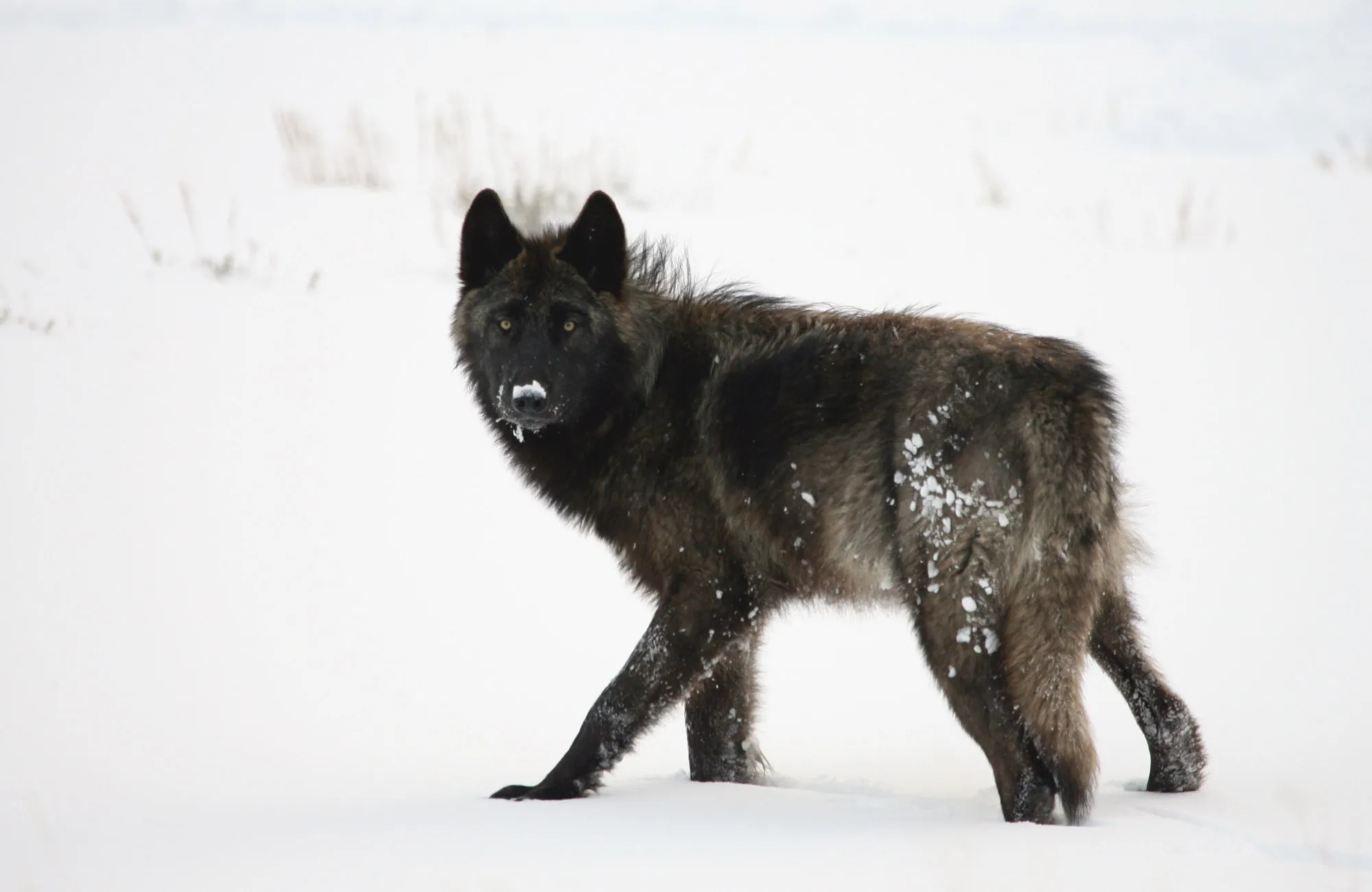
A gray wolf in the Lamar Valley — wolves were completely eliminated from Yellowstone by 1926
Between 1914 and 1926, at least 136 wolves were killed in the park. By 1926, the gray wolf was completely eliminated from Yellowstone. Mountain lions were gone by the 1930s. Coyotes were poisoned and trapped by the thousands.
Without predators, elk populations exploded. They overgrazed riverbanks, meadows, and aspen groves. The ripple effects cascaded through the entire ecosystem.
Before European settlement, an estimated 30 to 60 million bison roamed North America. By 1902, fewer than two dozen wild bison remained in all of Yellowstone — the last wild, free-ranging herd in the United States.
 (source: nps.gov)
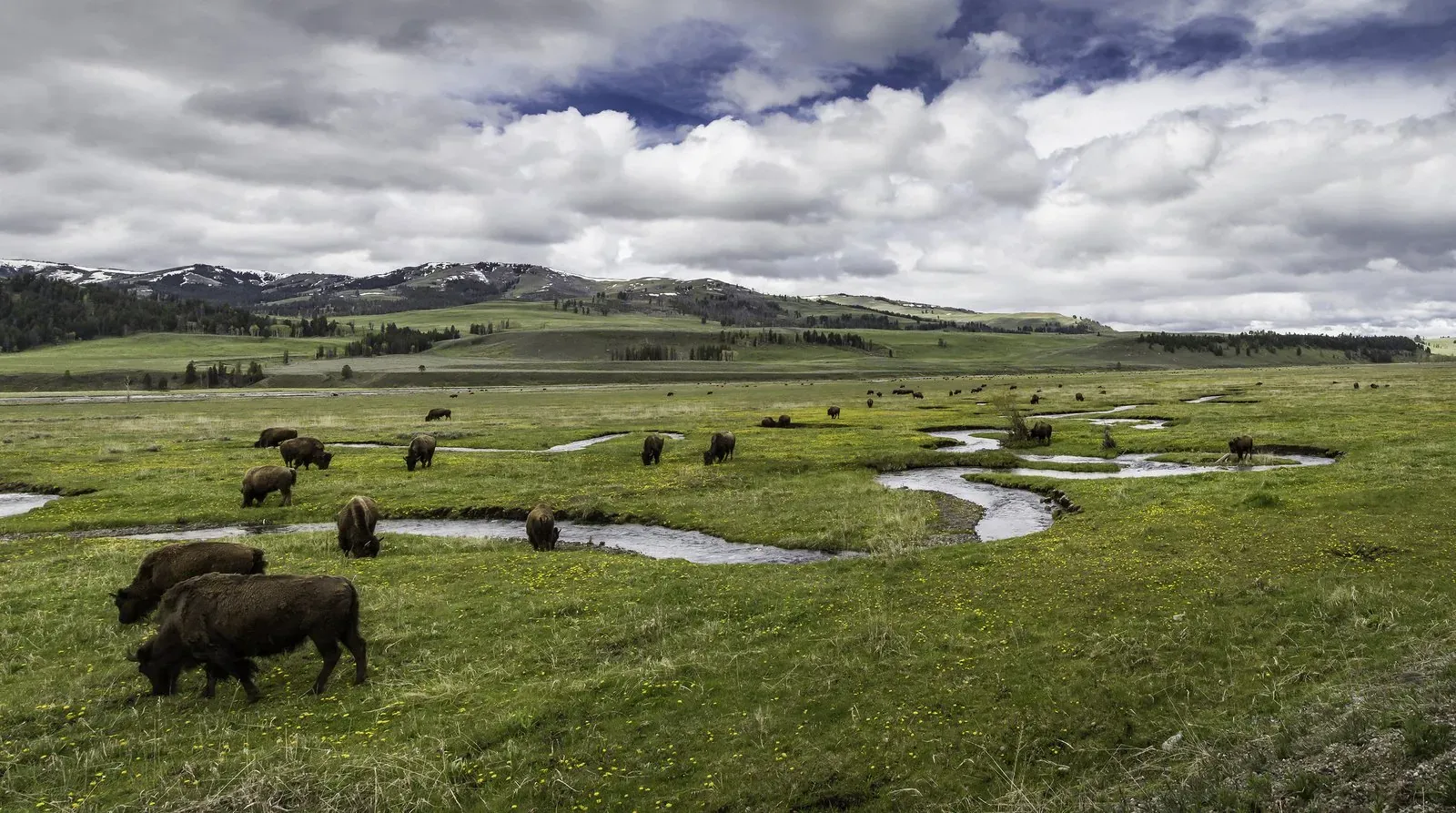
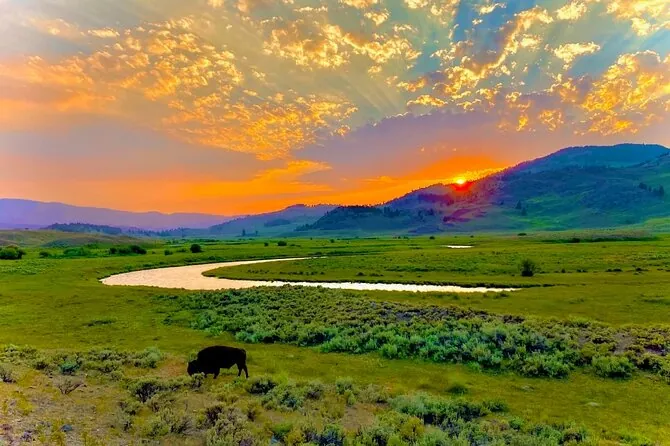
Bison grazing in the Lamar Valley — their ancestors were rescued from near-extinction in this very landscape
In 1902, the Army brought 21 bison from private ranches to the Lamar Valley, establishing the "Buffalo Ranch." Congress passed the Lacey Act of 1894, finally making it illegal to kill wildlife in Yellowstone.
Today, Yellowstone's bison herd numbers roughly 5,500 animals — the largest free-ranging, genetically pure wild bison population in the world.
For decades, one of Yellowstone's most popular "attractions" was watching bears eat garbage. The park maintained open-pit dumps where grizzly and black bears congregated nightly. Rangers set up bleachers. Hotels advertised "bear shows."
 (source: nps.gov)
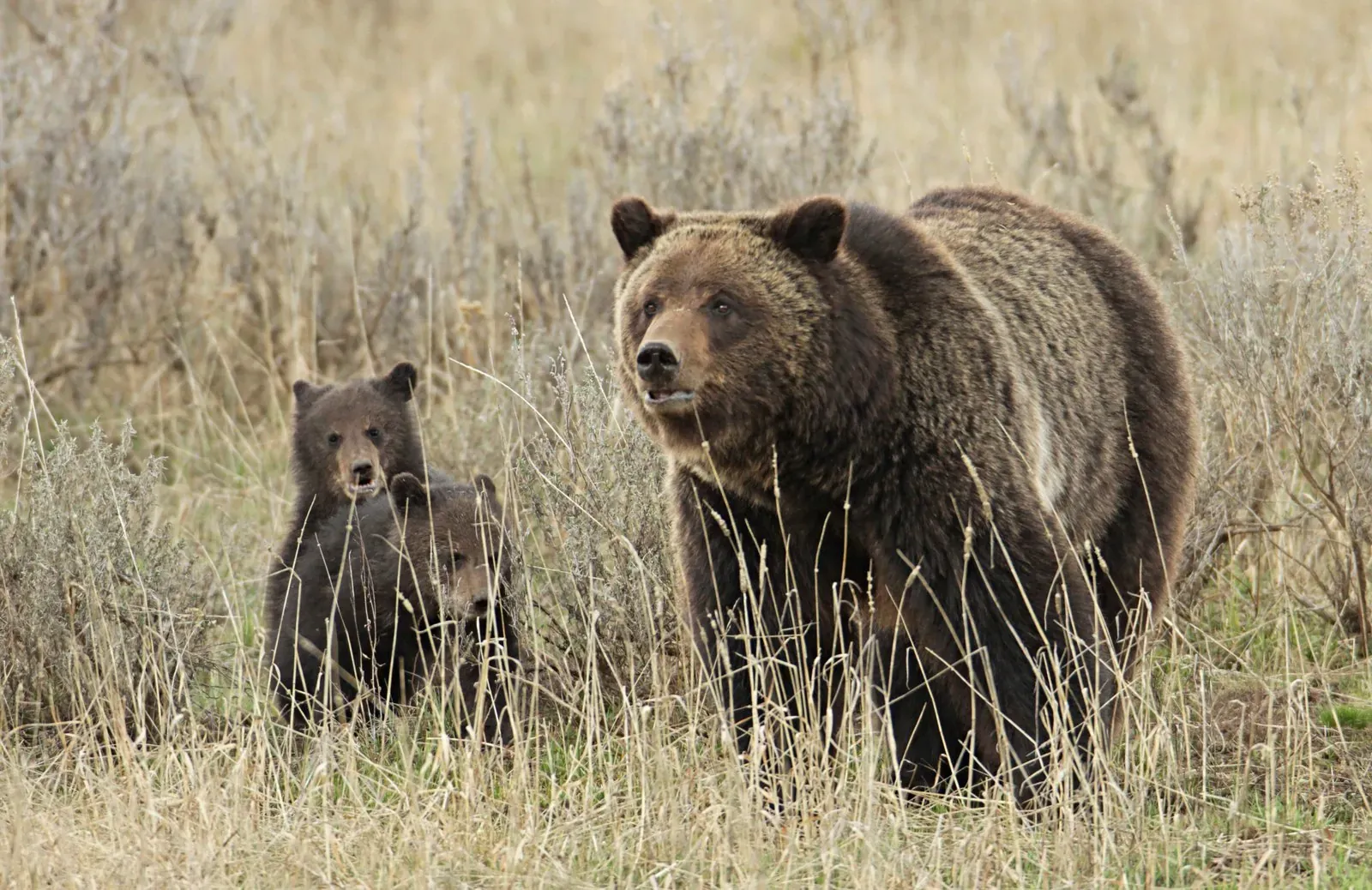
A grizzly sow with cubs — far healthier than dump-era bears
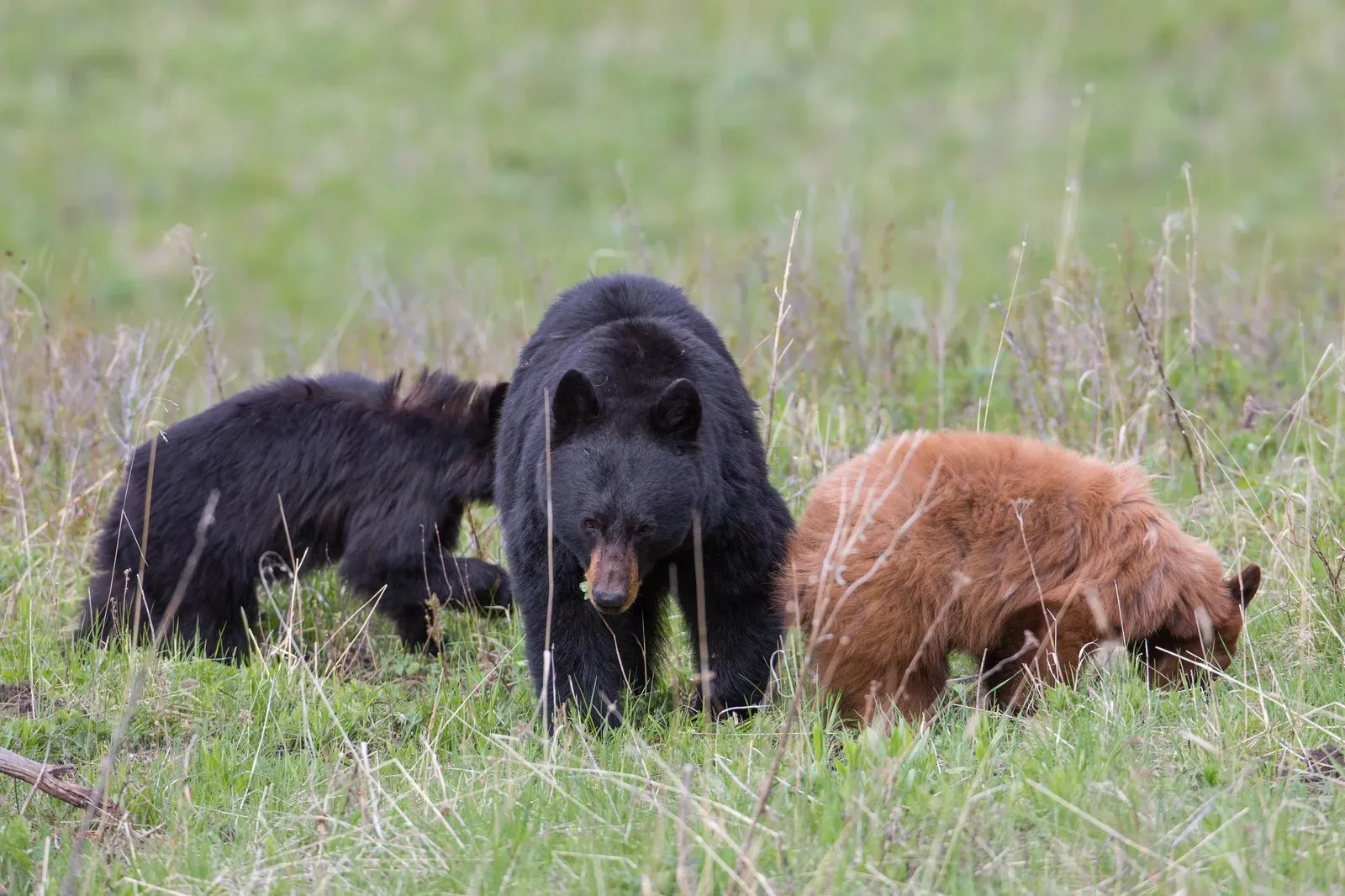 (source: nps.gov)
A black bear family in Yellowstone
In 1970, the Park Service closed the dumps. The grizzly population dropped to an estimated 136 animals by 1975, leading to their listing as a threatened species. The dump closure was painful but essential.
On January 12, 1995, 14 gray wolves from Alberta, Canada were carried in steel crates into Yellowstone's Lamar Valley — ending a 70-year absence. A second group of 17 wolves from British Columbia followed in 1996.
The wolves were held in acclimation pens for 10 weeks before release, allowing them to bond as packs and adjust to the landscape. When the gates opened, the wolves stepped into an ecosystem that hadn't seen their kind in seven decades — and everything changed.
Today, approximately 100 wolves in 10 packs live in Yellowstone.
What happened after wolves returned became one of the most famous ecological stories ever documented — a trophic cascade, where a top predator triggered changes through the entire food web.
Wolves preyed on elk and changed their behavior → Elk stopped lingering on riverbanks → Willows, aspens, and cottonwoods regenerated → Beavers returned (from 1 colony to 12+) → Beaver dams stabilized riverbanks → Fish, amphibians, and songbirds increased → Eagles and ravens benefited from wolf-killed carcasses
You can see the evidence yourself in the Lamar Valley: stands of young willows and aspens growing along streams where, for 70 wolf-free years, nothing but grass survived the relentless elk browsing.
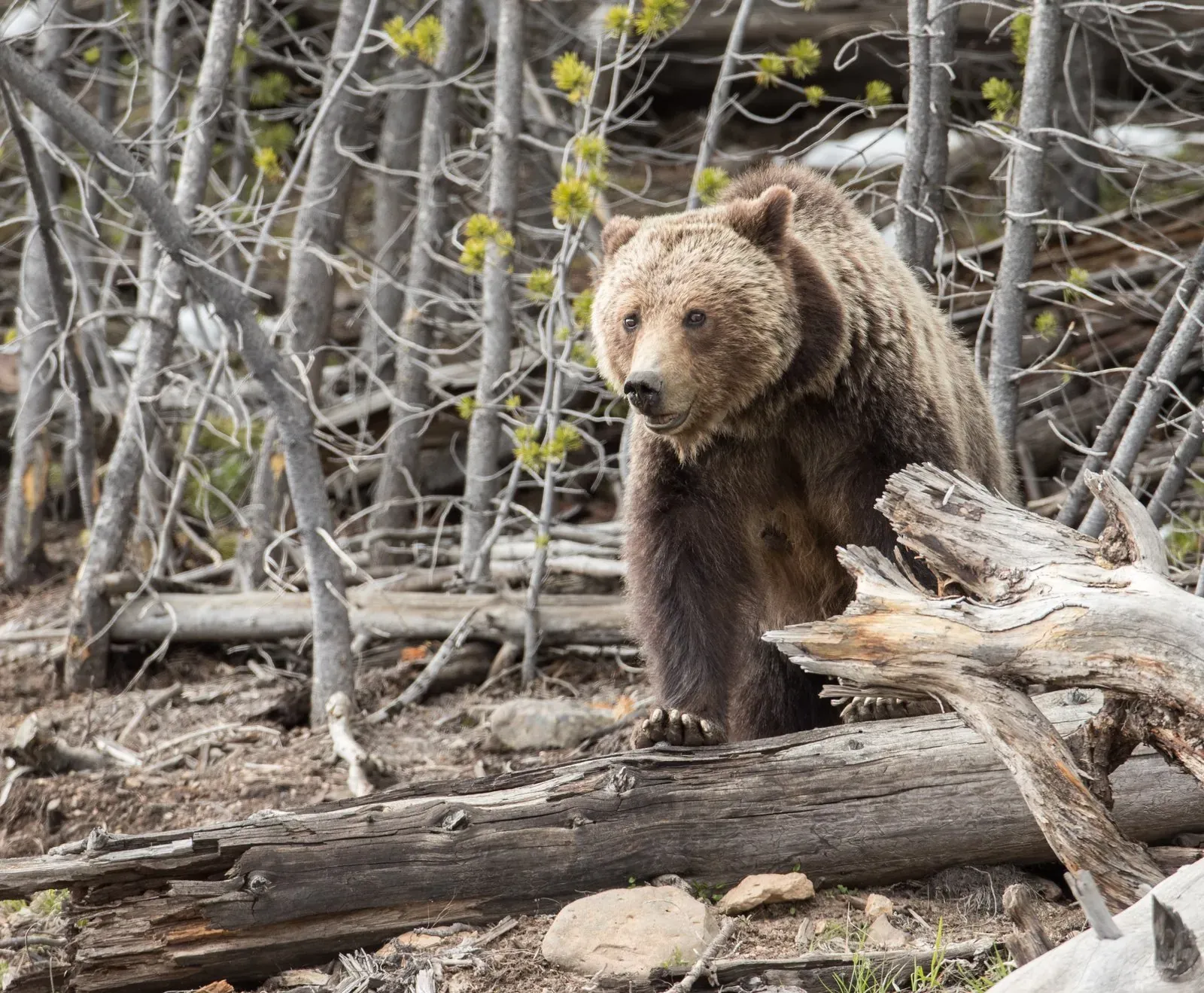
From a low of roughly 136 bears in 1975, the Greater Yellowstone Ecosystem now supports an estimated 1,000+ grizzly bears — a sevenfold increase.
 (source: nps.gov)
A grizzly bear traversing a Yellowstone meadow — the population has recovered from 136 to over 1,000
The recovery was driven by dump closures, strict enforcement against poaching, habitat protection, and decades of intensive research. Bear-proof garbage containers and food storage regulations all reduced human-bear conflicts.
After predators were removed, elk populations soared to over 20,000 animals on the Northern Range. Overgrazing stripped riverbanks and eliminated aspen recruitment.
 (source: nps.gov)
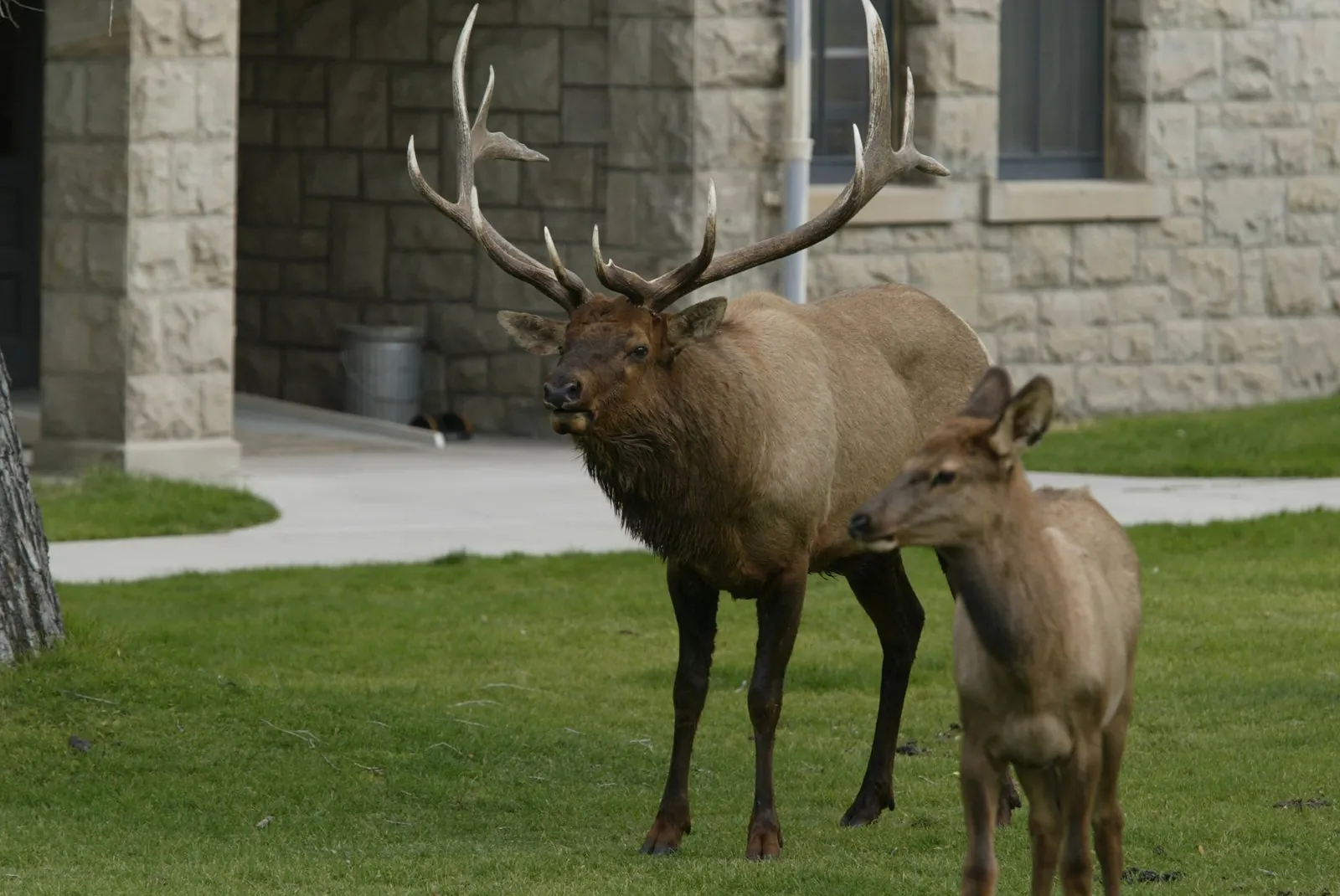
A bull elk at Mammoth Hot Springs
Wolf reintroduction in 1995 proved far more effective than any human program. The Northern Range elk herd has declined from roughly 20,000 to about 6,000 — a number biologists consider healthier for the ecosystem.
 (source: nps.gov)
Dawn in the Lamar Valley — "America's Serengeti"
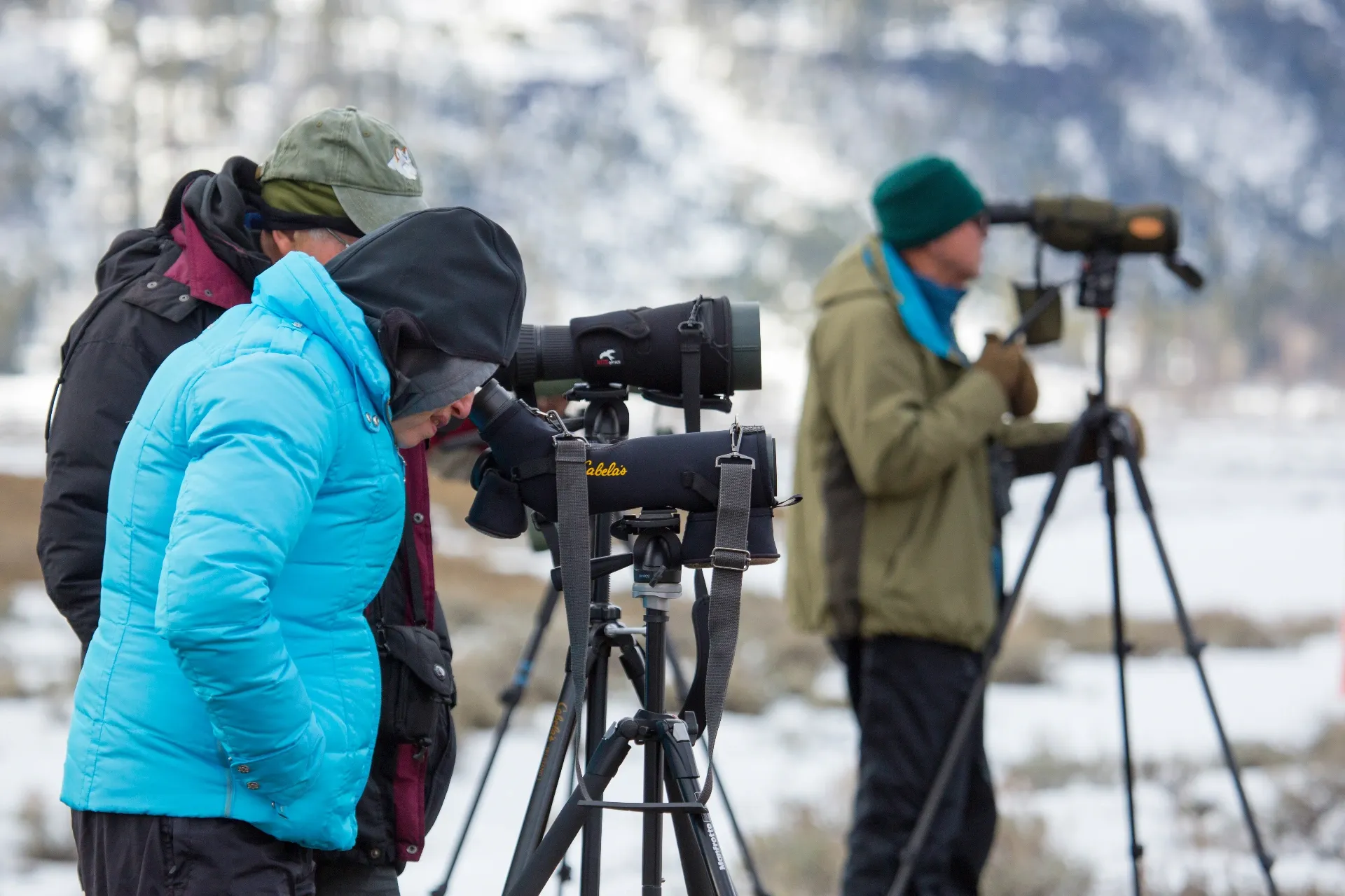 (source: nps.gov)
Wildlife watchers in the Lamar Valley
Lodgepole Pines Retreat is just minutes from Yellowstone's West Entrance — and a short drive from the Lamar Valley, the best wildlife watching corridor in North America.
Check Availability