 (source: nps.gov)
A Park Without Protection (1872–1886)
When President Ulysses S. Grant signed the Yellowstone National Park Protection Act on March 1, 1872, he created the world's first national park — but Congress provided no funding, no staff, and no enforcement mechanism to actually protect it.
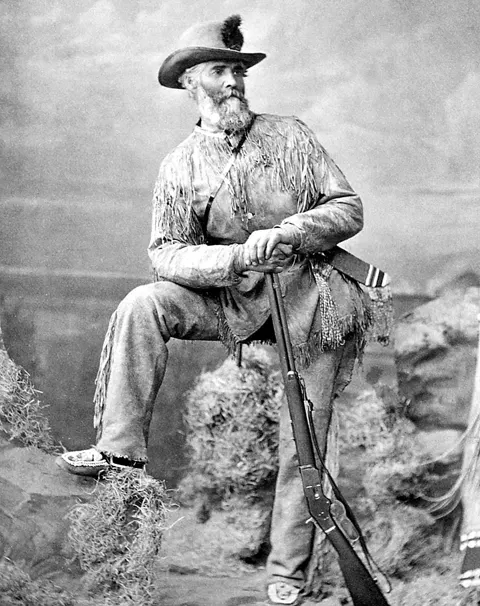
The first superintendent, Nathaniel Langford, served without pay and visited the park only twice during his five-year tenure. His successor, Philetus Norris (1877–1882), was more active — exploring roads, naming features, and documenting geysers — but he had almost no resources.
 (source: nps.gov)
Philetus Norris, Yellowstone's second superintendent — more active than Langford but vastly under-resourced
The result was predictable: market hunters slaughtered elk, bison, and bighorn sheep by the hundreds. Souvenir hunters chipped away at geyser formations. Squatters set up unauthorized hotels and saloons. The park's natural wonders were being destroyed faster than anyone could stop it.
By the mid-1880s, after a series of corrupt and incompetent civilian superintendents, Congress turned to the only federal institution capable of imposing order in remote territory: the United States Army.
The Army Arrives (August 1886)
On August 20, 1886, Captain Moses Harris of the 1st U.S. Cavalry rode into Mammoth Hot Springs with Company M — about 50 soldiers — and took command of Yellowstone National Park.
Harris moved swiftly. He evicted squatters, confiscated firearms from poachers, established patrol routes, and began imposing the kind of discipline the park had never seen. His soldiers lived in canvas tents through their first brutal winter — temperatures at Mammoth regularly dropped below −30°F.
The Army's legal authority was limited: they could expel trespassers but couldn't impose fines or jail time. Their primary tool was confiscation — seizing weapons, traps, horses, and equipment. For the most part, the presence of uniformed soldiers on regular patrol created a deterrent effect that civilian superintendents had never achieved.
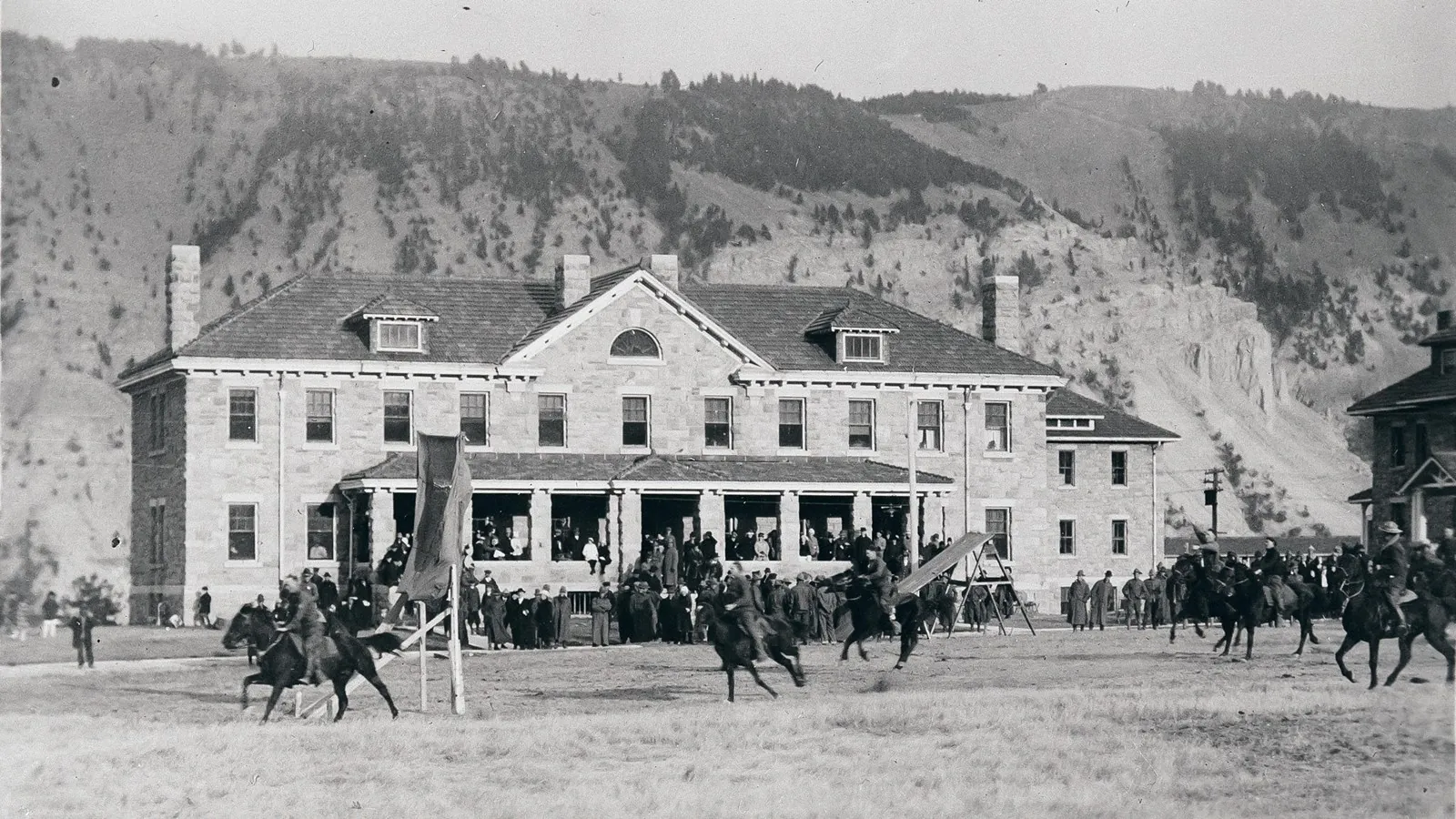
Fort Yellowstone at Mammoth Hot Springs
The tent camp at Mammoth quickly proved inadequate. Starting in 1891, the Army began constructing permanent buildings — transforming the area into Fort Yellowstone, a full military post with officers' quarters, barracks, a guardhouse, stables, a hospital, and administrative buildings.
 (source: nps.gov)
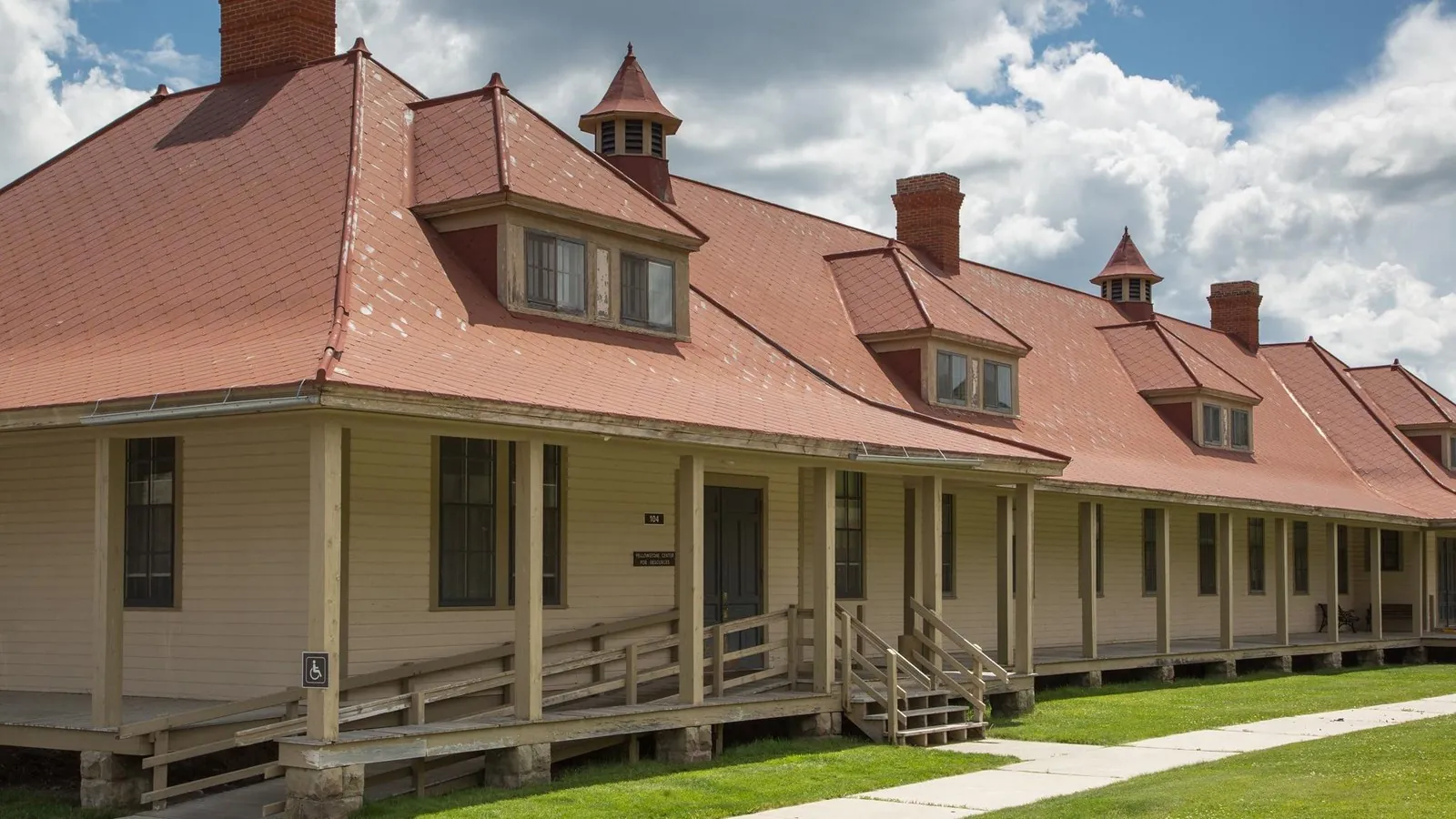
Cavalry barracks at Fort Yellowstone, 1897 — the Army built a full military post at Mammoth Hot Springs
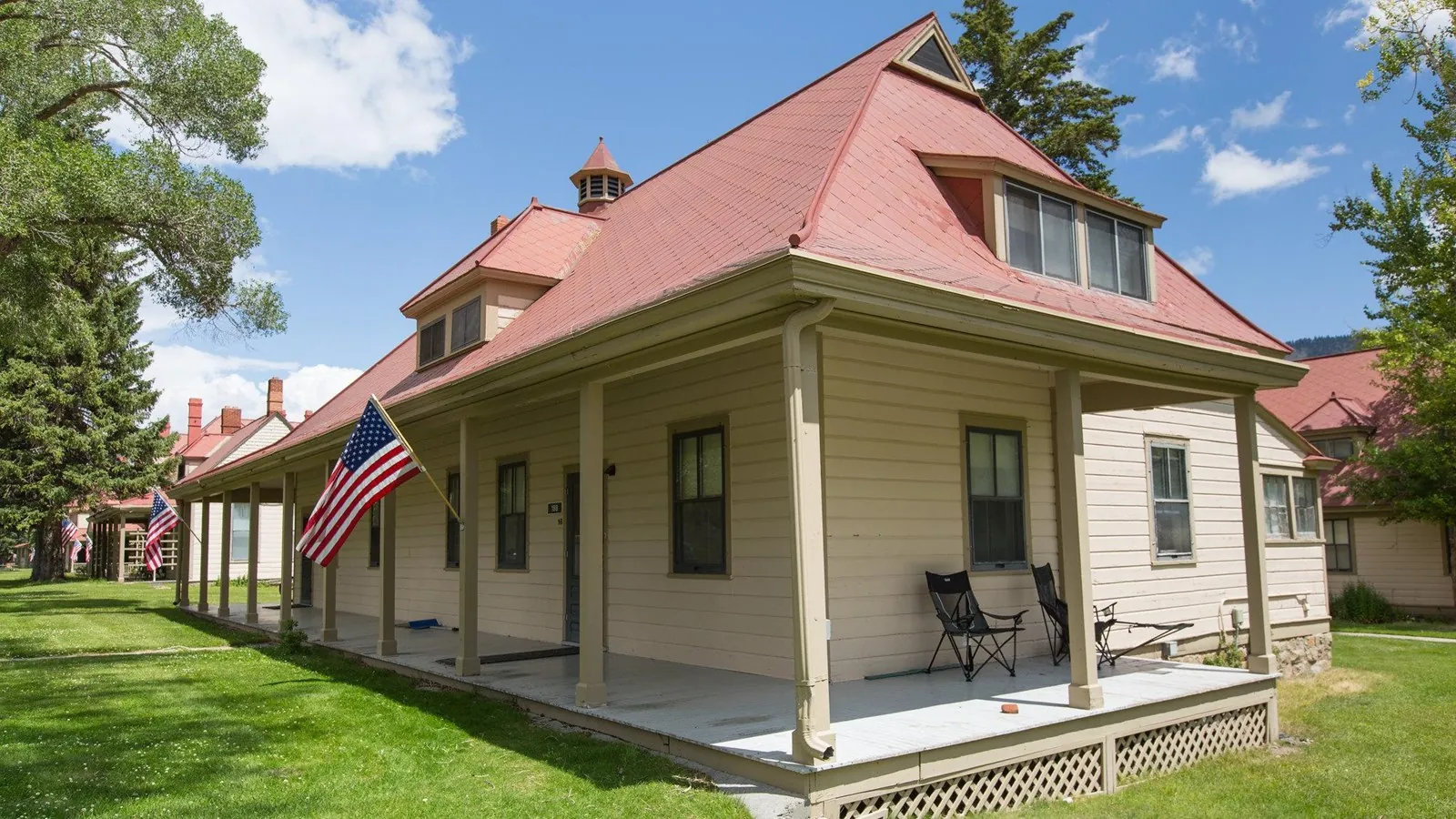
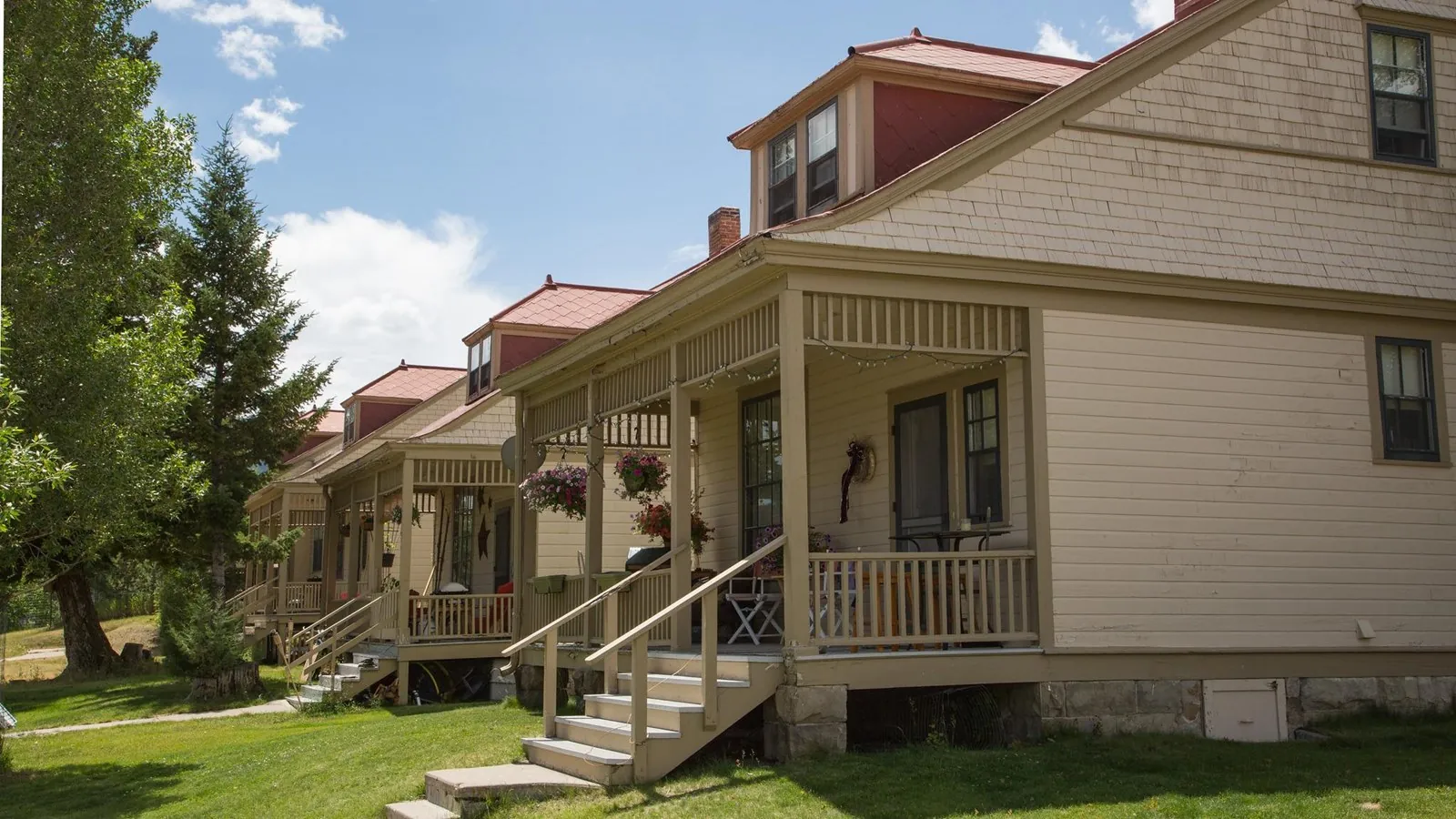
The buildings were constructed in the Colonial Revival style from locally quarried sandstone, giving them a dignified, permanent appearance that still defines Mammoth's character today. Many still stand and are used by the National Park Service.
 (source: nps.gov)
The Fort Yellowstone guardhouse — where poachers and rule-breakers were detained
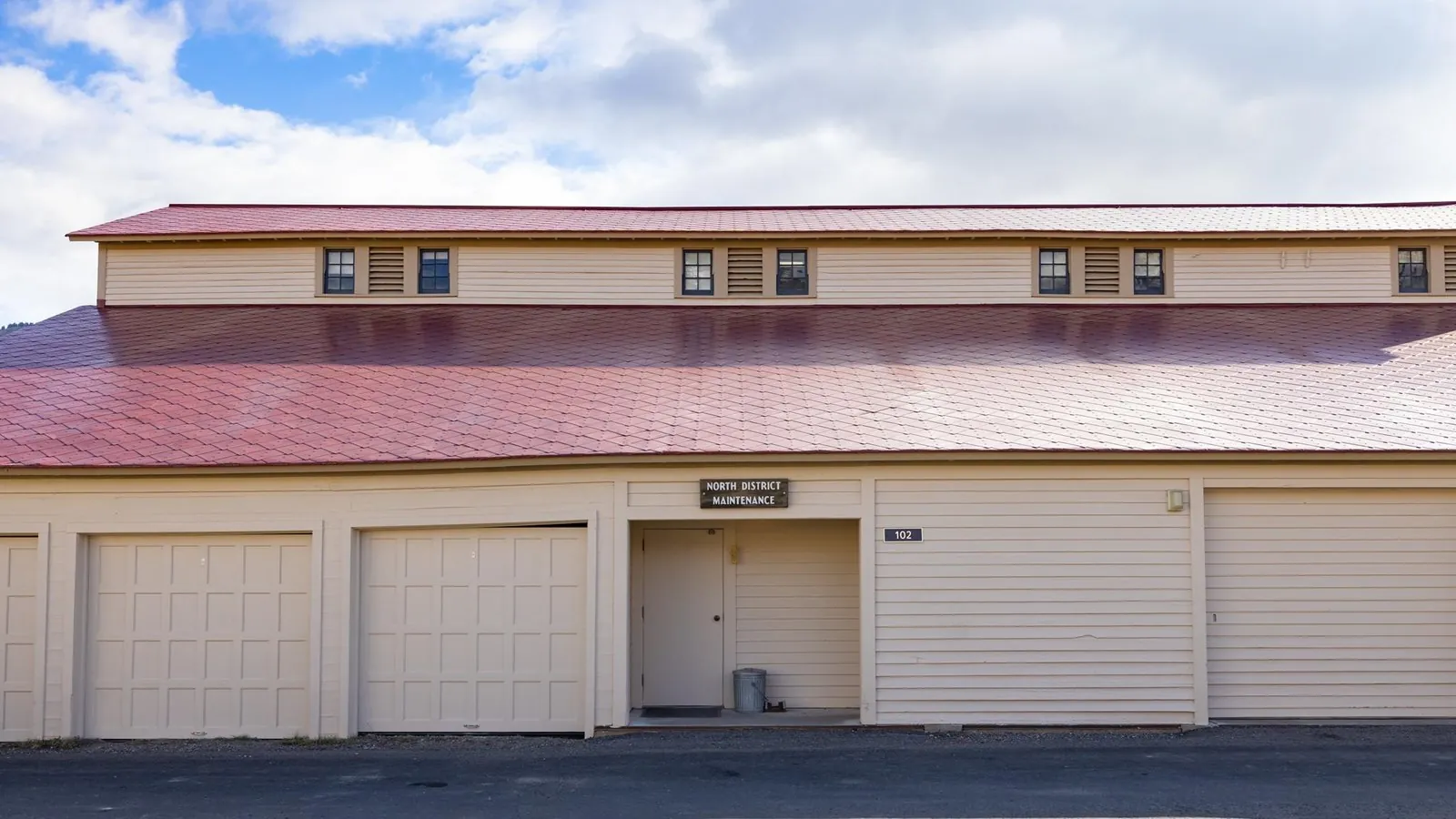
At its peak, the garrison included over 300 soldiers with additional troops at outposts. The fort included stables for over 100 horses — cavalry was the only practical way to patrol 2.2 million acres.
 (source: nps.gov)
Fort Yellowstone stables, 1897 — cavalry horses were essential for backcountry patrol
Soldier Stations & Winter Patrols
The Army established a network of soldier stations — small outposts throughout the park, each manned by a handful of soldiers. Stations were located at the Upper Geyser Basin (near Old Faithful), Lake, Tower Fall, Norris, and boundary crossings.
Soldiers conducted regular patrols on horseback in summer and on skis and snowshoes in winter. Winter patrols covered 20 to 30 miles per day through deep snow in sub-zero temperatures. These patrols were essential because winter was when poachers targeted vulnerable elk and bison.
The soldier stations evolved into the ranger station system still used by the NPS today. The concept of distributed, year-round patrol coverage was an Army innovation that became the foundation of modern park management.
The Poaching Wars & the Bison Crisis
The Army's most critical mission was stopping the slaughter of Yellowstone's wildlife — particularly the American bison. By the 1890s, the great herds had been reduced to near-extinction. Yellowstone's herd was one of the last wild populations remaining.
In March 1894, Army scout Felix Burgess caught notorious poacher Edgar Howell red-handed in the Pelican Valley, standing over freshly killed bison. A journalist from Forest and Stream, Emerson Hough, was embedded with the patrol and published a scathing account that generated national outrage.
The arrest exposed a critical gap: the Army could confiscate Howell's equipment and expel him, but had no legal authority to fine or imprison him. The public fury was the direct catalyst for the Lacey Act, passed just weeks later.
The Lacey Act of 1894: Teeth for Park Protection
On May 7, 1894, Congress passed the National Park Protective Act (the Lacey Act). It made it a federal crime to kill, wound, or capture any wildlife within Yellowstone, with fines up to $1,000 (roughly $35,000 today) and up to two years in prison.
The Lacey Act was a watershed in American conservation — the first time federal law provided real criminal penalties for harming wildlife in a national park. Combined with the Army's enforcement, it effectively ended mass poaching and helped save the bison from extinction.
Today, Yellowstone's bison herd numbers over 5,000 animals — direct descendants of those the Army protected. Learn more in our guide to finding bison in Yellowstone.
Roads, Bridges & Infrastructure
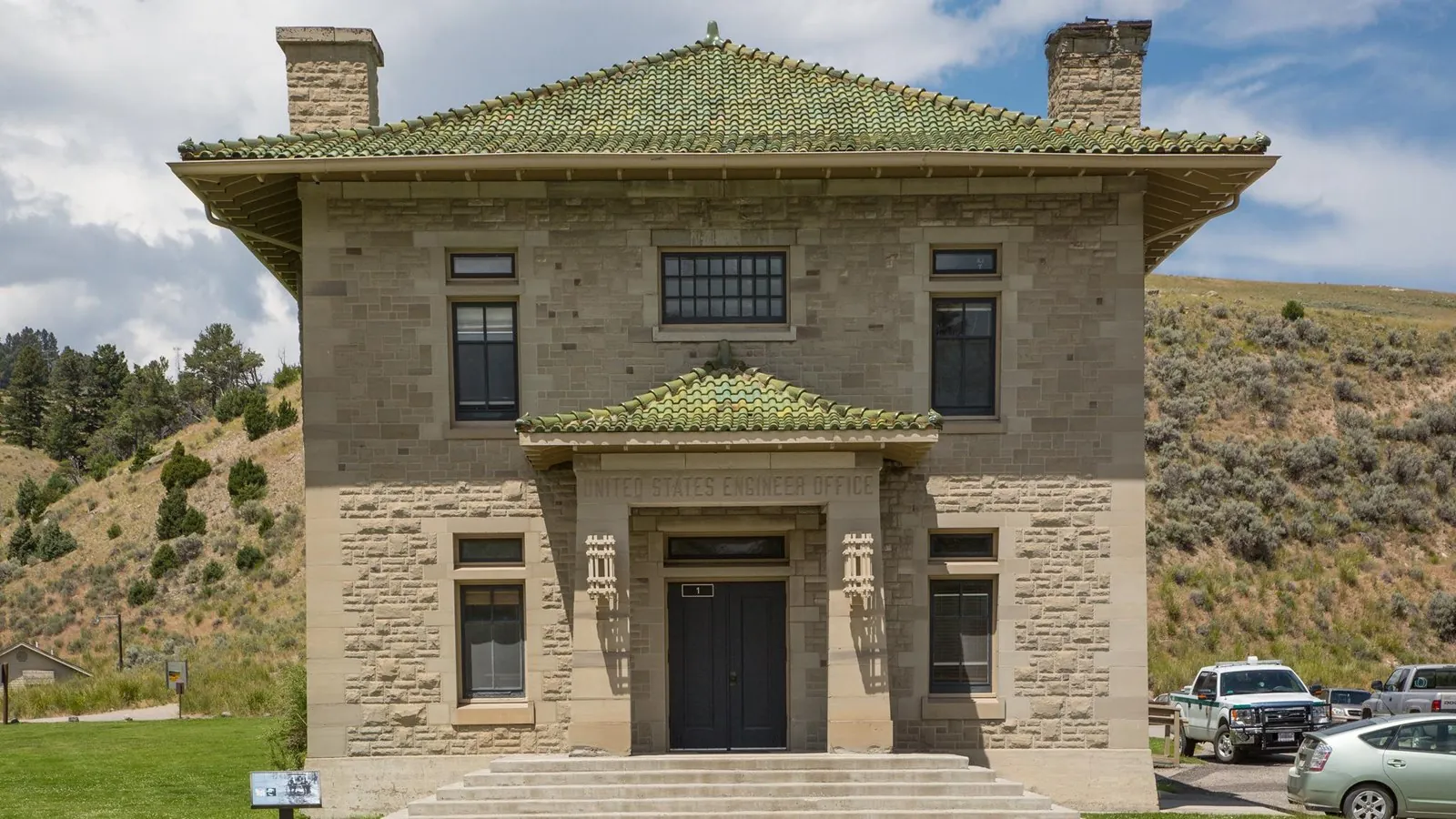
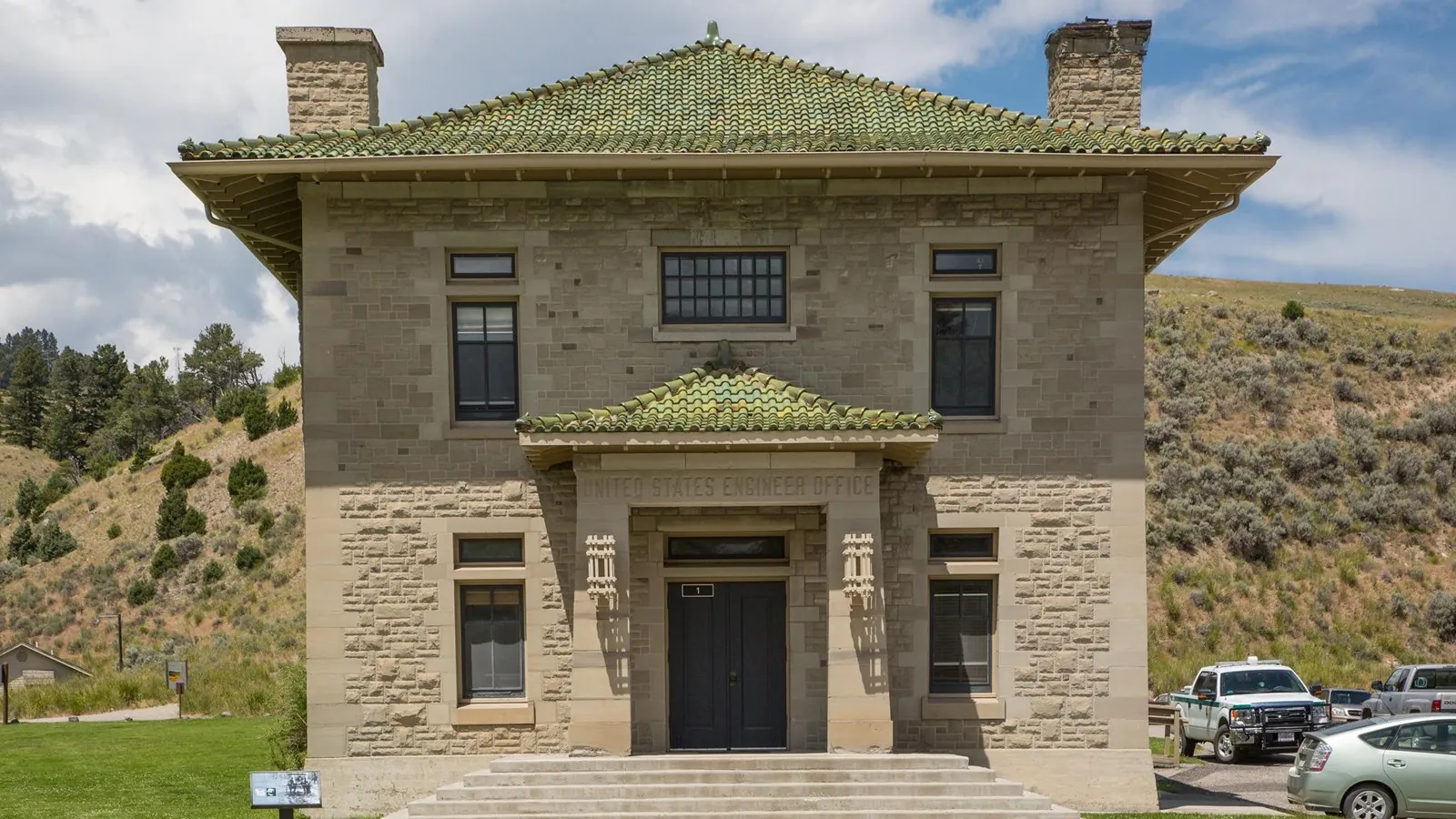
The U.S. Army Corps of Engineers designed and constructed the Grand Loop Road — the 142-mile figure-eight road system that remains the primary way visitors experience the park. The same road you drive from Island Park into Yellowstone follows routes first engineered by Army surveyors.
 (source: nps.gov)
The U.S. Army Corps of Engineers office — the engineers who designed Yellowstone's road system
The Army also built bridges, trail systems, campgrounds, boardwalks at geyser basins, viewing platforms at the Grand Canyon of the Yellowstone, and protective railings at thermal areas. Many of their stone bridges and road alignments are still in use over a century later.
The Army's Conservation Legacy
The Army's 32 years in Yellowstone established principles that define national park management today:
- Active enforcement — parks require dedicated personnel to prevent damage
- Year-round presence — seasonal-only management leaves parks vulnerable in winter
- Distributed patrol stations — small outposts covering the full territory
- Wildlife protection — conservation requires legal teeth and consistent enforcement
- Infrastructure investment — professional roads and facilities enable public access
- Visitor regulation — rules about camping, fires, wildlife interaction, and thermal features
 (source: nps.gov)
Non-commissioned officers' quarters, 1897 — permanent stone buildings replaced the original tent camp
The Army also served as a model for other parks — Sequoia, Yosemite, Mount Rainier — proving that national parks could work as a permanent institution, not just a symbolic gesture.
Transition to the National Park Service (1916–1918)
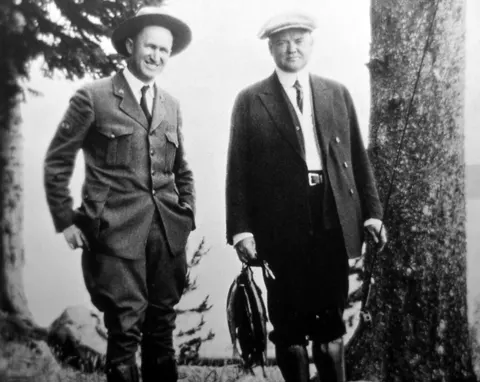
On August 25, 1916, President Woodrow Wilson signed the National Park Service Organic Act, creating the NPS. The first director, Stephen Mather, and his assistant Horace Albright, modeled the new ranger corps directly on the Army's patrol system.
 (source: nps.gov)
Horace Albright with President Herbert Hoover, 1928 — Albright became Yellowstone's first civilian superintendent
The military formally transferred control on October 31, 1918. Fort Yellowstone's buildings became NPS headquarters — a role they still serve today. The Mammoth Hot Springs area visitors drive through is, architecturally, still Fort Yellowstone.
Walk the Army's Grounds Today
You can explore Fort Yellowstone on a self-guided walking tour through Mammoth Hot Springs. The Fort Yellowstone Historic District includes over 30 original Army-era buildings, most still in active use.
 (source: nps.gov)
The Mammoth district ranger station — one of many Army-era buildings still in active NPS use
Don't miss: The Albright Visitor Center at Mammoth has excellent exhibits on the Army years, including original photographs, uniforms, and artifacts.
Mammoth is accessible from the West Entrance via the park's northern loop — just under two hours from our cabin in Island Park. Combine it with the Mammoth Hot Springs terraces for a full morning.
Explore more Yellowstone history: