 (source: nps.gov)
Three days in Yellowstone is enough to see the park's greatest hits — if you plan your route strategically. Most visitors waste hours backtracking across the figure-eight road system because they didn't map out their days in advance.
This itinerary is built specifically for travelers staying in Island Park, Idaho — entering through the West Entrance each morning and maximizing every hour inside the park. We've tested these routes across multiple seasons and refined the timing so you hit major attractions before the crowds arrive.
Whether you're traveling as a couple or bringing the whole family, this 3-day plan covers Yellowstone's most iconic landmarks: Old Faithful, Grand Prismatic Spring, the Grand Canyon of the Yellowstone, and Lamar Valley for wildlife viewing.
Before You Go: What You Need to Know
A few logistics will make or break your 3-day experience. Yellowstone spans 2.2 million acres with over 400 miles of roads, so preparation matters.
Park Entrance Fees
A 7-day vehicle pass costs $35. If you plan to visit other national parks this year, the America the Beautiful Pass ($80) pays for itself quickly. Purchase in advance at recreation.gov to skip the entrance line.
Driving Distances from Island Park
| Destination | From Island Park | From West Entrance |
|---|---|---|
| Old Faithful | ~1 hr 30 min | ~50 min |
| Grand Prismatic Spring | ~1 hr 20 min | ~40 min |
| Canyon Village | ~2 hr | ~1 hr 10 min |
| Lamar Valley | ~2 hr 45 min | ~2 hr |
| Mammoth Hot Springs | ~2 hr 15 min | ~1 hr 30 min |
| West Thumb / Lake | ~1 hr 45 min | ~55 min |
⚠️ Entrance Timing Tip
During peak summer (June–August), the West Entrance line can reach 30–60 minutes between 9–11 AM. Arrive before 8 AM or after 3 PM to avoid the worst of it. Staying in Island Park gives you flexibility to leave early without fighting town traffic.
Cell Service & Navigation
Cell service is spotty throughout most of Yellowstone. Download offline maps before you leave — Google Maps and AllTrails both support offline downloads. Wi-Fi is available at some lodges (Old Faithful Inn, Lake Hotel, Canyon Lodge) but don't count on it for navigation.
Day 1 — The Geyser Basin & Grand Prismatic Spring
Day 1
Old Faithful, Grand Prismatic & Upper Geyser Basin
Focus: Western Yellowstone's iconic geothermal features • ~60 miles of park driving
Your first day covers the park's most famous attractions — and they're the closest to Island Park. By entering through the West Entrance, you'll reach Old Faithful in under an hour with minimal backtracking.
7:00 AM
Leave Island Park
Depart early for the West Entrance. Pack breakfast to eat in the car or at a pullout — every minute counts in peak season. Fill your gas tank before entering the park (fuel inside Yellowstone is limited and expensive).
8:00 – 10:30 AM
Old Faithful & Upper Geyser Basin
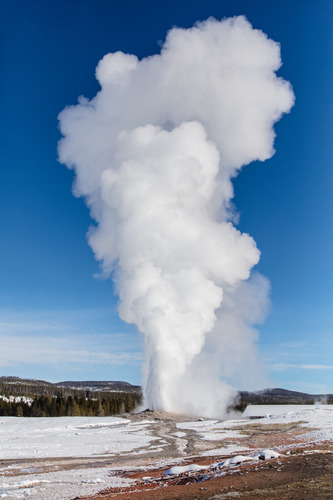
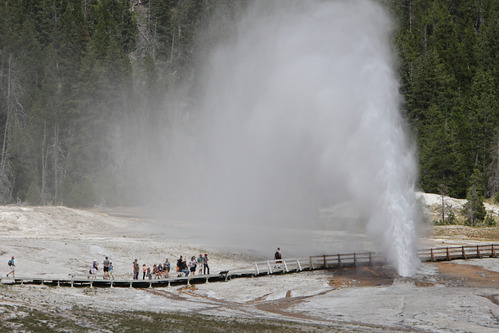
Head straight to Old Faithful. Check the predicted eruption time at the visitor center (eruptions happen roughly every 90 minutes, ±10 minutes). While waiting, walk the Upper Geyser Basin boardwalk — this 1.5-mile loop passes Beehive Geyser, Morning Glory Pool, and dozens of smaller geysers.
Insider tip: If Old Faithful's next eruption is 30+ minutes away, walk the boardwalk first and circle back.
10:30 – 11:30 AM
Biscuit Basin & Black Sand Basin
These two small thermal areas sit just north of Old Faithful and are often overlooked. Sapphire Pool at Biscuit Basin is one of the most beautiful springs in the park, and both can be explored in about 30 minutes each.
11:30 AM – 1:00 PM
Grand Prismatic Spring & Fairy Falls Overlook
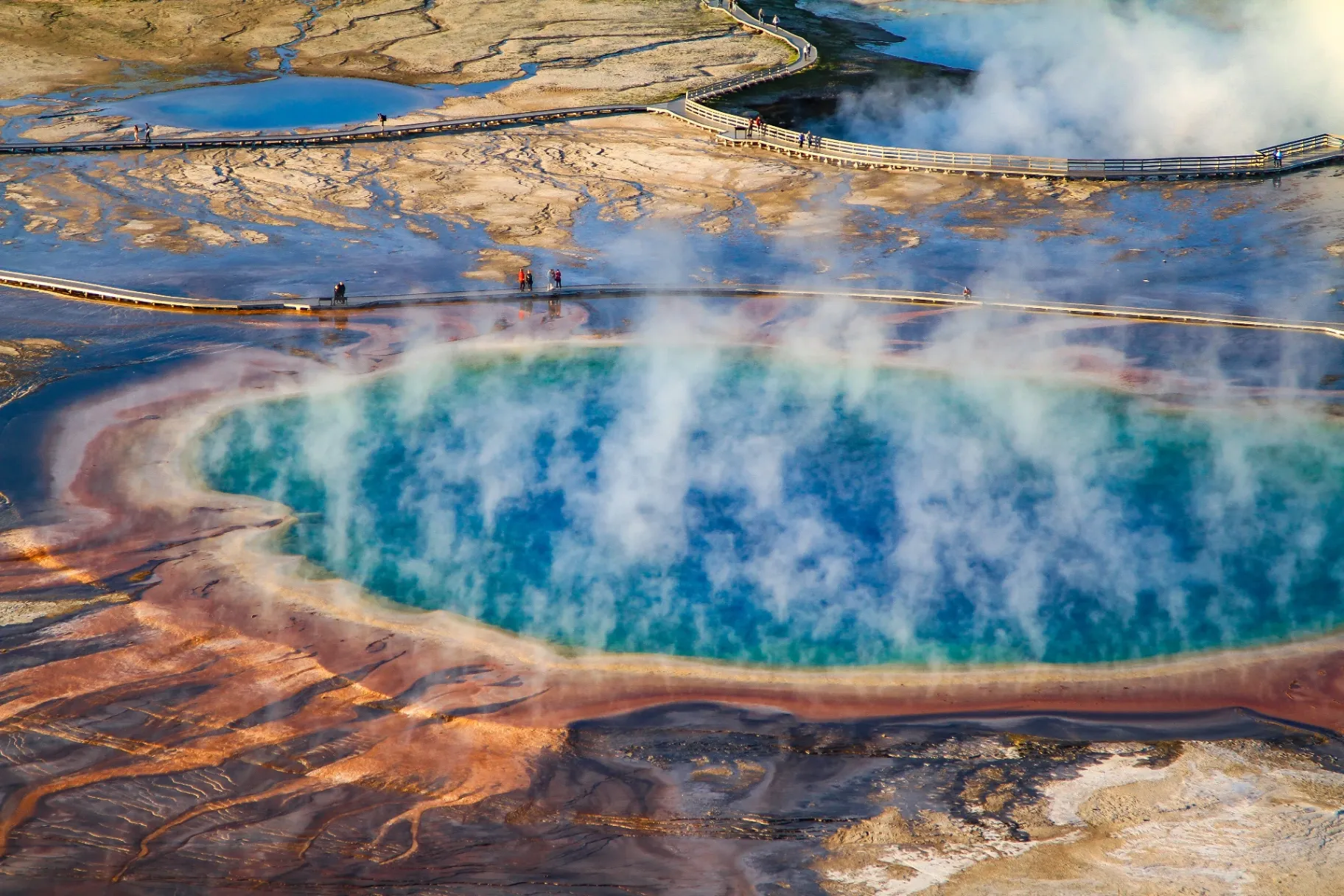
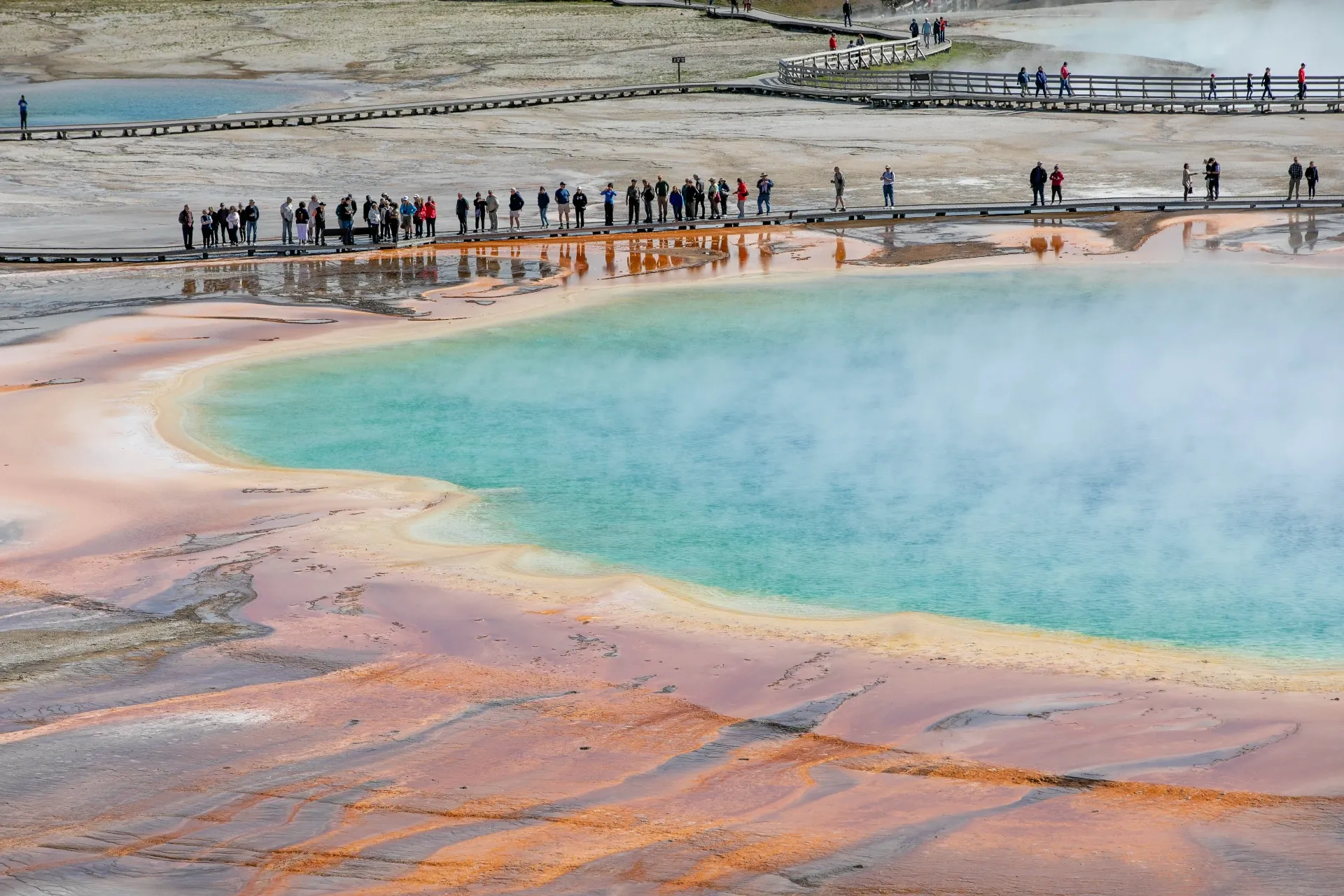
The Grand Prismatic Spring is Yellowstone's most photographed feature. The boardwalk takes you right along the edge, but for the iconic aerial-style view, take the Fairy Falls Trail to the overlook (1.6 miles round trip, easy). The overlook is the only way to appreciate the full rainbow of colors from above.
1:00 – 2:00 PM
Lunch Break
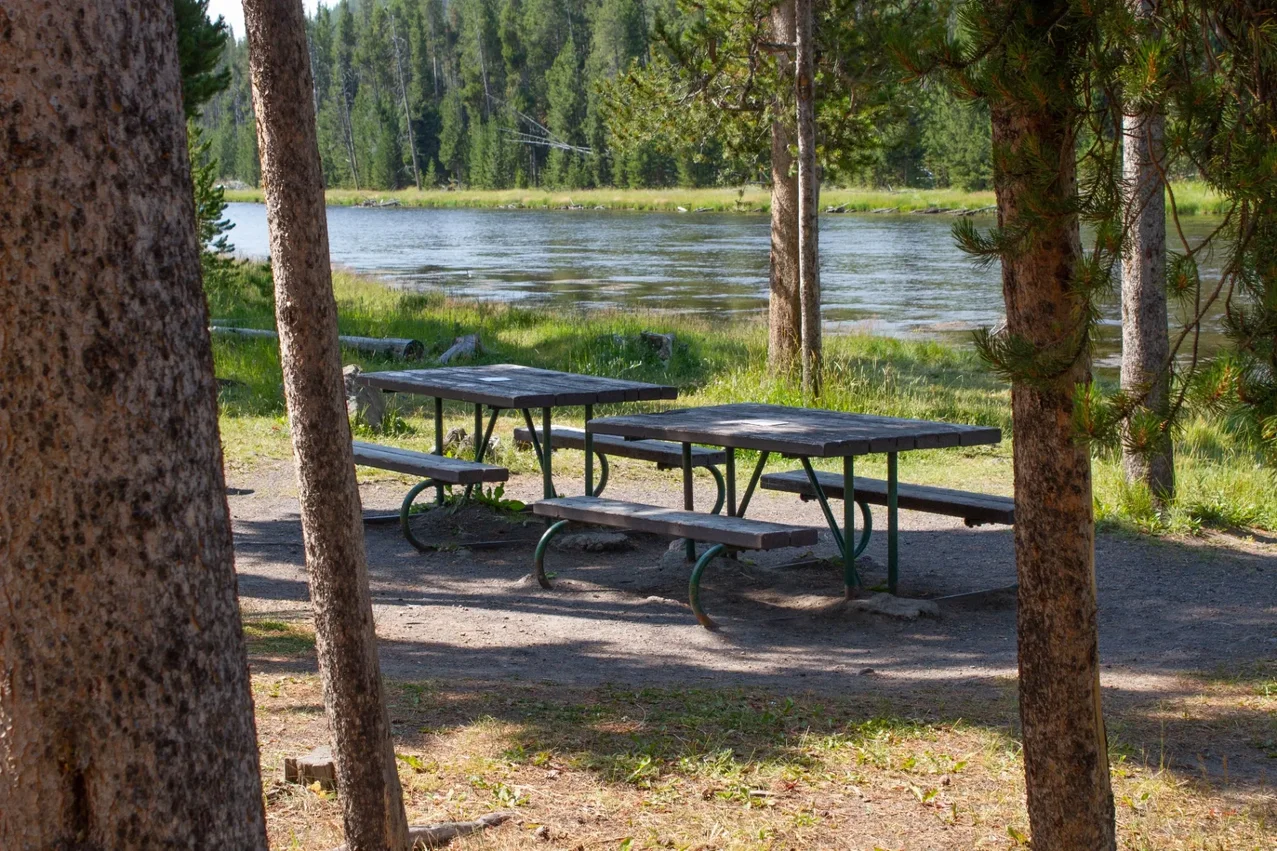
Pack a picnic lunch and eat at the Firehole River picnic area — one of the prettiest lunch spots in the park. Alternatively, the Old Faithful Lodge cafeteria offers quick, affordable meals.
2:00 – 4:00 PM
Midway Geyser Basin & Firehole Drive
Return to the Midway Geyser Basin boardwalk for a ground-level walk past Grand Prismatic and Excelsior Geyser Crater. Then take the one-way Firehole Lake Drive — a scenic loop passing Great Fountain Geyser.
4:00 – 5:30 PM
Fountain Paint Pots or Second Old Faithful Eruption
Wrap up the geyser basins with Fountain Paint Pots — a quick, family-friendly boardwalk featuring mud pots, fumaroles, and hot springs all in one place.
⚠️ Day 1 Pro Tip
If you're visiting in summer, check the Old Faithful Visitor Education Center prediction board for Grand Geyser and Beehive Geyser — both are far more dramatic than Old Faithful and worth waiting for.
Day 2 — The Grand Canyon of the Yellowstone & Hayden Valley
Day 2
Canyon Village, Waterfalls & Wildlife in Hayden Valley
Focus: Yellowstone's dramatic canyon, waterfalls, and bison-rich valleys • ~100 miles of park driving
Day 2 takes you deeper into the park's interior. The Grand Canyon of the Yellowstone is one of the most visually stunning landscapes in the national park system — and Hayden Valley is your best shot at bison herds, elk, and possibly grizzly bears along the road.
7:00 AM
Leave Island Park
Today's destinations are farther east, so leave a bit earlier. The drive from Island Park to Canyon Village is roughly 2 hours via the West Entrance and Madison Junction.
9:00 – 11:00 AM
Grand Canyon of the Yellowstone — South Rim
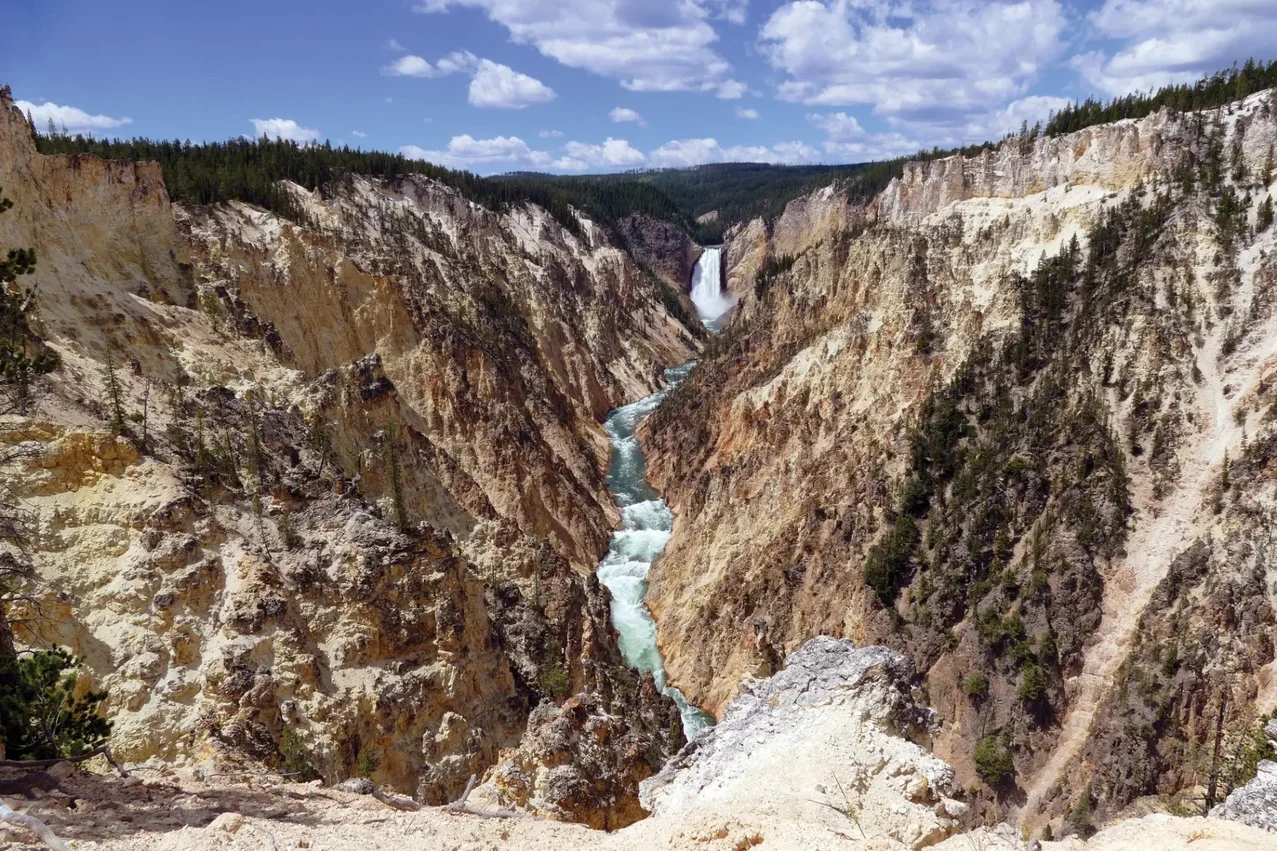
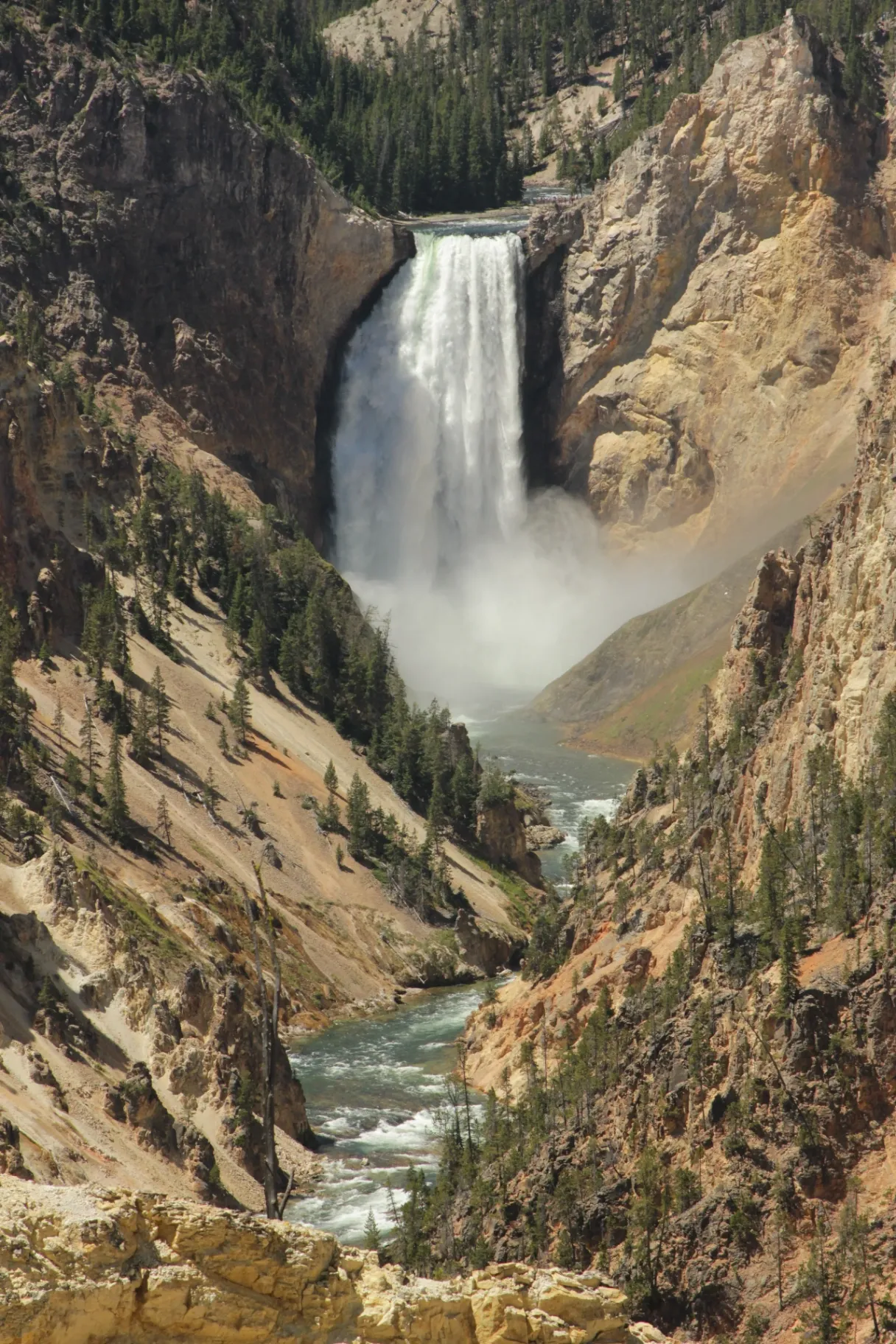
Start at Artist Point — the most iconic viewpoint of Lower Yellowstone Falls. The 308-foot waterfall drops into a technicolor canyon. Then walk the South Rim Trail to Uncle Tom's Trail for a closer perspective.
11:00 AM – 12:30 PM
North Rim Trail & Brink of the Lower Falls
Cross to the North Rim for different perspectives. The Brink of the Lower Falls trail takes you to the very edge where the river plunges into the canyon — you can feel the thunder in your chest.
12:30 – 1:30 PM
Lunch at Canyon Village
Canyon Lodge has a cafeteria and sit-down restaurant. The cafeteria is faster and more than adequate.
1:30 – 3:30 PM
Hayden Valley Wildlife Drive
Drive south from Canyon toward Yellowstone Lake through Hayden Valley. Pull over at the many turnouts and scan the meadows. You're likely to see bison herds, elk, and grizzly bears foraging along the Yellowstone River.
3:30 – 4:30 PM
Yellowstone Lake & West Thumb Geyser Basin
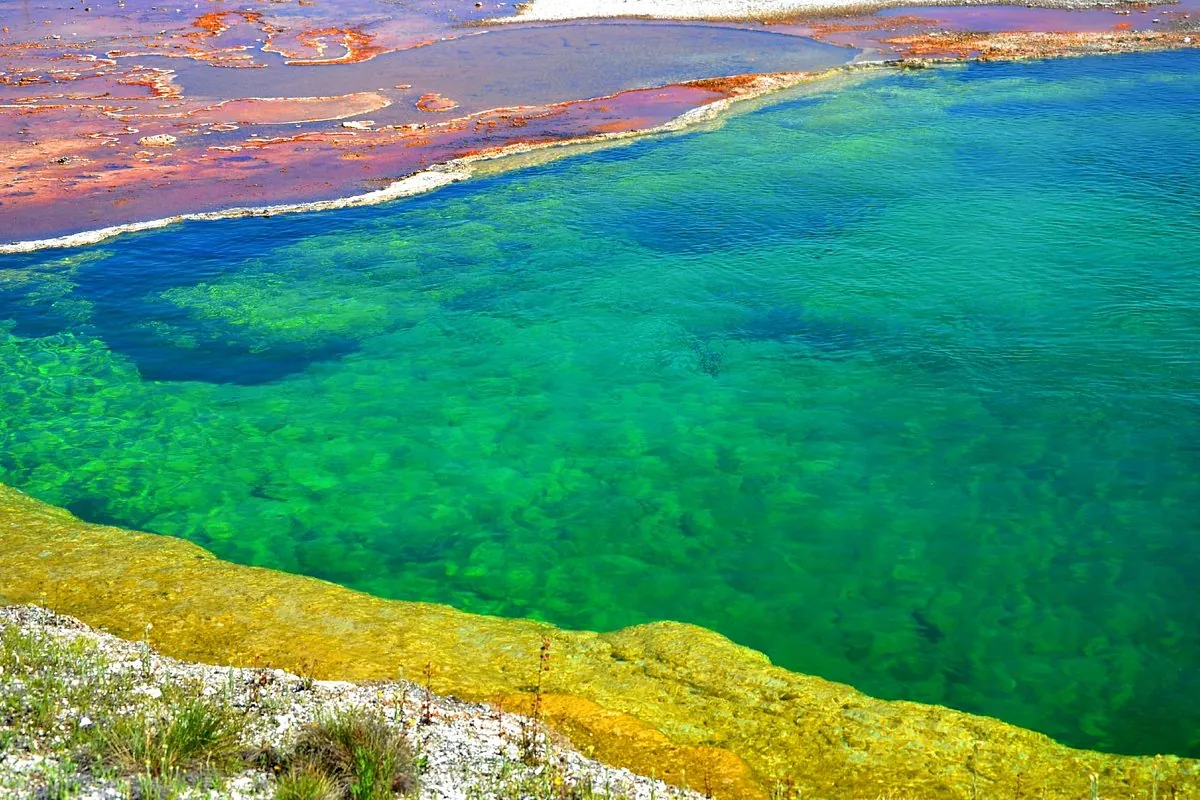
Continue south to West Thumb Geyser Basin — a shoreline thermal area where hot springs meet the cold waters of Yellowstone Lake.
4:30 – 6:00 PM
Return via Craig Pass
Head back to Island Park via Craig Pass and Old Faithful. This scenic route follows the Continental Divide.
⚠️ Day 2 Pro Tip
Hayden Valley wildlife is most active in early morning and late evening. Consider driving Hayden Valley first thing (7–9 AM) and saving the canyon viewpoints for later.
Day 3 — Lamar Valley & Mammoth Hot Springs
Day 3
Wildlife Watching & Mammoth Terraces
Focus: Yellowstone's wild northern range — wolves, bears, bison, and thermal terraces • ~130 miles of park driving
Day 3 is the longest driving day, but it rewards you with Yellowstone's most spectacular wildlife viewing and one of its most otherworldly geological features.
5:30 – 6:00 AM
Early Departure
This is your earliest start — and it's worth it. Lamar Valley is best at dawn when wolves, bears, and coyotes are active. Pack breakfast and coffee to go.
8:30 – 11:00 AM
Lamar Valley — The American Serengeti
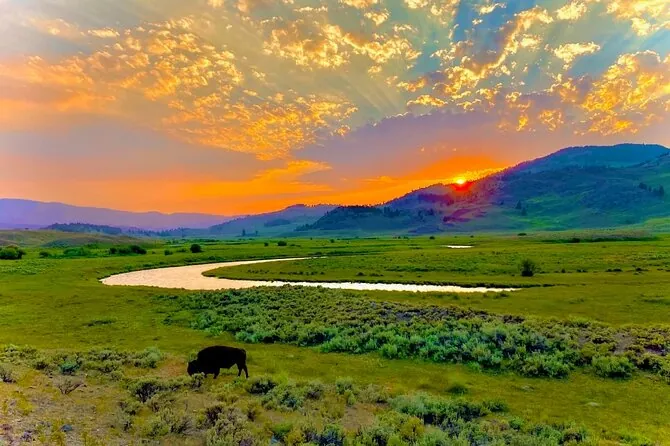
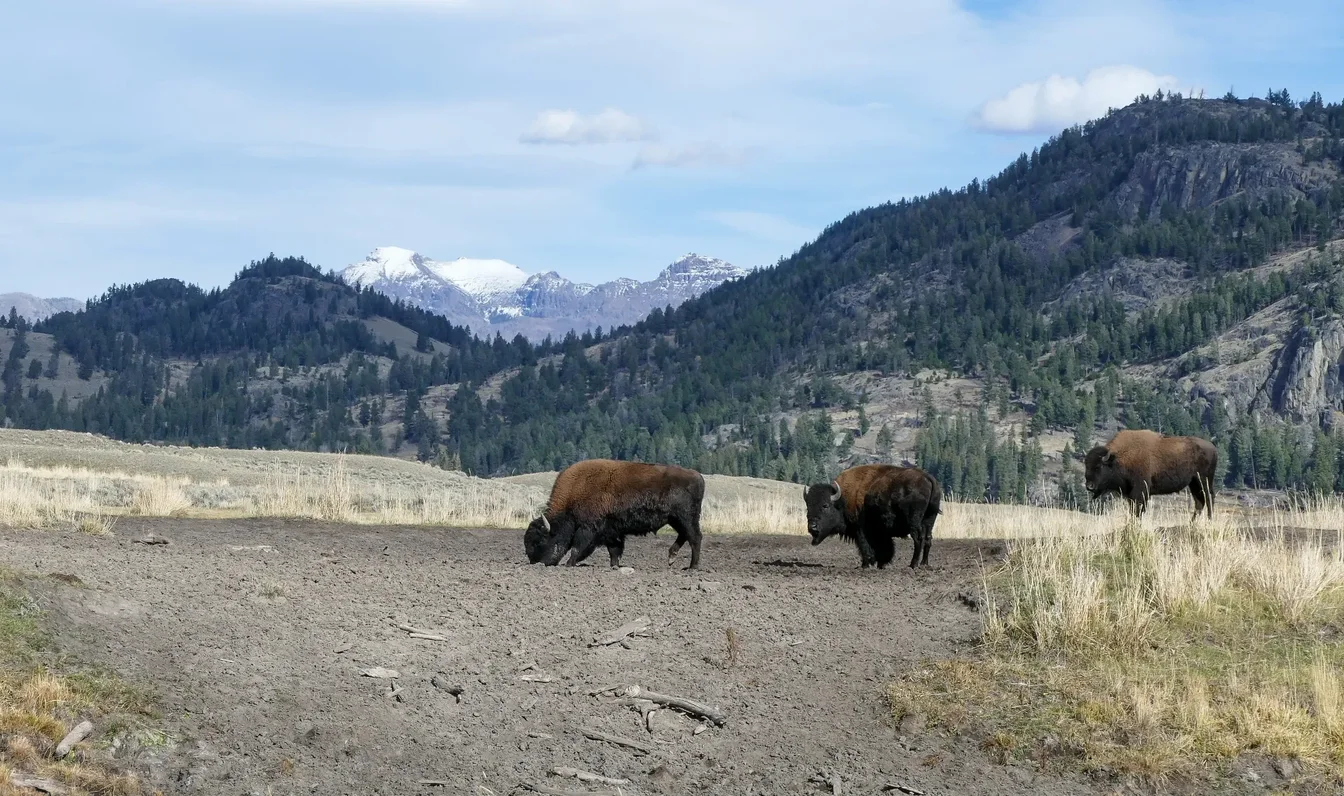
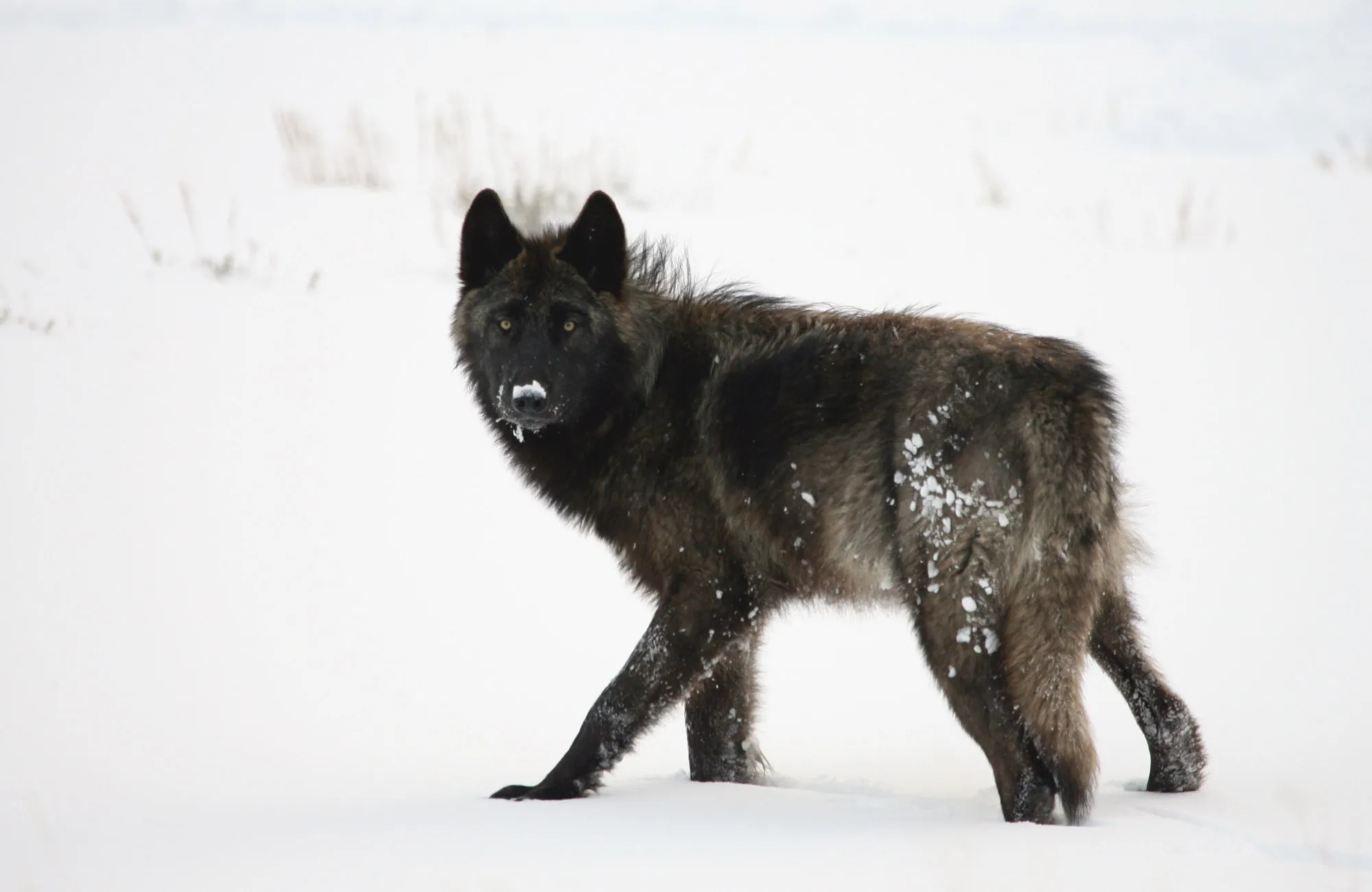
Lamar Valley is the best place in North America to see large predators in the wild. Drive slowly through the valley, pulling over at every turnout. Look for:
- Wolf packs — most commonly seen at dawn and dusk
- Grizzly bears — especially in spring and early summer with cubs
- Bison herds — thousands roam this valley year-round
- Pronghorn, elk, and coyotes
- Bighorn sheep — check the cliffs near the confluence
Bring binoculars or a spotting scope. Many rangers set up scopes and are happy to let you look.
11:00 AM – 12:00 PM
Tower Fall
Stop at Tower Fall — a 132-foot waterfall framed by volcanic spires. The viewpoint is a short walk from the parking area.
12:00 – 2:00 PM
Mammoth Hot Springs Terraces
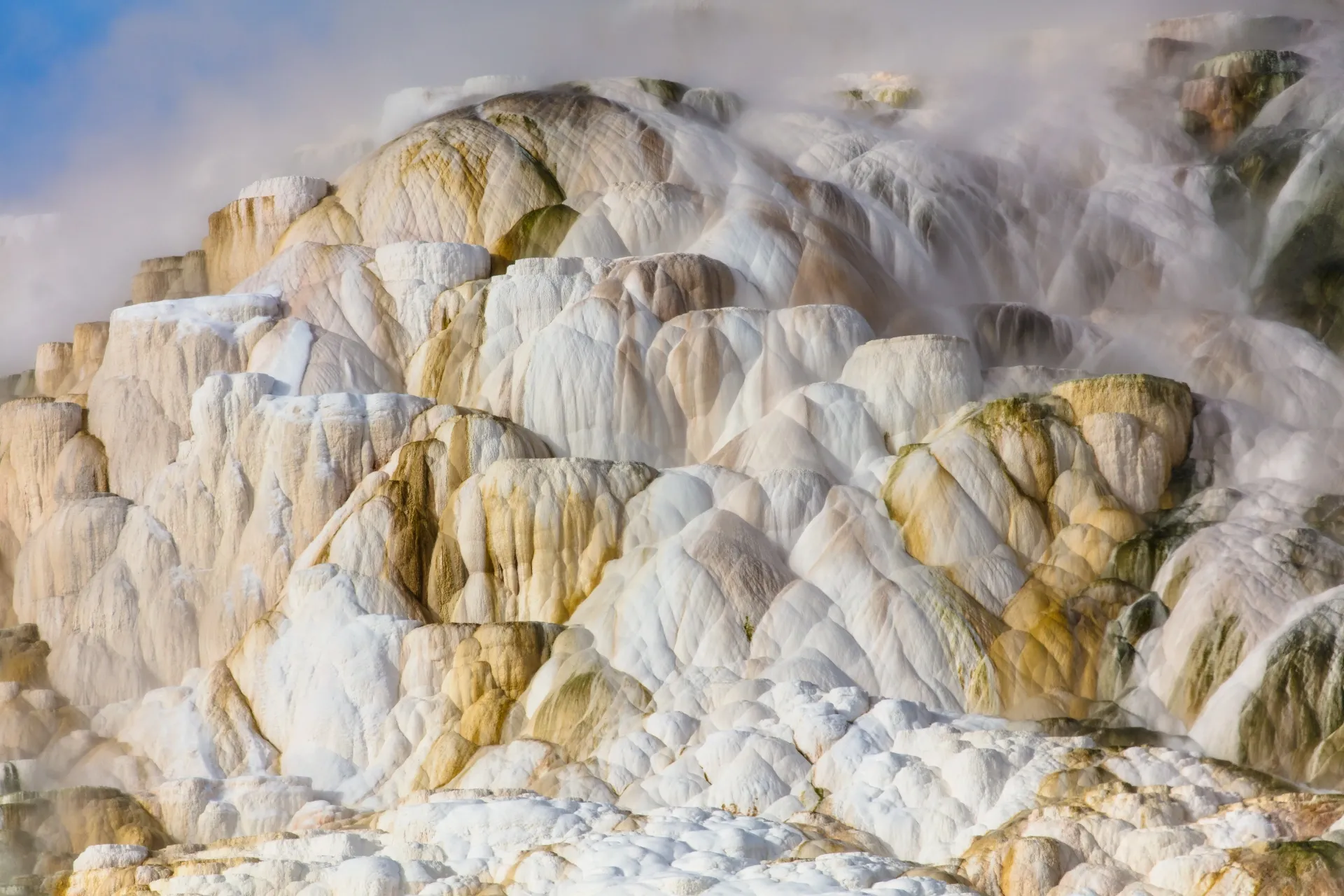
Mammoth Hot Springs features travertine terraces — an ever-changing landscape of white, orange, and brown formations. Walk both the Upper and Lower Terraces. Keep an eye out for elk on the lawns — they regularly graze right next to the buildings.
2:00 – 2:30 PM
Lunch at Mammoth
The Mammoth Hotel Dining Room serves solid meals with views. Mammoth is also one of the few places with reliable cell service.
2:30 – 5:00 PM
Return via Norris Geyser Basin
Head south through Golden Gate Canyon to Norris Geyser Basin — the hottest and most volatile thermal area in the park. Steamboat Geyser here is the world's tallest active geyser when it erupts.
⚠️ Day 3 Pro Tip
If wildlife is your primary goal, consider reversing Days 2 and 3 so you can do Lamar Valley twice. The northern range rewards repeat visits.
Insider Timing Tips to Beat the Crowds
Yellowstone hosts over 4 million visitors per year, with most arriving between June and September.
⏰ Enter Before 8 AM
The West Entrance line peaks 9–11 AM. Arriving before 8 AM means near-zero wait.
☀️ Stay Until Golden Hour
Most tour buses leave by 4 PM. The park between 5–8 PM feels completely different — fewer crowds, better light.
📍 Go Counterclockwise
Most visitors turn right at Madison Junction. Going left puts you ahead of the crowd at every major stop.
📷 Visit Landmarks Twice
If you see Old Faithful on Day 1 morning, drive past on Day 2 evening. Different light, different experience.
🍂 September & October Secret
Visiting in September or early October is the sweet spot. Roads are still open, crowds drop by 50–70%, and fall colors with the elk rut make it a photographer's paradise. Read our Yellowstone in October guide for more.
What to Pack for 3 Days in Yellowstone
Yellowstone's weather is unpredictable at any elevation. Even in July, mornings can be near freezing at 8,000+ feet.
- ✓ Layered clothing — base, mid, shell
- ✓ Rain jacket
- ✓ Sturdy walking shoes or hiking boots
- ✓ Sunscreen, hat, and sunglasses
- ✓ Binoculars for wildlife viewing
- ✓ Reusable water bottles
- ✓ Packed lunches & snacks
- ✓ Bear spray
- ✓ Offline maps downloaded
- ✓ Camera with zoom lens
For a comprehensive packing list, see our Weather & Packing Guide.
Where to Stay: Why Island Park Works
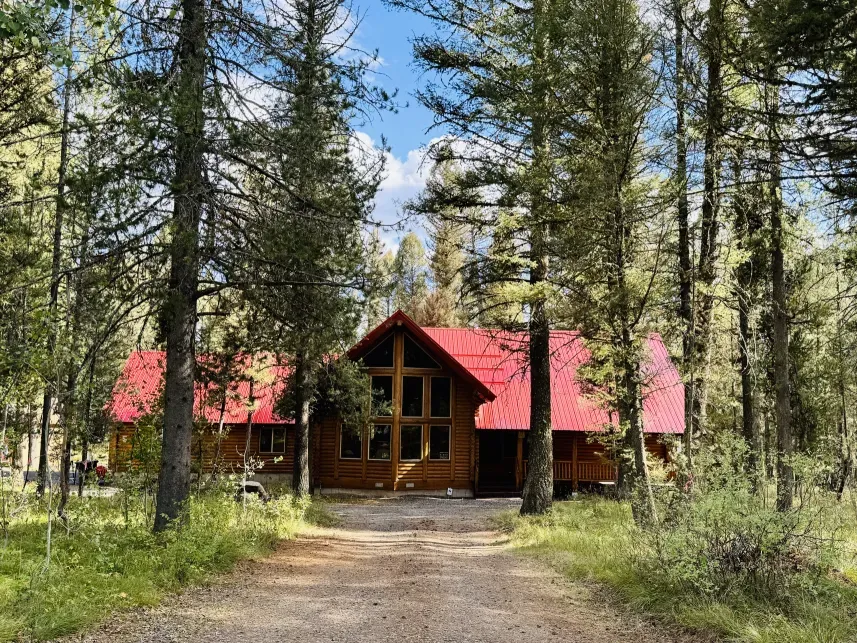
This itinerary is designed around the Island Park, Idaho basecamp for good reason:
- ✓ Space to spread out — full kitchens, living rooms, multiple bedrooms
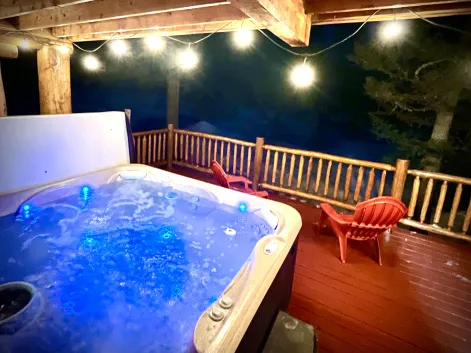
- ✓ Private hot tubs to soak sore hiking muscles under the stars
- ✓ Fire pit evenings — grill dinner and decompress in the pines
- ✓ Cost savings for groups — one cabin beats 3–4 hotel rooms
- ✓ Quieter mornings — no town traffic
- ✓ Moose, deer, and eagles right outside your door
Not sure if Island Park is right for you? Read our Island Park vs. Border Towns comparison.
Got More Time? How to Extend Your Trip
Three days covers the essentials, but Yellowstone rewards extra time generously.
Day 4 — Grand Teton National Park
Drive south from Island Park to enter Grand Teton. Highlights include Jenny Lake, Mormon Row barn at sunrise, Taggart Lake Trail, and the Snake River Overlook.
Day 5 — Island Park Itself
Spend a day exploring your own backyard with Island Park activities:
- ✓ Mesa Falls — Idaho's most dramatic waterfall
- ✓ Henry's Fork fishing — world-class fly fishing
- ✓ Big Springs — crystal-clear spring-fed water
- ✓ Harriman State Park — moose, trumpeter swans, and peaceful trails
For help deciding how long to spend, see our guide: How Many Days Do You Actually Need in Yellowstone?