 (source: nps.gov)
The Complete Guide to Yellowstone's Best Attractions
Yellowstone spans 2.2 million acres across three states. With that much ground to cover, knowing where to focus your time is everything.
This guide breaks down every major area of Yellowstone — from the iconic Upper Geyser Basin to the wildlife-rich Lamar Valley — so you can build a trip that matches your interests and schedule. For Grand Teton, see our dedicated Best Things to Do in Grand Teton guide. Whether you have 2 days or a full week, you'll know exactly what not to miss.
We live in Island Park, Idaho — 45 minutes from Yellowstone's West Entrance — and have spent hundreds of days exploring the park. Here's what we recommend.
Upper Geyser Basin & Old Faithful
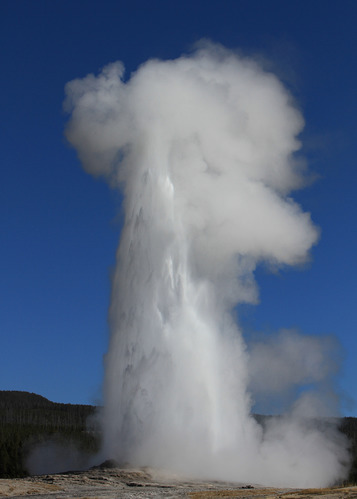
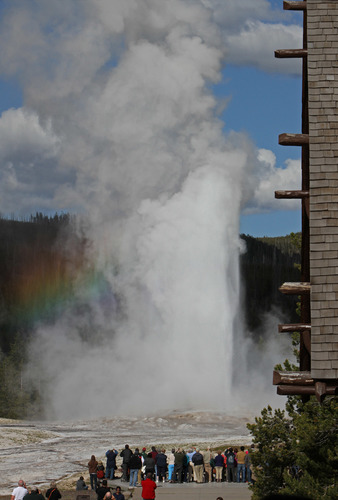
The Upper Geyser Basin contains the highest concentration of geysers on Earth — over 150 within a single square mile. Old Faithful is the headliner, erupting every 60–110 minutes with impressive consistency, but the entire basin deserves hours of exploration.
Must-See Highlights
- › Old Faithful — Predicted eruptions posted at the Visitor Center; arrive 30 min early for a good seat.
- › Old Faithful Inn — The world's largest log structure; walk through the lobby even if you're not staying.
- › Morning Glory Pool — Stunning blue-orange hot spring at the end of the boardwalk loop (1.4 mi one way).
- › Castle Geyser — Erupts roughly every 10–12 hours with a dramatic 20-minute display.
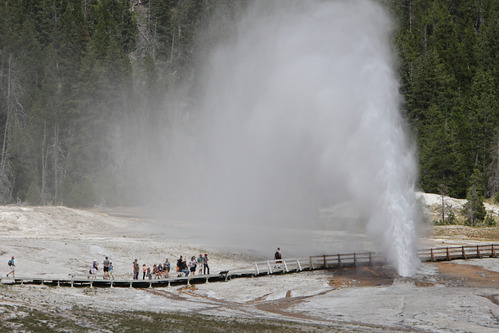
- › Beehive Geyser — When the indicator vent goes off, run — the eruption reaches 200 feet.
- › Grand Geyser — The world's tallest predictable geyser (150–180 ft).
☀️ Insider Tip
Visit early morning (before 9 AM) or late afternoon for smaller crowds. The boardwalk loop takes 2–3 hours. Check the NPS Yellowstone app for live eruption predictions.
Grand Prismatic Spring
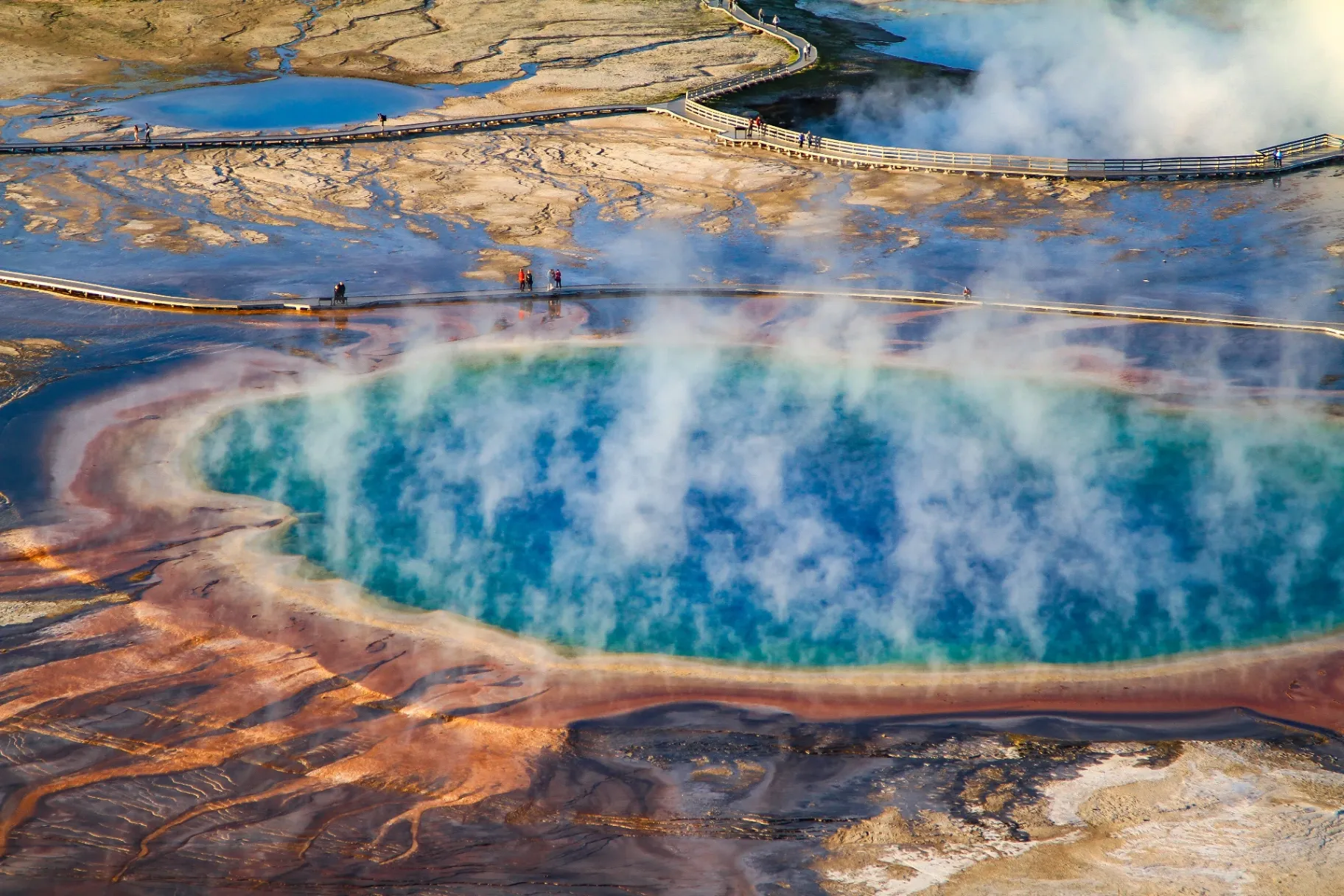
The largest hot spring in the United States (370 feet in diameter) and arguably the most photographed feature in Yellowstone. The rainbow rings of orange, yellow, and green are caused by heat-loving bacteria — each species thrives at a different temperature.
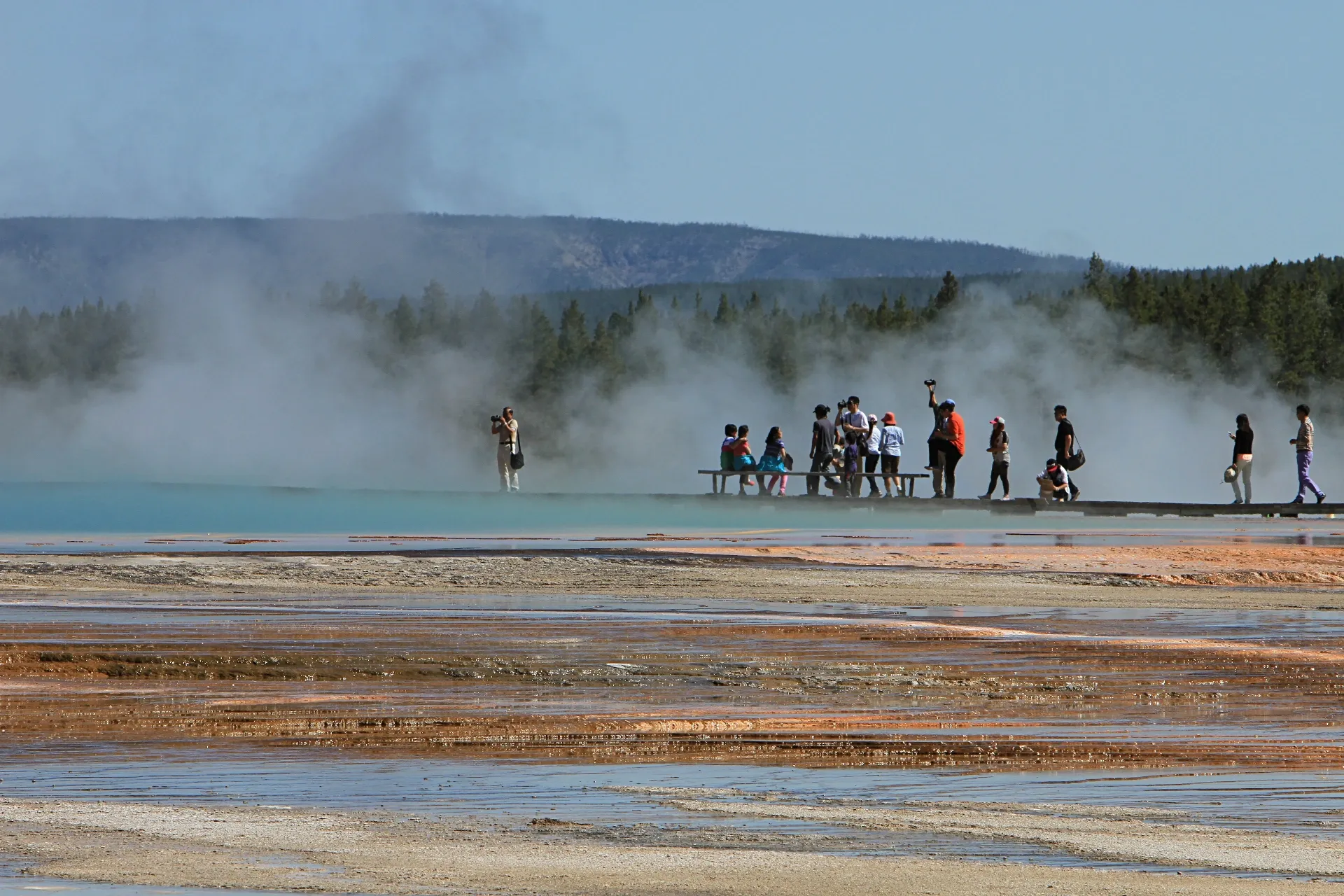
How to See It
- › Boardwalk (Midway Geyser Basin) — Walk right past the spring at ground level.
- › Fairy Falls Overlook — A 1.2-mile hike to the hilltop viewpoint for the classic aerial perspective.
- › Best light — Late morning to early afternoon when the sun is directly overhead.
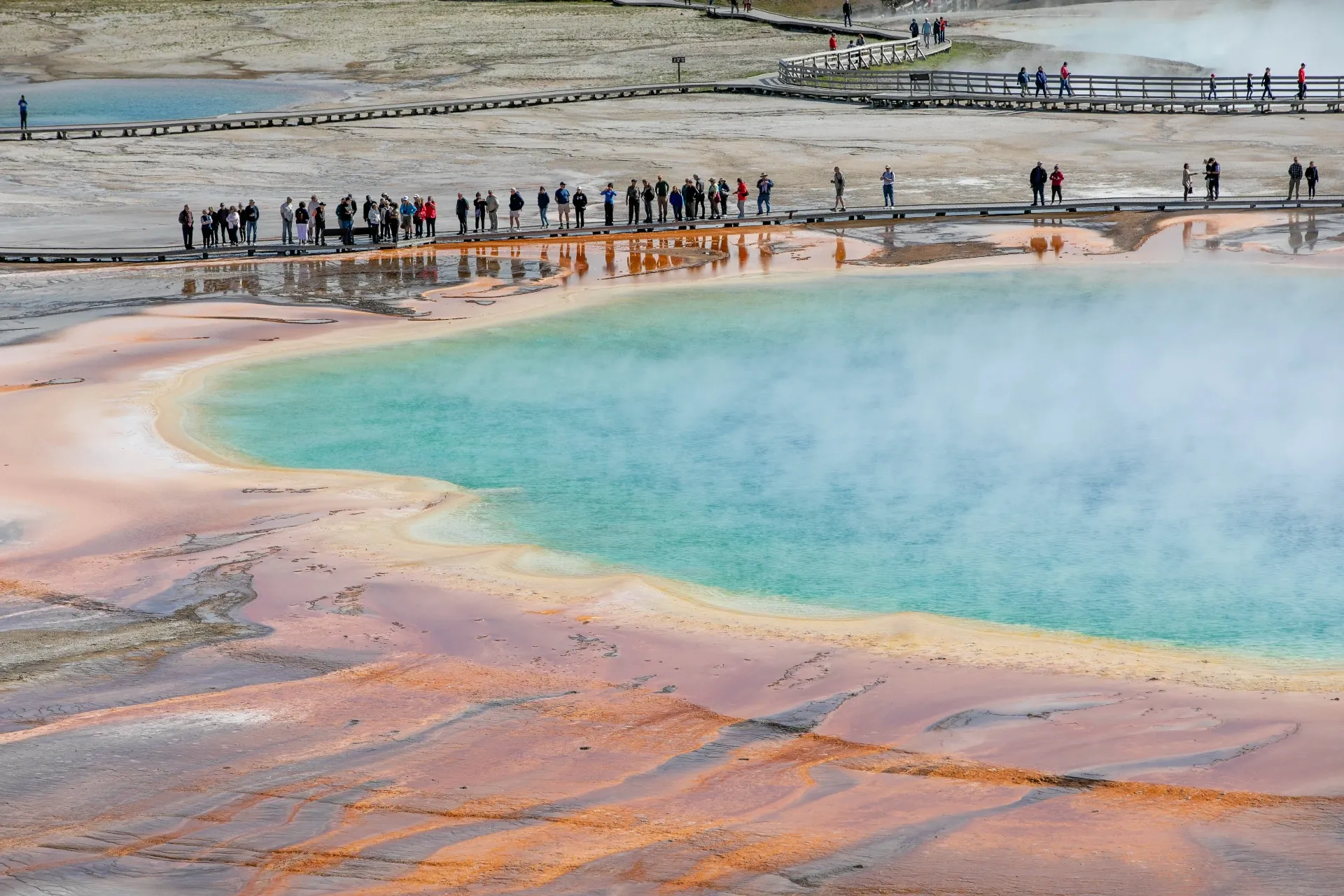
☀️ Timing Note
The Fairy Falls parking lot fills by 10 AM in summer. Arrive by 8:30 or visit after 4 PM.
Grand Canyon of the Yellowstone
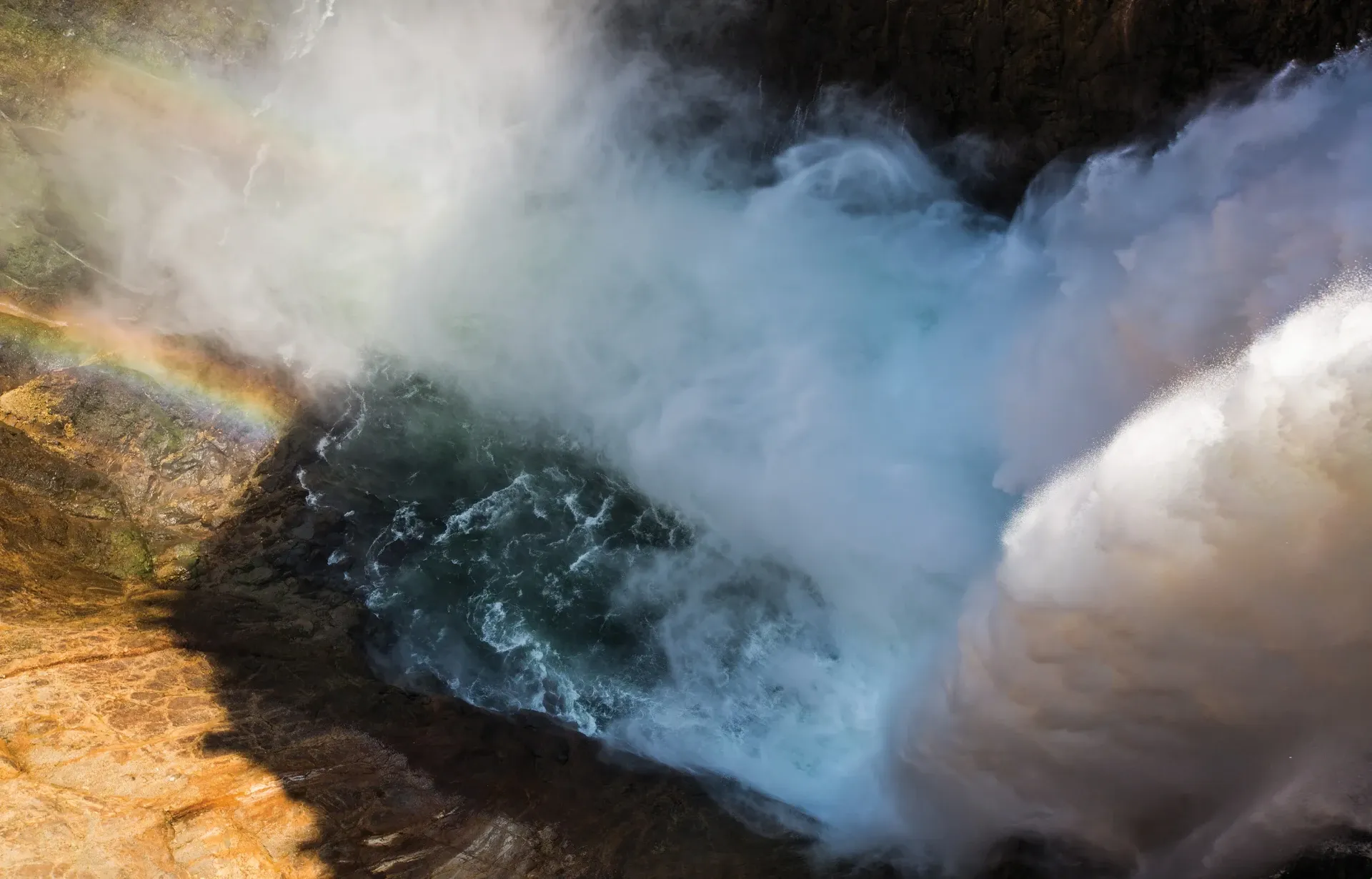
The Yellowstone River carved this 20-mile canyon up to 1,200 feet deep, exposing layers of yellow, orange, and pink rhyolite. The two major waterfalls — Upper Falls (109 ft) and Lower Falls (308 ft) — are among the most dramatic sights in any national park.
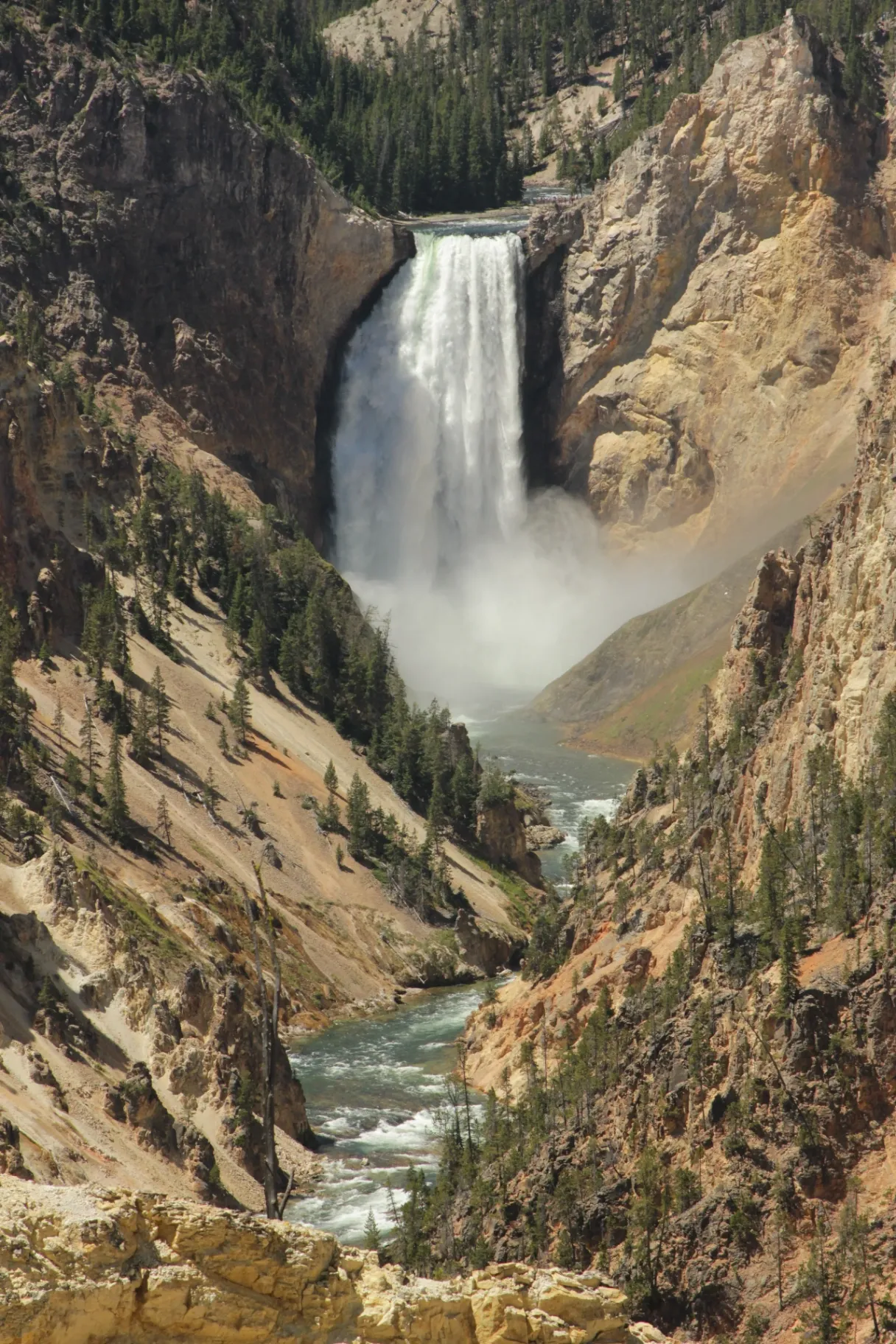
Best Viewpoints
- › Artist Point (South Rim) — The classic postcard view. Easy paved walkway.
- › Brink of the Lower Falls — Steep 600-step descent to stand at the edge. Rainbows in the spray.
- › Lookout Point — Panoramic canyon view; less crowded than Artist Point.
- › Uncle Tom's Trail — 328 steel steps into the canyon.
- › Brink of the Upper Falls — Short walk to overlook the 109-ft falls.
- › Inspiration Point — Wide canyon panorama from the North Rim.
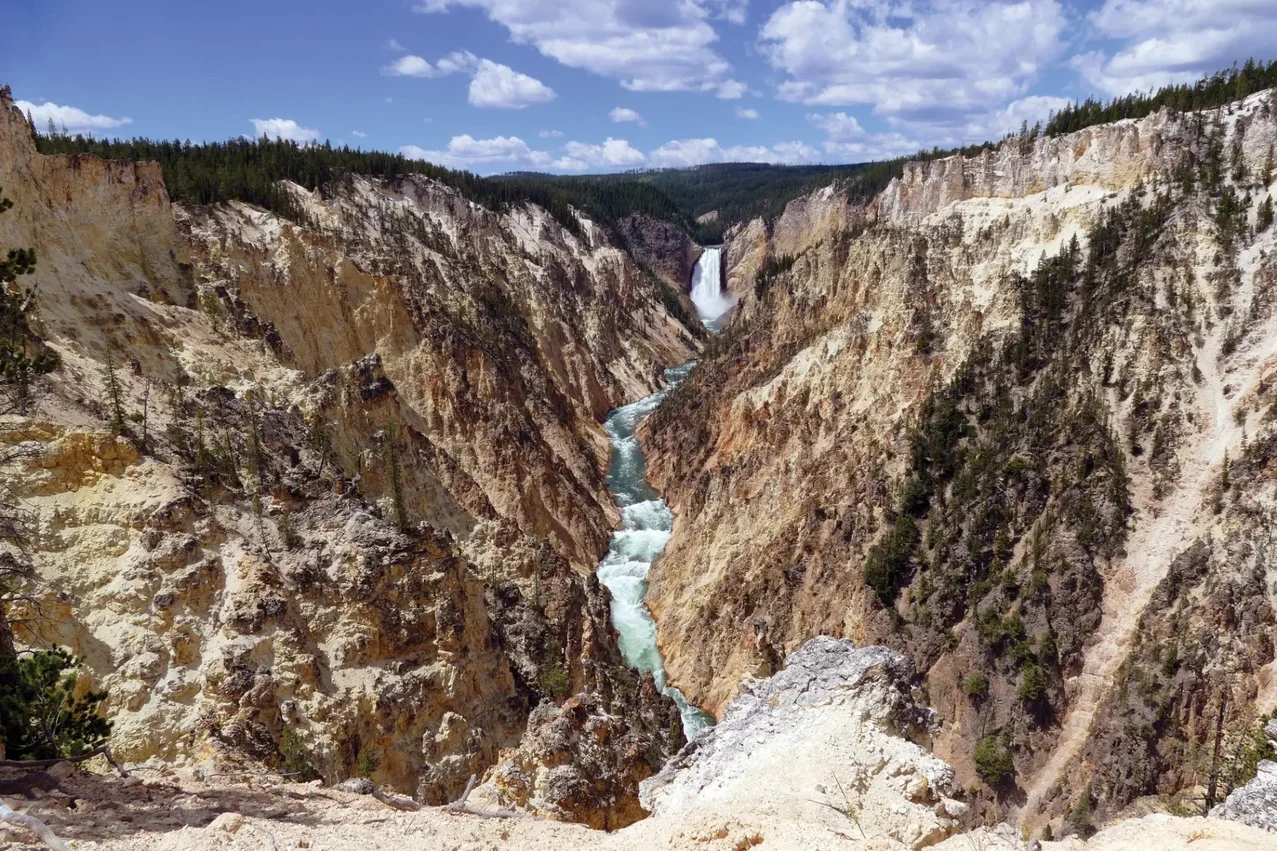
☀️ Planning Tip
Dedicate 2–3 hours. South Rim is easier; North Rim has more strenuous trails but fewer people. Morning light best for Artist Point photography.
Mammoth Hot Springs
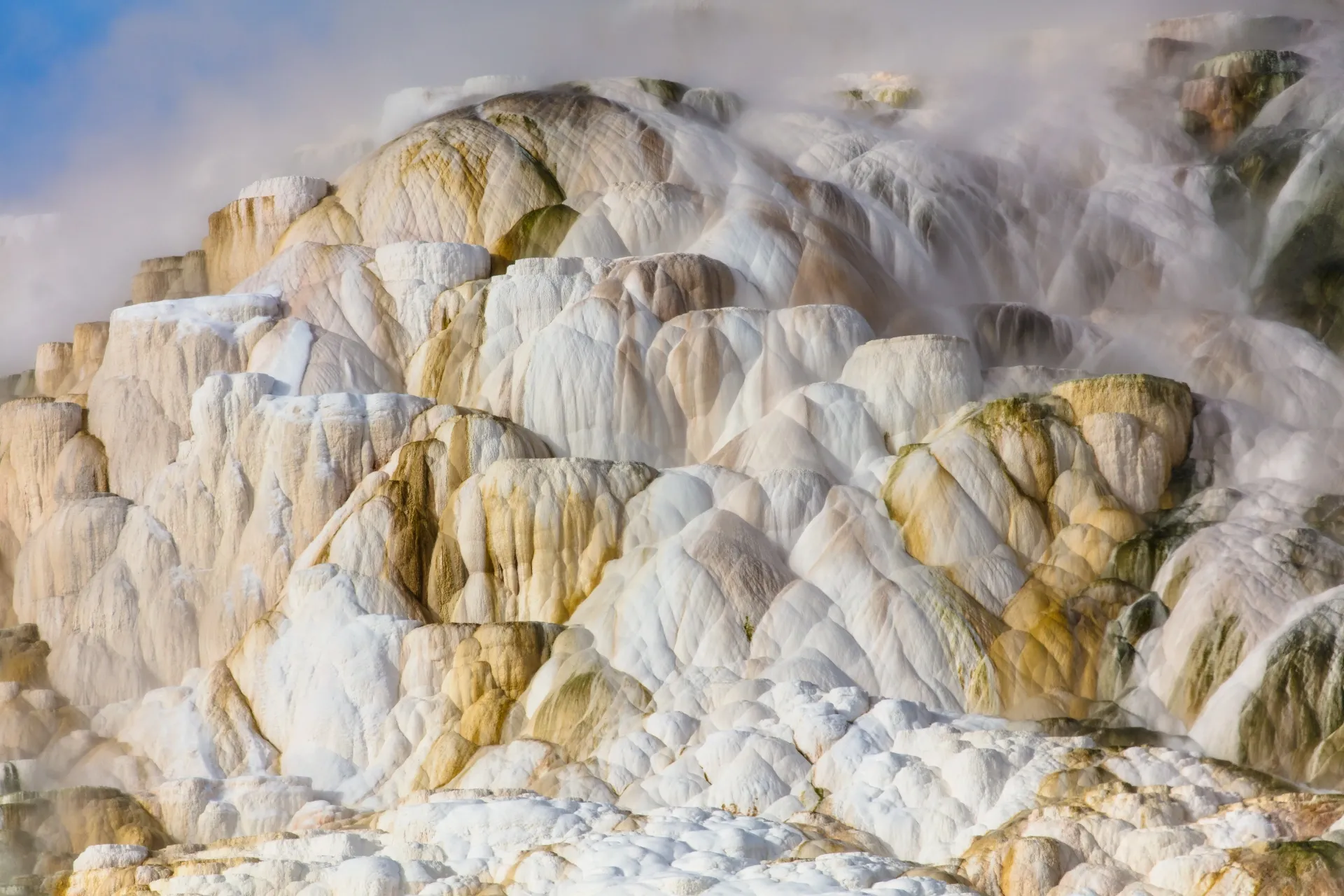
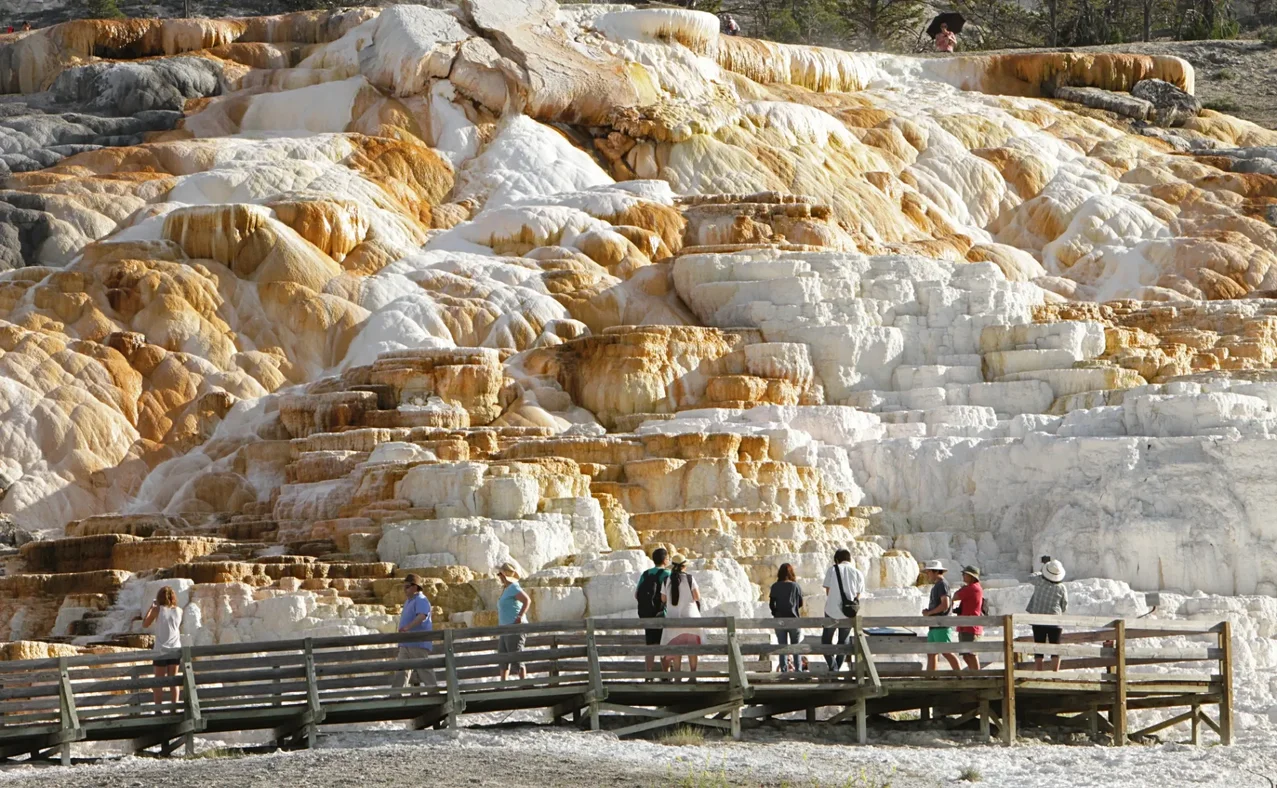
Unlike Yellowstone's other thermal features, Mammoth Hot Springs is built from limestone — not silica. Hot water dissolves calcium carbonate underground and deposits it as travertine terraces on the surface.
Highlights
- › Canary Spring — Vibrant yellow and white cascading terraces.
- › Palette Spring — Brilliantly colored formations on the Lower Terrace boardwalk.
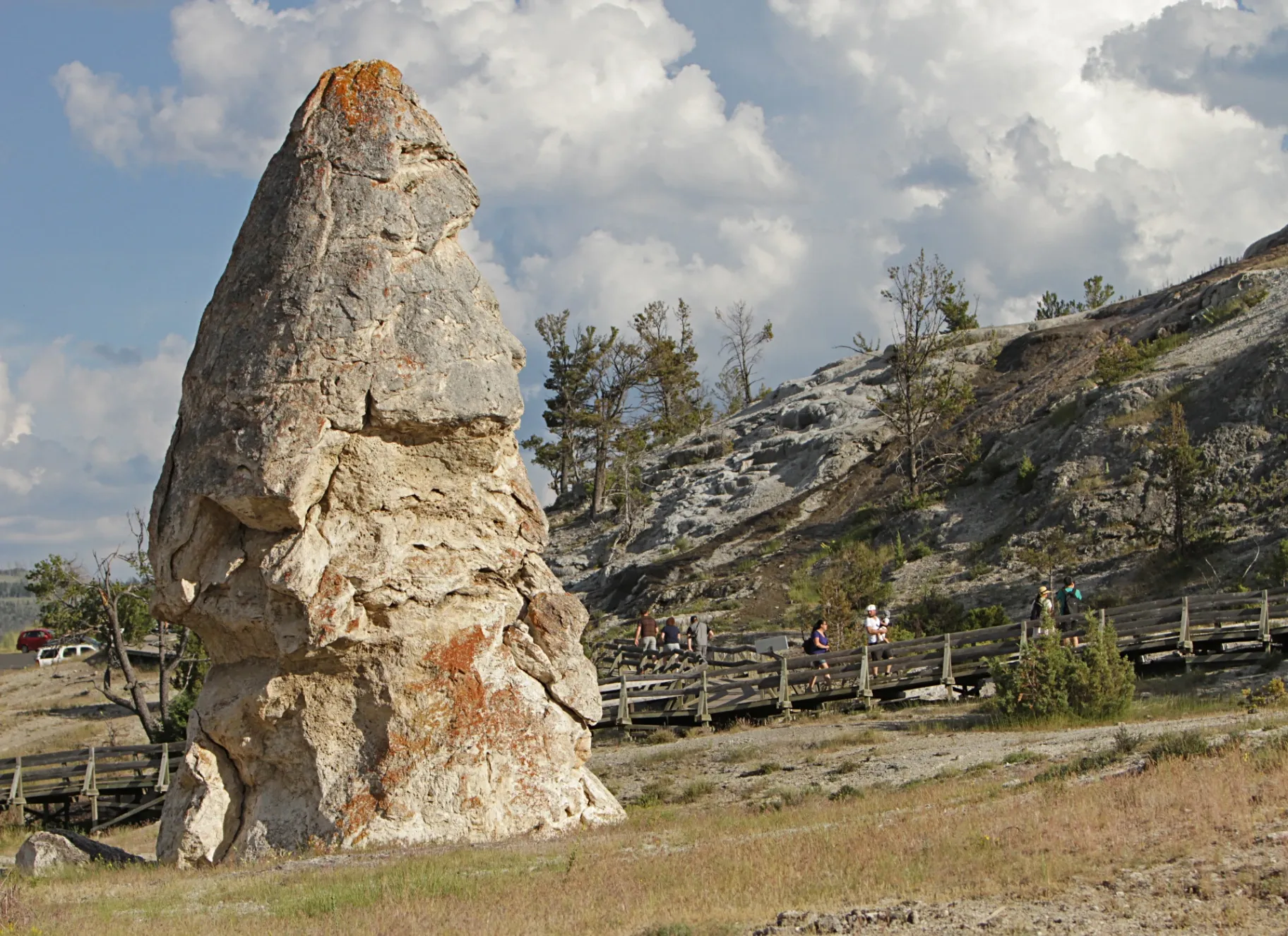
- › Liberty Cap — A 37-foot dormant hot spring cone.
- › Upper Terrace Drive — One-way loop road with overlooks.
- › Elk on the lawns — Bull elk frequently graze on the Mammoth Hotel lawn during fall.
Lamar Valley & Wildlife Viewing
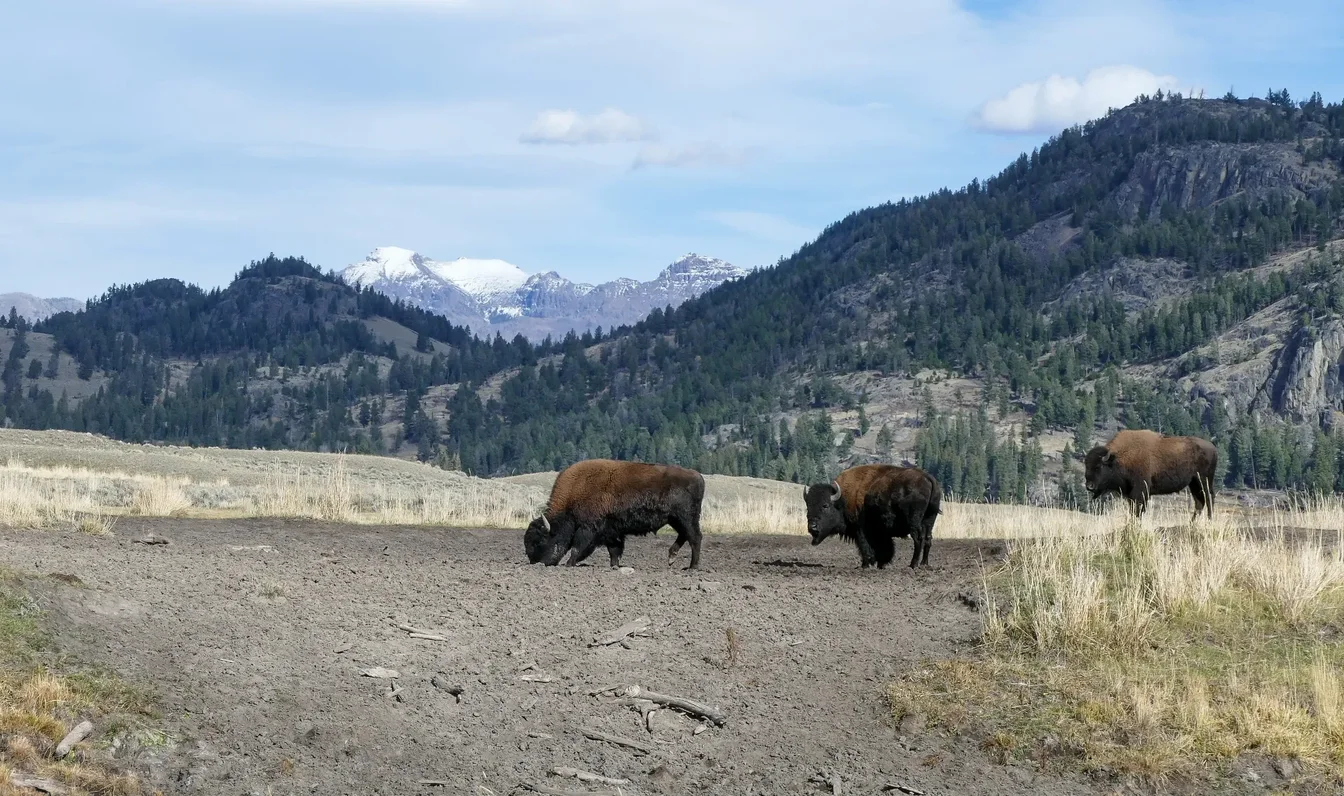
Known as "America's Serengeti," the Lamar Valley is the premier wildlife viewing destination in Yellowstone. For a complete species-by-species guide, see our Yellowstone Wildlife Guide.
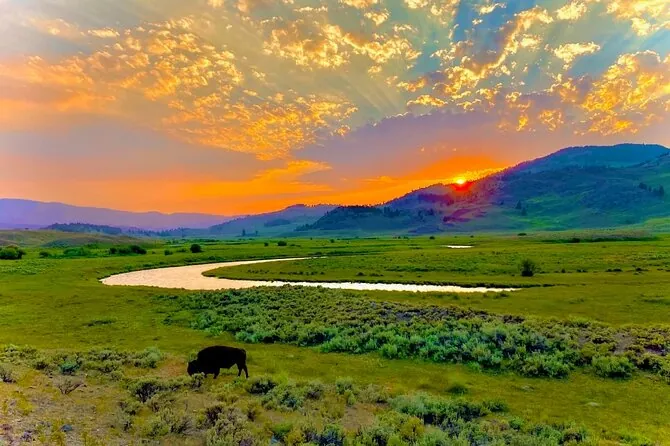
What You'll See
- › Bison — Herds of hundreds grazing the valley floor.
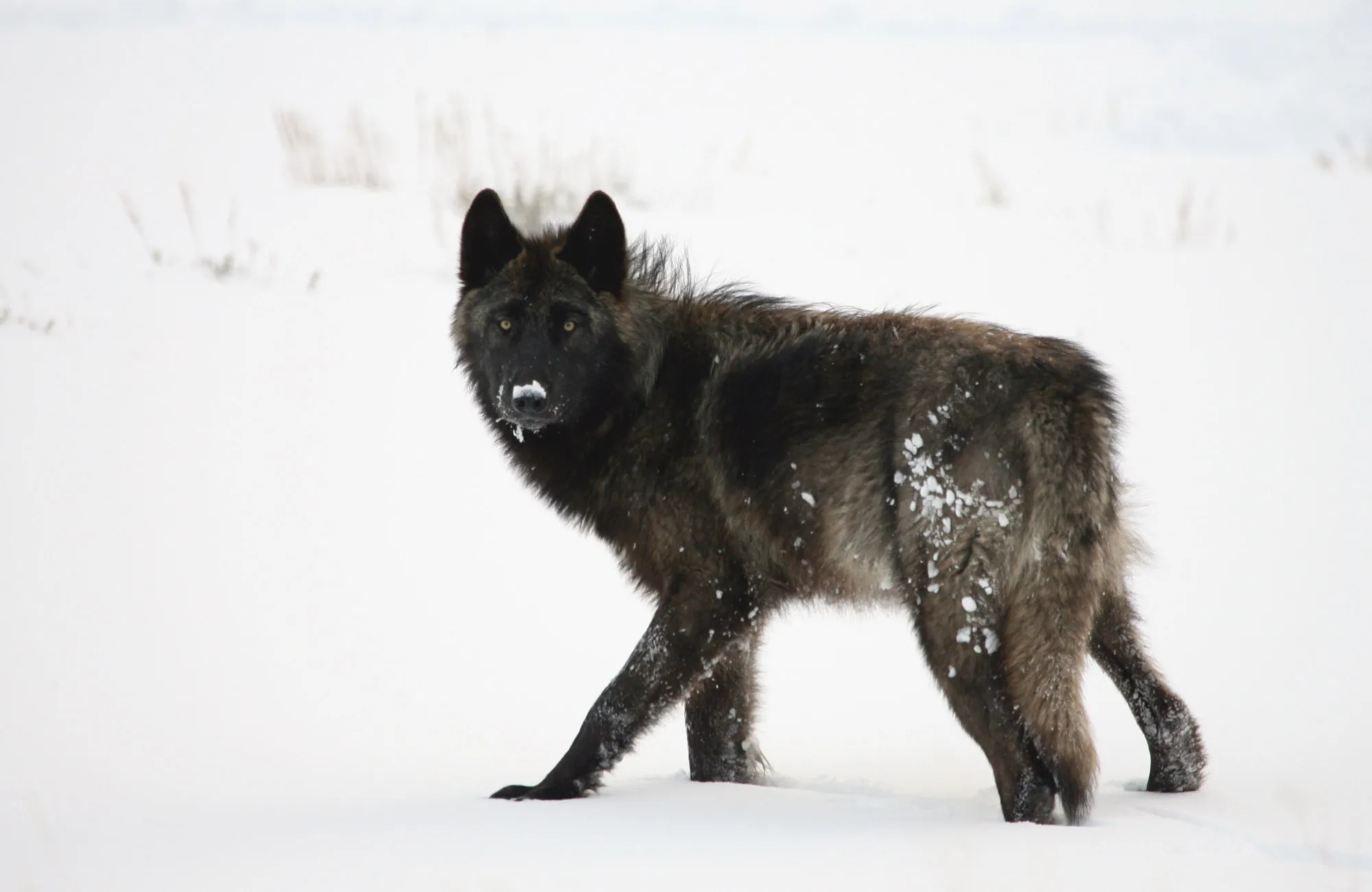
- › Wolves — Best spotted at dawn and dusk with a spotting scope.
- › Grizzly Bears — Frequently seen in spring and early summer.
- › Pronghorn — Common in the eastern valley.
- › Bighorn Sheep — On cliffs near the Northeast Entrance.
Yellowstone Lake & West Thumb
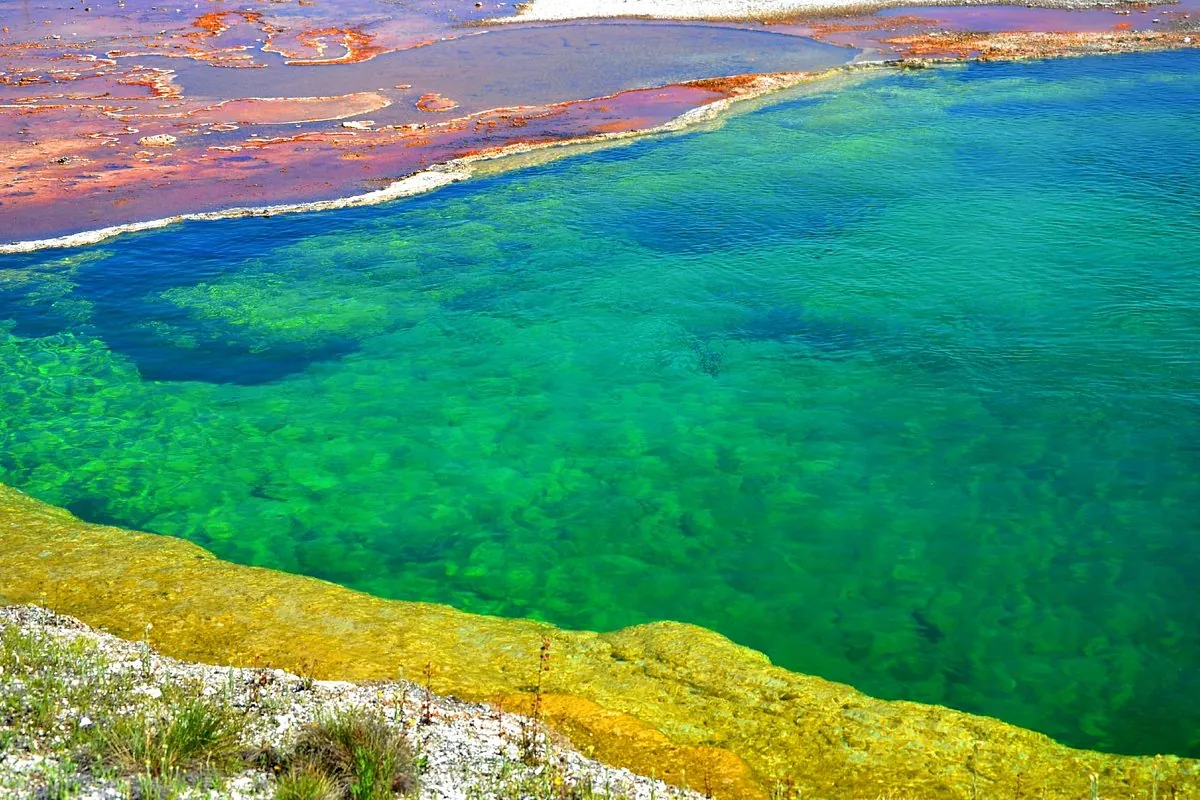
Yellowstone Lake is the largest high-altitude lake in North America — 136 square miles at 7,733 feet elevation.
Highlights
- › West Thumb Geyser Basin — Boardwalk loop with lakeside hot springs.
- › Fishing Bridge — Historic bridge over the Yellowstone River outlet.
- › Lake Hotel — Historic 1891 hotel with stunning lake views.
- › Storm Point Trail — Easy 2.3-mile loop along the lakeshore.
- › Natural Bridge — A 51-foot rock arch; 2.5-mile walk.
Norris Geyser Basin & Madison Area
Norris is the hottest and most dynamic thermal area in the park. Steamboat Geyser — the world's tallest — erupts here unpredictably to 300+ feet.
Norris Highlights
- › Steamboat Geyser — Unpredictable but spectacular.
- › Porcelain Basin — Alien landscape of milky blue pools and hissing vents.
- › Echinus Geyser — One of the largest acidic geysers in the world.
Madison Area
- › Madison Junction — Where the Firehole and Gibbon Rivers meet; excellent elk viewing at dawn.
- › Gibbon Falls — An 84-foot waterfall visible from a roadside pullout.
- › Artists Paintpots — A short 1-mile loop to bubbling mud pots.
Area-by-Area Planning Map
Use this quick-reference table to plan your days by area.
| Area | Time Needed | Top Attraction | Best For |
|---|---|---|---|
| Upper Geyser Basin | 2–4 hours | Old Faithful + boardwalk loop | Geysers, hot springs |
| Grand Prismatic | 1–2 hours | Fairy Falls Overlook | Photography, geology |
| Grand Canyon | 2–3 hours | Artist Point + Brink of Lower Falls | Waterfalls, hiking |
| Mammoth Hot Springs | 1–2 hours | Canary Spring terraces | Geology, elk viewing |
| Lamar Valley | Half day | Dawn wildlife safari | Wolves, bears, bison |
| Yellowstone Lake | 1–2 hours | West Thumb Geyser Basin | Lakeside thermal features |
| Norris Geyser Basin | 1–2 hours | Porcelain Basin | Extreme geothermal |
For a complete day-by-day schedule, check our 3-Day Yellowstone Itinerary.
Seasonal Tips
☀️ Summer (Jun–Aug)
Peak season
All roads open, longest daylight. Start early (7 AM entry). Use the park app for eruption predictions.
🌿 Spring (Apr–May)
Shoulder season
Roads open in phases — check our Road Openings Guide. Baby animals everywhere.
🍂 Fall (Sep–Oct)
Low season
Elk rut in Mammoth, fall colors, dramatically fewer crowds. See our Best Time to Visit guide.
❄️ Winter (Nov–Mar)
Oversnow only
Most roads close. Access via snowmobile or snowcoach. Surreal beauty, virtually no crowds.
Where to Stay
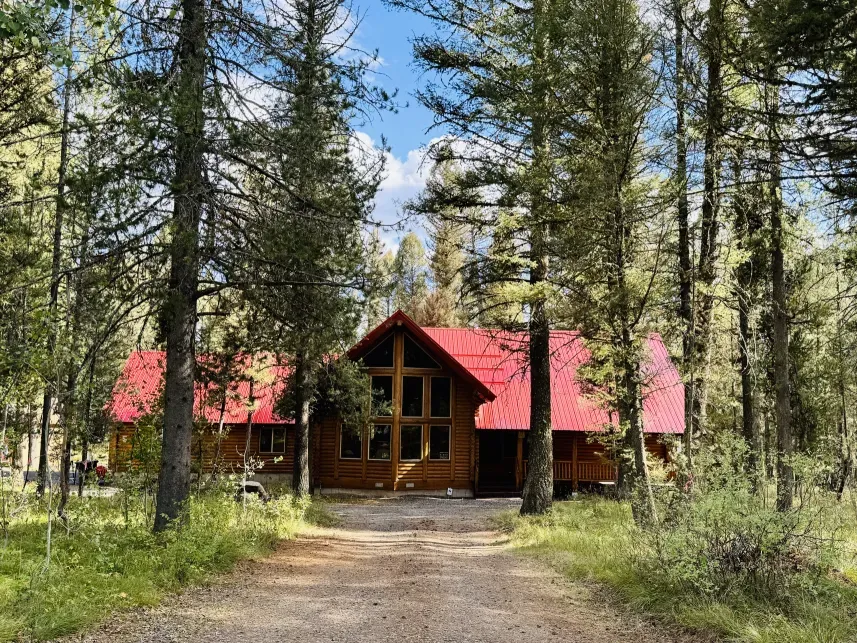
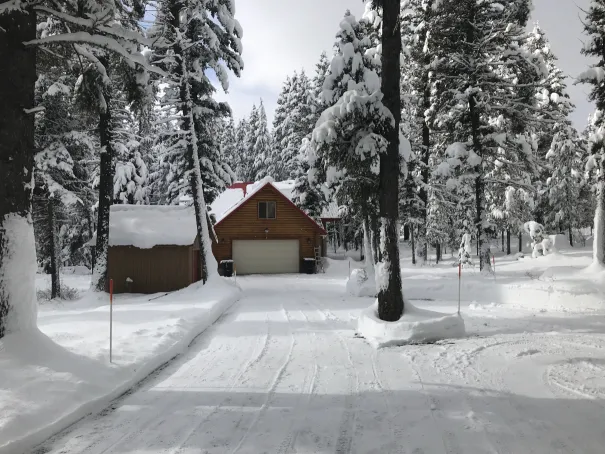
We recommend staying in Island Park, Idaho — 45 minutes from Yellowstone's West Entrance, with more space, lower prices, and a quieter setting. Our cabin sleeps 12 with a hot tub, fire pit, full kitchen, and direct trail access.
Compare gateway towns in our Island Park vs. Yellowstone Border Towns guide.
Frequently Asked Questions
What is the #1 thing to see in Yellowstone?
Old Faithful and the Upper Geyser Basin — the world's largest concentration of geysers in one walkable area. Grand Prismatic Spring is a close second.
Can you see Yellowstone and Grand Teton in one trip?
Absolutely. One $35 vehicle pass covers both parks for 7 days. They're connected by highway.
How many days do you need for Yellowstone?
3 days lets you hit every major area. 5–7 days is ideal for a relaxed pace including Grand Teton.
What's the best time of year to visit?
June–September offers all roads open and best weather. September is the sweet spot — fewer crowds, fall colors, elk rut.
Is Island Park a good base for Yellowstone?
Yes — 45 minutes from the West Entrance, with more space and lower prices than West Yellowstone or Jackson.