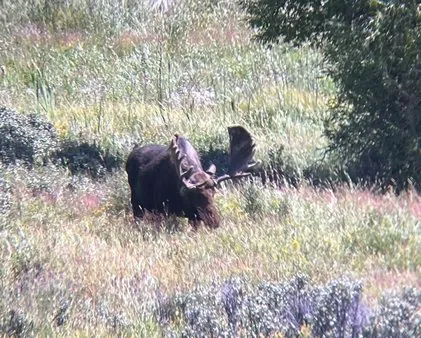
The Last Great Temperate Ecosystem
Yellowstone and Grand Teton aren't just national parks — they anchor the largest intact temperate ecosystem in the lower 48 states. Spanning roughly 22 million acres of protected and wild land, the Greater Yellowstone Ecosystem supports an unbroken chain of megafauna that has existed here since the Pleistocene. Bears, wolves, bison, elk, moose, and eagles are not just present — they're thriving.
Wildlife viewing is the number one reason many visitors plan their Yellowstone trip, and this guide is designed to be the only resource you need. Below you'll find detailed profiles for 12 iconic species — including the best locations, times of year, times of day, historical context, population data, and field-tested pro tips for maximizing sightings.
Whether you're a first-time visitor hoping to glimpse a bison or a seasoned wildlife photographer chasing wolves in the Lamar Valley, read on — then plan your basecamp in Island Park, Idaho, just 45 minutes from the West Entrance.
What You'll Need
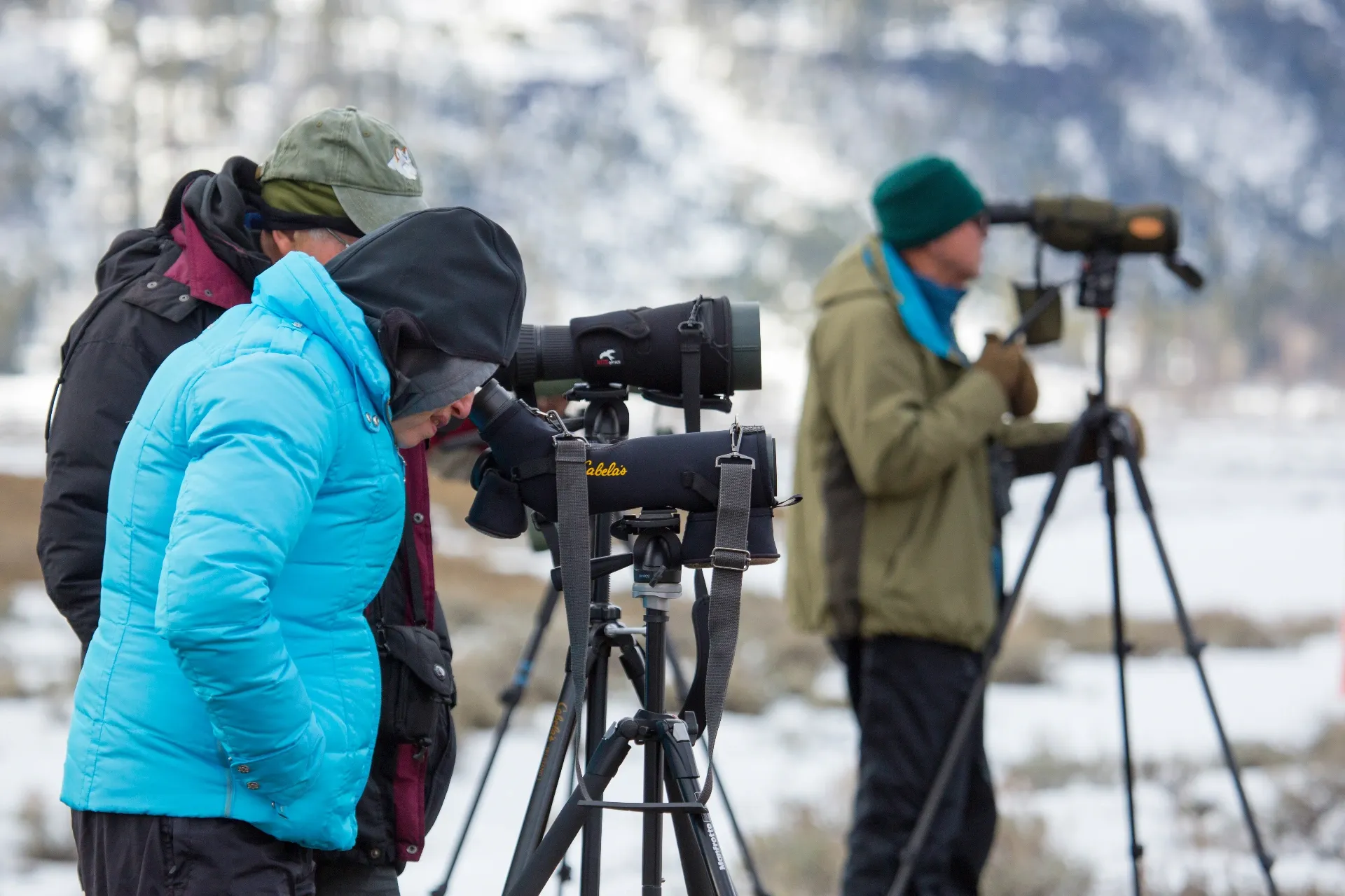
Binoculars are the minimum for serious wildlife viewing. A spotting scope dramatically increases your success — especially for wolves and bears. Most sightings happen at 200+ yards. Patience and early mornings matter more than expensive gear.
Grizzly Bear
Ursus arctos horribilis
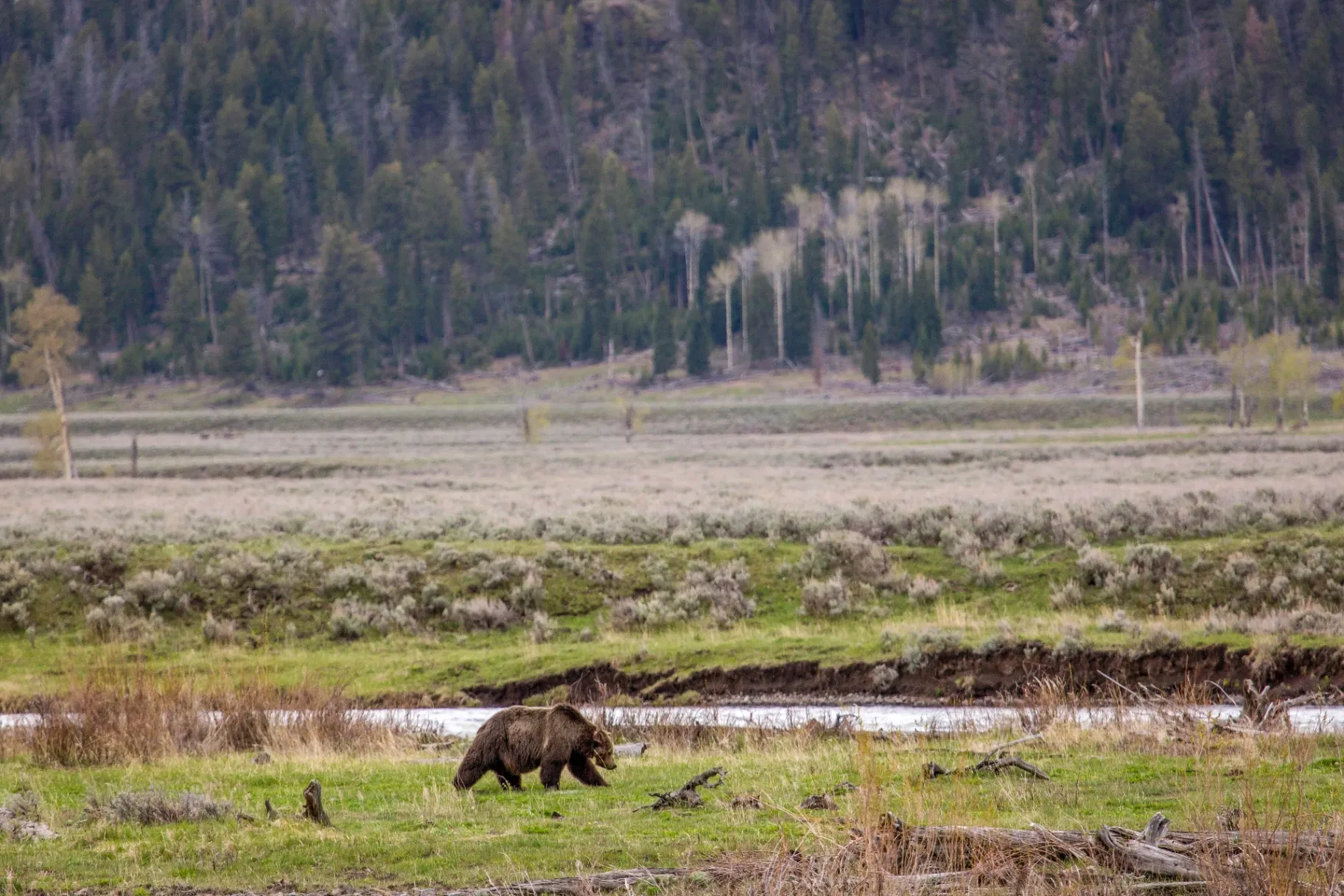
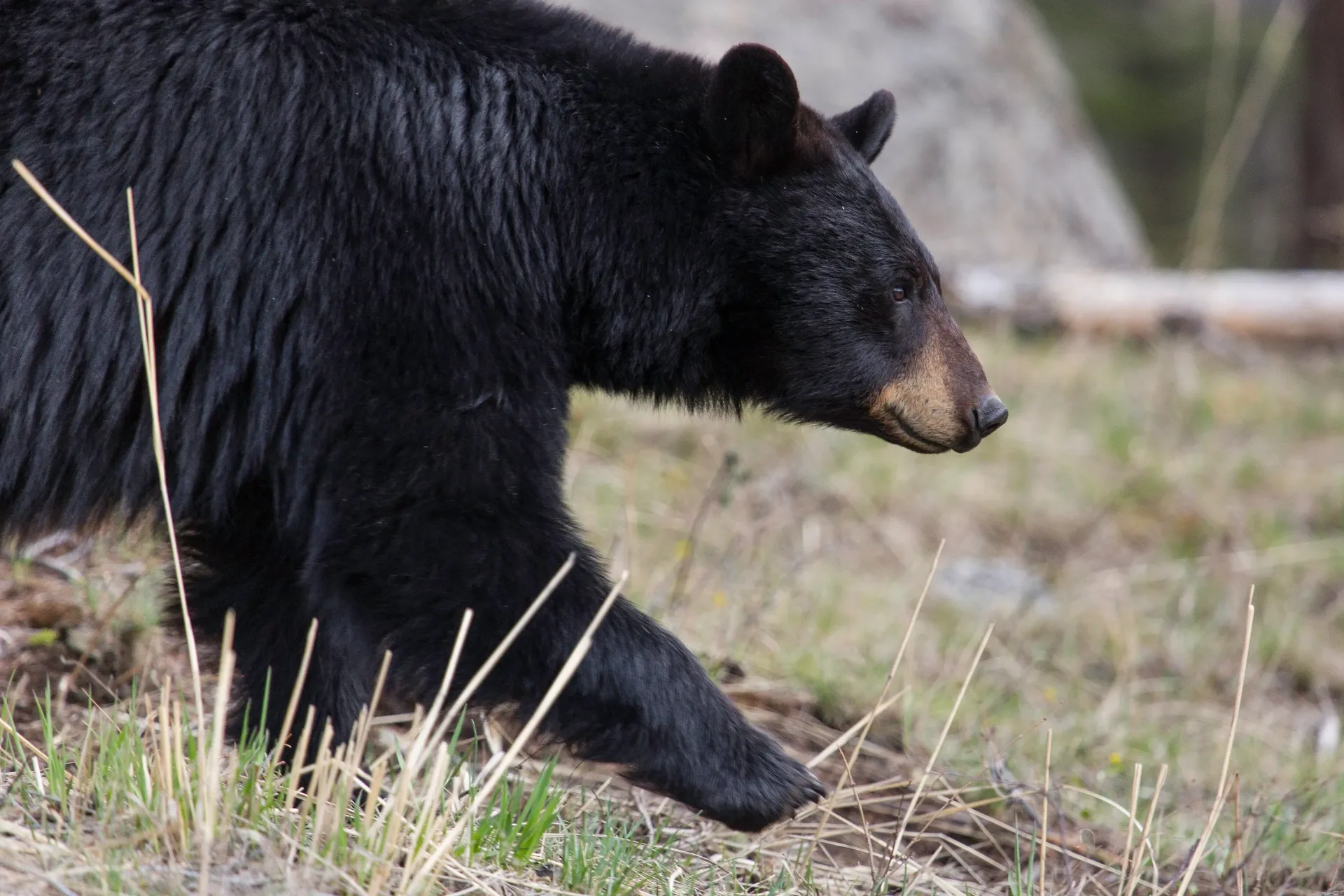
The grizzly bear is the apex predator of the Greater Yellowstone Ecosystem and arguably the park's most iconic animal. Distinguished from black bears by their prominent shoulder hump, dished facial profile, and larger size (males average 400–600 lbs), grizzlies command respect and awe in equal measure.
Grizzlies were listed as threatened under the Endangered Species Act in 1975, when Greater Yellowstone's population had dwindled to as few as 136 bears. Decades of habitat protection and management grew the population to over 700 — one of the greatest conservation comebacks in American history. Today, Yellowstone is one of the last strongholds for grizzlies in the lower 48.
🕐 Best Time of Year
May–June (spring emergence) and September–October (hyperphagia feeding)
🌅 Best Time of Day
Sunrise to 9 AM, and the last two hours before sunset
Estimated Population
~728 in the Greater Yellowstone Ecosystem (2023 estimate)
Best Places in Yellowstone
- › Lamar Valley — the most consistent location for spring grizzly sightings
- › Hayden Valley — large open meadows with excellent visibility
- › Tower-Roosevelt area — a bear corridor in spring
- › Dunraven Pass — roadside sightings common in early summer
- › Slough Creek — quieter alternative with reliable activity
Best Places in Grand Teton
- › Moose-Wilson Road — berry patches attract bears in late summer
- › Pilgrim Creek area
- › Pacific Creek corridor
Pro Tips
- • Bring a spotting scope — most sightings are at 200+ yards in open valleys.
- • Spring mornings in Lamar Valley offer the highest probability of sightings.
- • Bears dig for camas bulbs in meadows in May — look for freshly turned earth.
- • During fall hyperphagia, bears feed up to 20 hours per day and are highly visible.
- • Join a ranger-led wildlife program for expert-guided viewing.
Black Bear
Ursus americanus
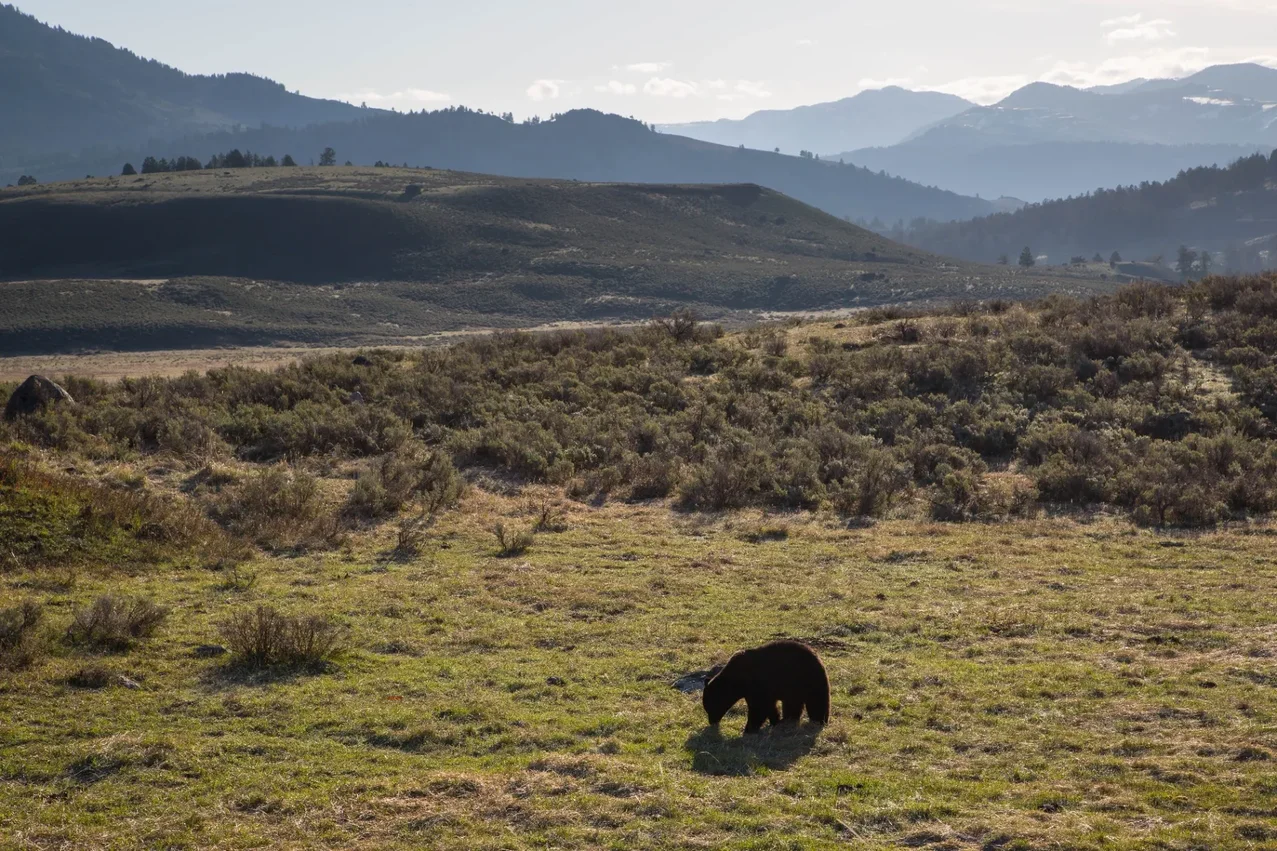
Smaller and more adaptable than grizzlies, black bears are actually more numerous in Yellowstone but can be trickier to spot because they favor forest edges. Despite their name, Yellowstone black bears can be brown, cinnamon, or even blonde — making color an unreliable identifier. Look instead for their straight facial profile and lack of a shoulder hump.
In the early 1900s, black bears famously begged for food along Yellowstone roads — a practice the park ended in the 1970s. Today's bears are wild and wary, making genuine sightings far more rewarding.
🕐 Best Time of Year
May–June (post-hibernation) and September–October (fall feeding)
🌅 Best Time of Day
Dawn and dusk — though daytime sightings are common in spring
Estimated Population
~500–650 in Yellowstone National Park
Best Places in Yellowstone
- › Tower-Roosevelt to Lamar Valley corridor
- › Mammoth to Tower road — one of the best stretches for roadside sightings
- › Dunraven Pass
- › Near Bridge Bay and Fishing Bridge
Best Places in Grand Teton
- › Moose-Wilson Road — perhaps the best road in either park for black bears
- › Death Canyon trailhead area
Pro Tips
- • Don't rely on color alone — many Yellowstone black bears are brown or cinnamon.
- • Look for claw marks on aspen trees, a sign of recent activity.
- • The Tower-Mammoth road is a spring hotspot — drive slowly after dawn.
- • Black bears climb trees readily; grizzlies generally do not. This is a useful ID tip.
Gray Wolf
Canis lupus
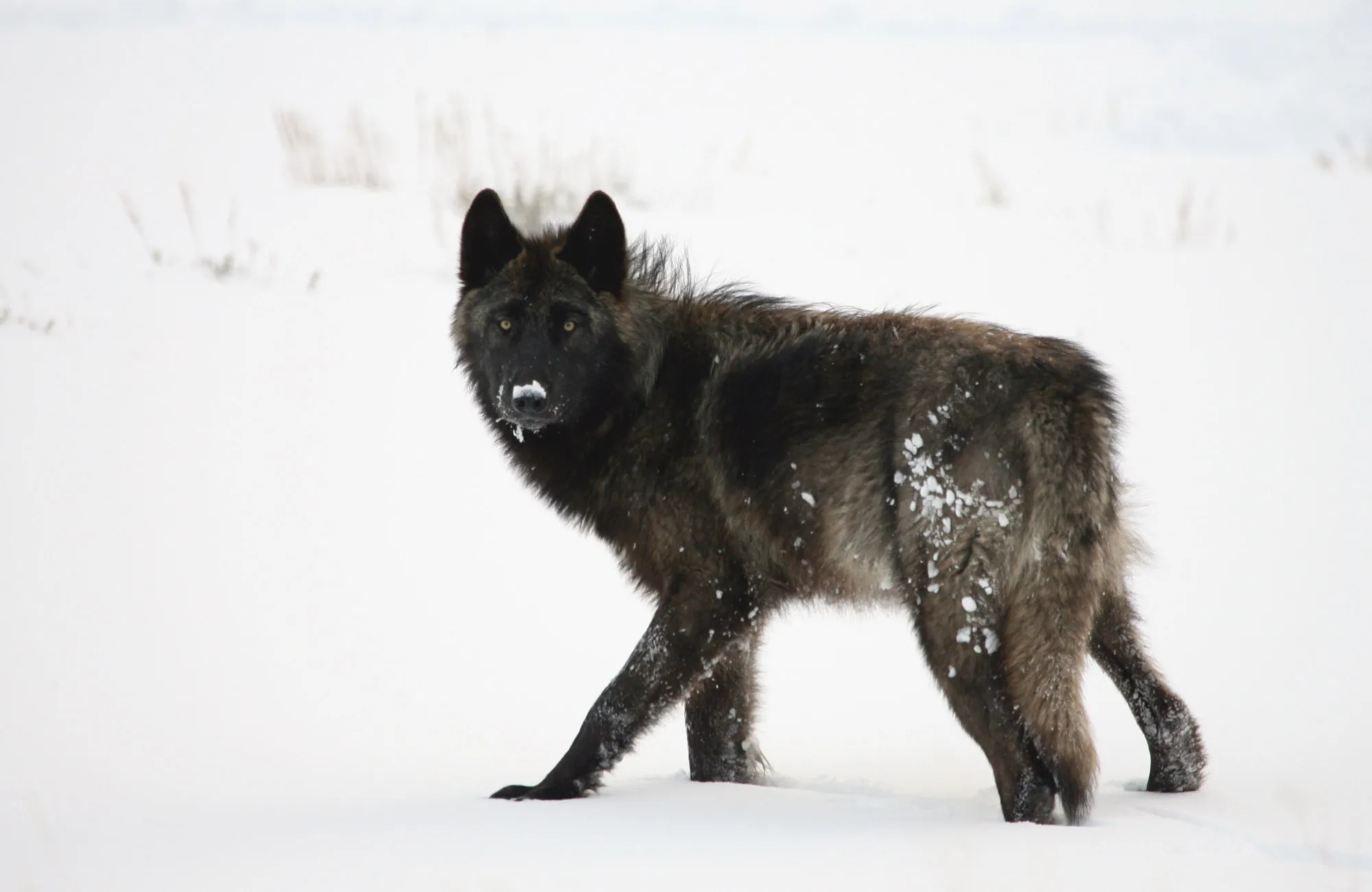
Yellowstone is one of the best places on Earth to see wild wolves. After being extirpated in the 1920s, 31 gray wolves were reintroduced from Canada in 1995–96. The reintroduction triggered one of ecology's most famous trophic cascades — wolves reduced overgrazing elk, allowing willows and aspens to recover, which stabilized riverbanks and brought back songbirds and beavers.
The 1995 wolf reintroduction is considered one of the most successful conservation experiments in history. The original 31 wolves have given rise to a population that now exceeds 500 across the Greater Yellowstone Ecosystem. The "Druid Peak Pack" became world-famous, and wolf-watching has since generated over $35 million annually for the local economy.
🕐 Best Time of Year
Winter (highest success rate, fewer crowds), Spring (denning season), and early summer
🌅 Best Time of Day
First light and late evening — wolves are most active at the edges of day
Estimated Population
~108 wolves in 10 packs within Yellowstone (2023 count)
Best Places in Yellowstone
- › Lamar Valley — the most consistent wolf-watching location in the world
- › Slough Creek — den sites visible from the road in spring
- › Northeast Entrance corridor
- › Hayden Valley — the Canyon pack is sometimes visible
Pro Tips
- • A spotting scope is essential — wolves are often 500+ yards away.
- • Look for wolf-watchers with scopes already set up; they'll usually let you look.
- • Winter visits dramatically increase your odds — wolves are active, landscapes are open, and crowds are minimal.
- • Dawn arrivals in Lamar Valley are non-negotiable for serious wolf-watchers.
- • Follow Yellowstone Wolf Tracker reports for current pack locations.
American Bison
Bison bison
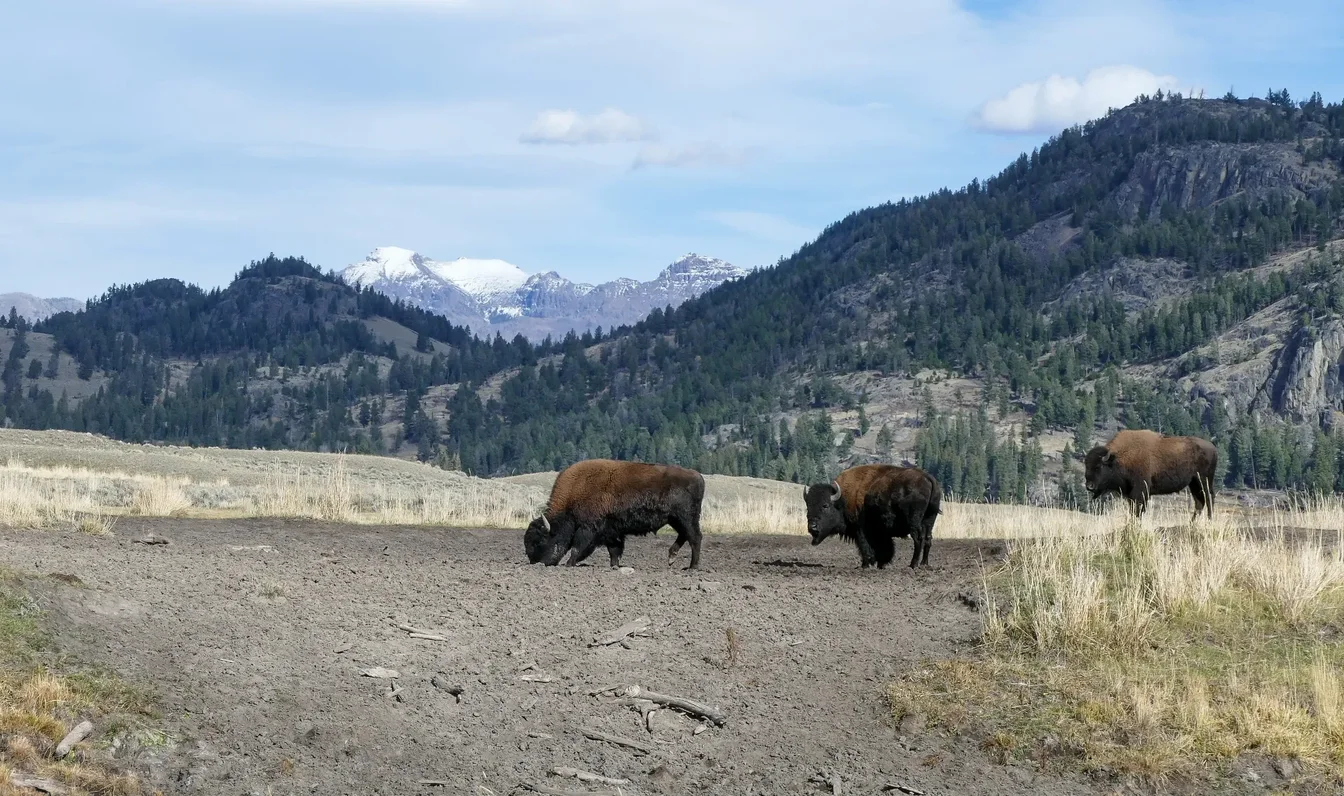
The American bison is Yellowstone's most commonly seen large mammal and the national mammal of the United States. Males can weigh over 2,000 lbs and run up to 35 mph — faster than any human. Despite their seemingly docile nature, bison injure more visitors than any other animal in Yellowstone.
By 1902, poaching had reduced Yellowstone's bison to just 23 animals — among the last wild bison in North America. The park's protection and a captive breeding program brought them back from the brink. Today's herd of nearly 6,000 descends from those survivors and represents one of the few genetically pure populations remaining.
🕐 Best Time of Year
Year-round — spring (calving) and late summer (rut) are most dramatic
🌅 Best Time of Day
Any time — bison are active throughout the day
Estimated Population
~5,900 in Yellowstone — the largest wild, free-ranging herd on public land in the U.S.
Best Places in Yellowstone
- › Lamar Valley — massive herds year-round
- › Hayden Valley — frequently seen near the Yellowstone River
- › Madison River — bison along the river are a photographer's dream
- › Near Old Faithful — they wander through the geyser basins
- › Road corridors throughout the park — bison create famous 'traffic jams'
Best Places in Grand Teton
- › Antelope Flats — one of the best spots in the Tetons
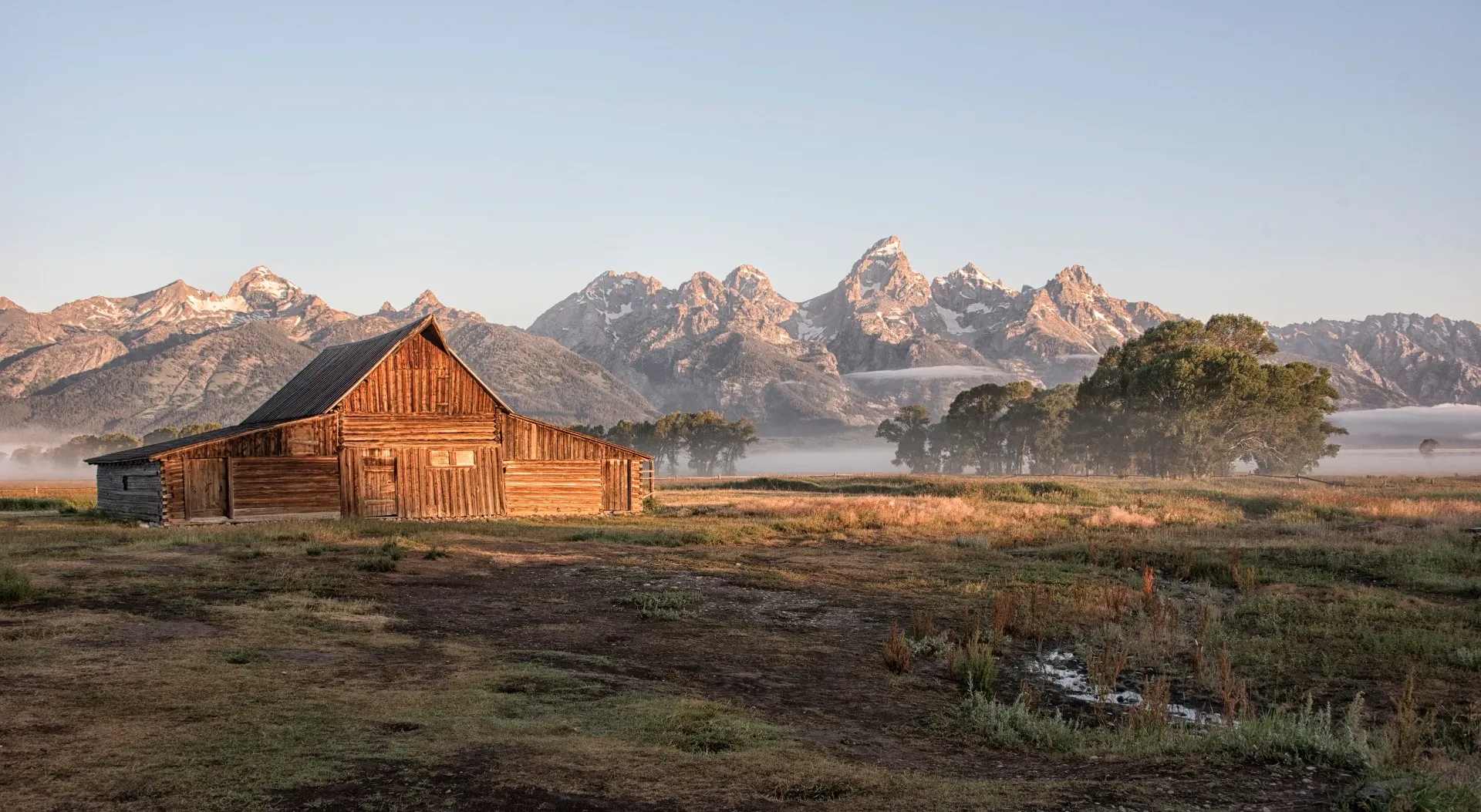
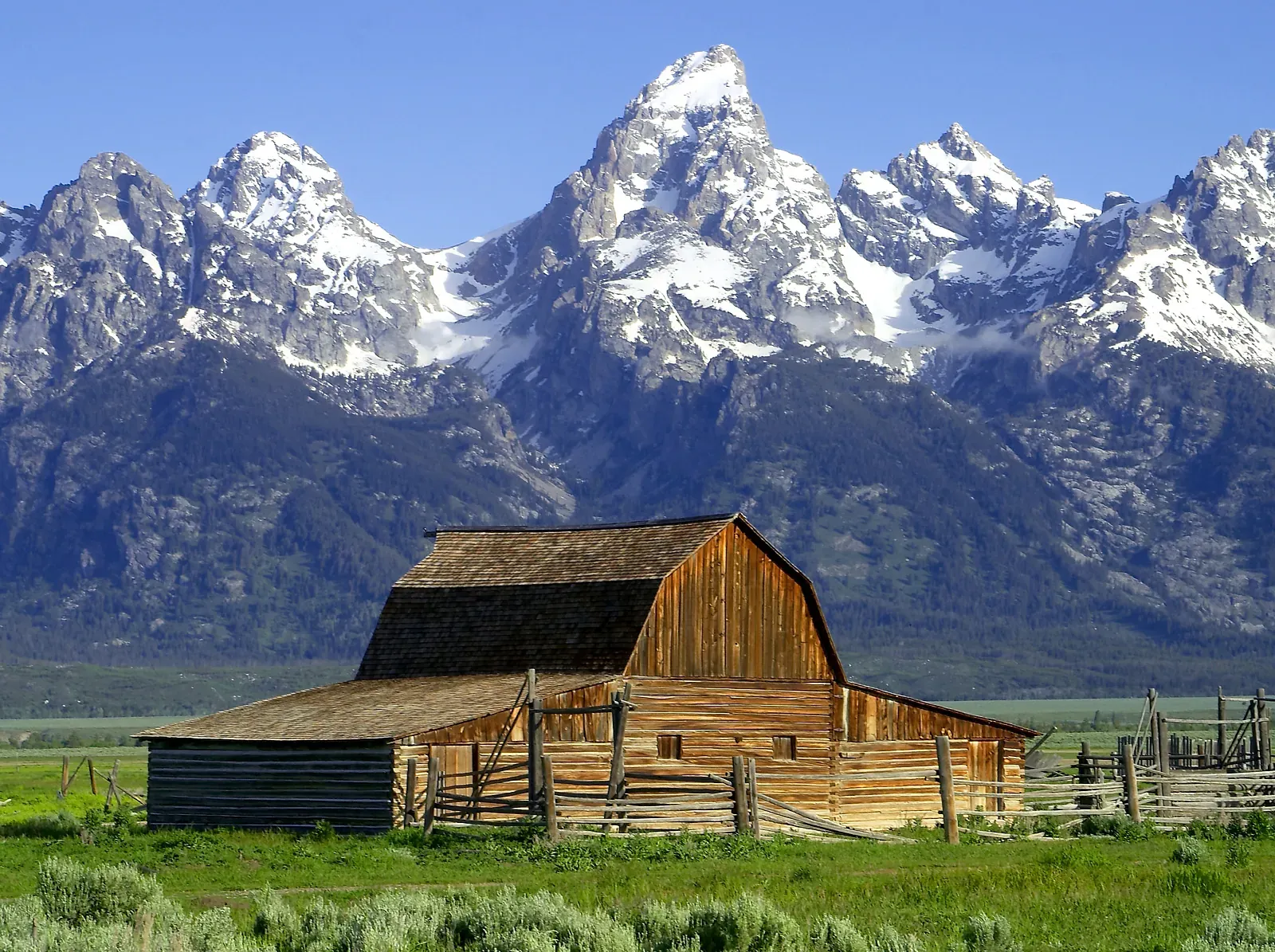
- › Mormon Row — bison with the Tetons as backdrop
Pro Tips
- • Bison are the most dangerous animal in the park — maintain at least 25 yards.
- • Bison 'jams' can last 30+ minutes. Turn off your engine and enjoy.
- • The rut (late July–August) features dramatic sparring between bulls.
- • Spring calves ('red dogs') appear in April–May and are irresistibly photogenic.
- • Early morning at Hayden Valley offers bison in mist — iconic photography conditions.
Elk
Cervus canadensis
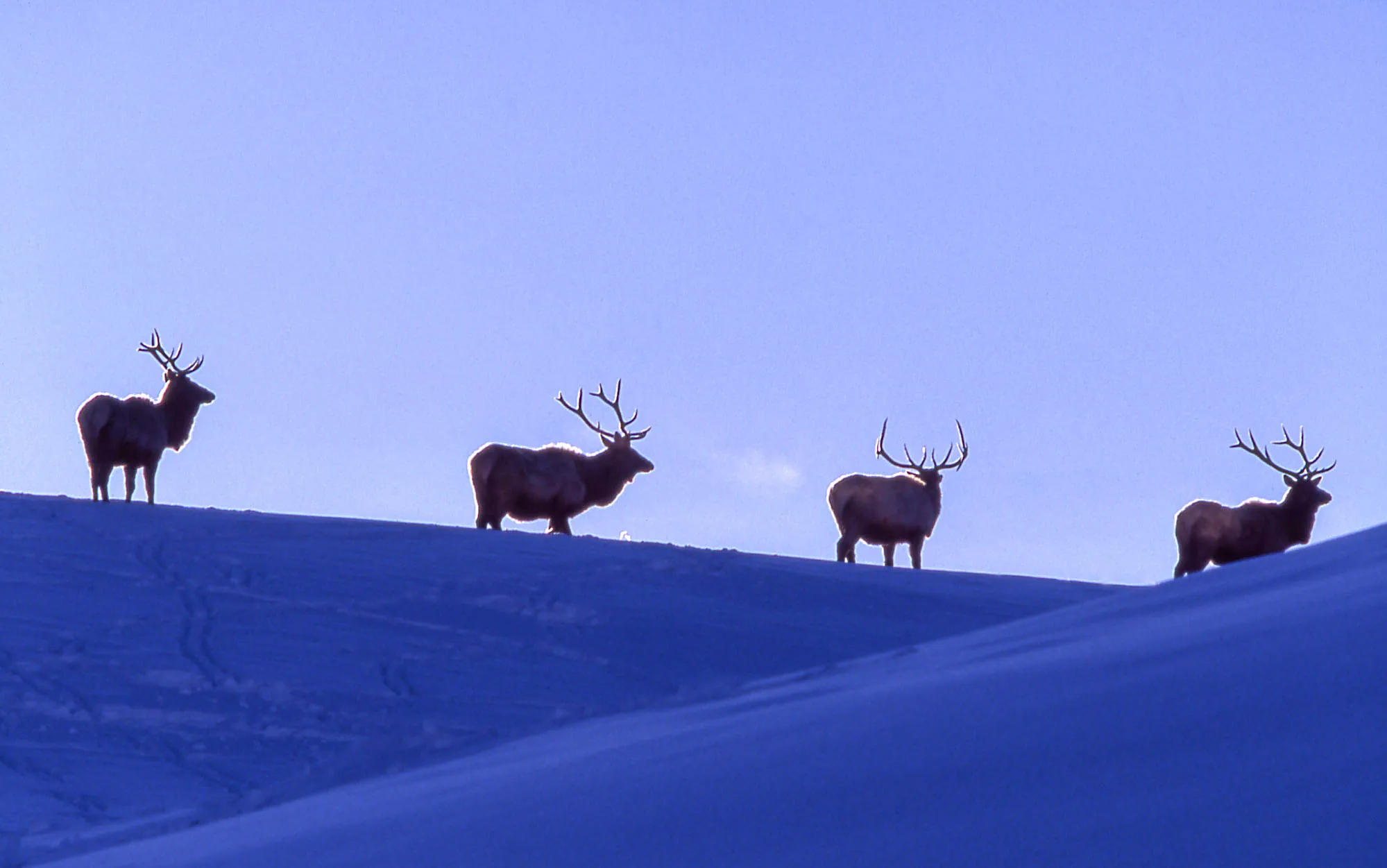
Elk are the most abundant large mammal in the Greater Yellowstone Ecosystem. During the September rut, bull elk bugling — a haunting, high-pitched call — is one of the most unforgettable wildlife experiences in North America. Bulls gather harems of cows and clash antlers with rivals in dramatic displays of dominance.
Elk have been central to Yellowstone's ecology since the park's founding. Their population dynamics drove the famous 'natural regulation' debate in the 1960s–80s, and their overgrazing of willows was one of the key motivations for wolf reintroduction in 1995.
🕐 Best Time of Year
September–October (rut) and May–June (calving)
🌅 Best Time of Day
Dawn and dusk — though Mammoth elk are visible all day
Estimated Population
~10,000–20,000 in the Greater Yellowstone Ecosystem
Best Places in Yellowstone
- › Mammoth Hot Springs — elk graze on the lawns and between buildings
- › Madison River area — large herds during fall rut
- › Lamar Valley
- › Near Tower Junction
Best Places in Grand Teton
- › National Elk Refuge (Jackson) — winter months host 7,000+ elk
- › Schwabacher Landing
- › Valley floor near Moose, WY
Pro Tips
- • September rut at Mammoth is world-class — bulls bugle between the buildings at dawn.
- • Bull elk are extremely aggressive during the rut. Keep 25+ yards — they will charge.
- • The Madison River at dusk during September is one of the best wildlife experiences anywhere.
- • Elk calving in late May–June happens in meadows near Lamar and Mammoth.
Moose
Alces alces shirasi
Moose are often the most sought-after animal in the Tetons — and surprisingly, they are commonly seen around Island Park, Idaho. The largest member of the deer family, bull moose can weigh 1,200 lbs and sport antlers spanning 6 feet. They are solitary, quiet, and favor riparian habitat — willow thickets, marshes, and riverbanks.
The Shiras moose subspecies found here is the smallest of North America's four subspecies but still impressively large. Their populations have declined somewhat in recent decades due to habitat loss and increasing temperatures, making each sighting especially meaningful.
🕐 Best Time of Year
Spring through fall — early morning and late evening
🌅 Best Time of Day
First light and last light — moose feed in low-visibility conditions
Estimated Population
~800 in the Greater Yellowstone Ecosystem — relatively rare in Yellowstone proper
Best Places in Yellowstone
- › Willow Park (between Mammoth and Norris) — the best spot in Yellowstone proper
- › Slough Creek area
- › Pelican Valley (backcountry)
Best Places in Grand Teton
- › Moose-Wilson Road — the single best road for moose in either park
- › Oxbow Bend — especially at dawn
- › Schwabacher Landing
- › Willow Flats near Jackson Lake Lodge
- › Snake River corridor
Pro Tips
- • Grand Teton is far better for moose than Yellowstone — plan accordingly.
- • Moose-Wilson Road at dawn is your highest-probability location.
- • Listen for splashing and branch-breaking near willows — moose are louder than you'd expect.
- • Moose are unpredictable and can be aggressive, especially cow moose with calves. Give them extra space.
- • In Island Park, float Big Springs early morning for casual moose encounters along the riverbank.
Pronghorn
Antilocapra americana
Pronghorn are the fastest land mammal in the Western Hemisphere, capable of sustained speeds of 55 mph. They're also among the oldest surviving species on the continent — their ancestors evolved alongside now-extinct American cheetahs, which explains their extraordinary speed despite having no modern predator that requires it.
🕐 Best Time of Year
Spring through fall — summer is most reliable
🌅 Best Time of Day
Midday — pronghorn are active in open terrain during daylight
Estimated Population
~500 in Yellowstone — one of the original populations in the park
Best Places in Yellowstone
- › Lamar Valley — particularly the open flats east of the Lamar Buffalo Ranch
- › Between Mammoth and the North Entrance — sagebrush habitat
- › Near Blacktail Plateau
Best Places in Grand Teton
- › Antelope Flats (named for them!) — the best location
- › Mormon Row area
Pro Tips
- • Pronghorn are easiest to spot in open sagebrush — scan flat areas.
- • They're surprisingly small — often mistaken for deer at a distance.
- • Antelope Flats in Grand Teton practically guarantees sightings.
- • Spring migration through the Lamar Valley is a special event.
Bighorn Sheep
Ovis canadensis
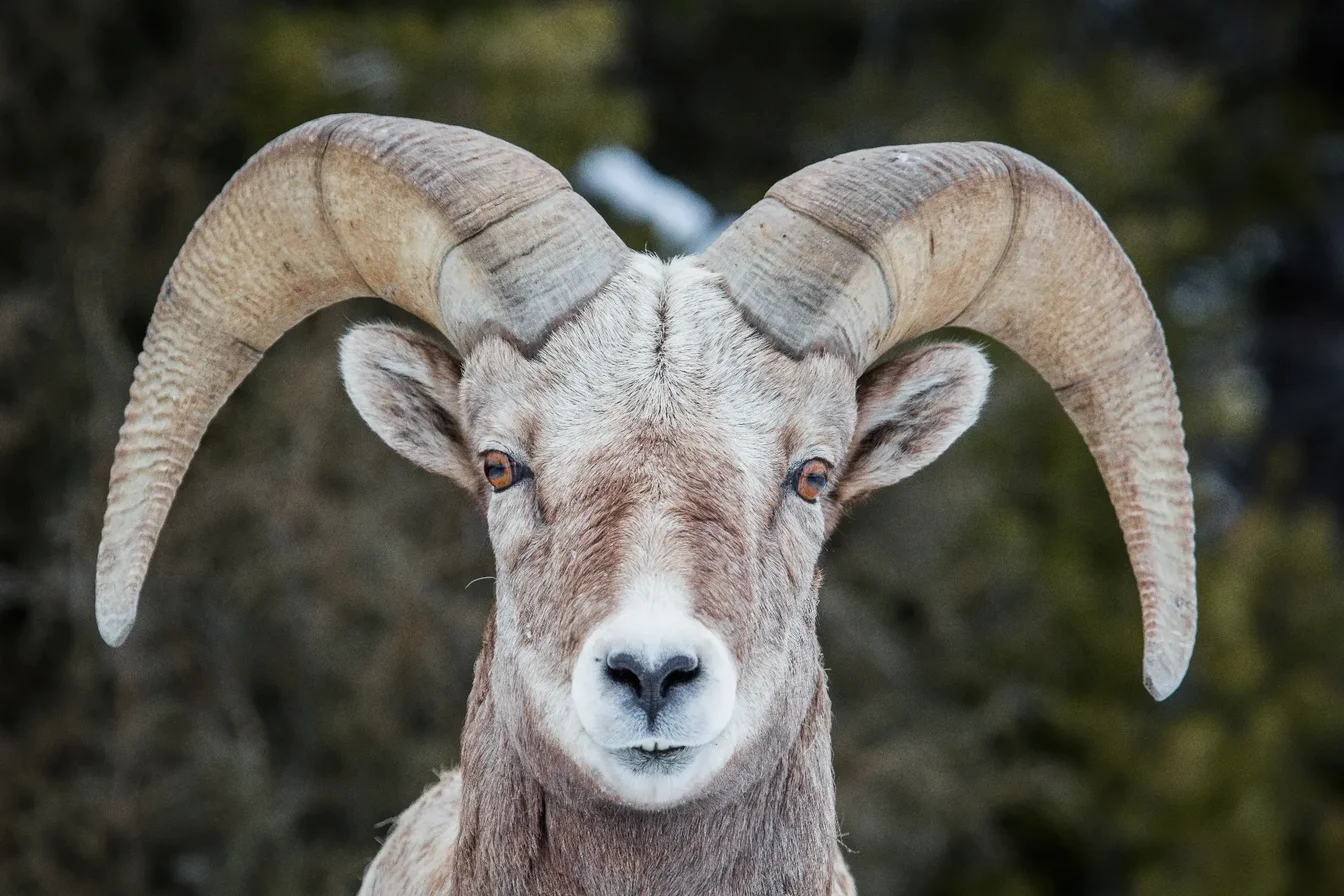
Bighorn sheep are masters of vertical terrain, navigating cliff faces and rocky outcrops with remarkable agility. Rams can weigh over 300 lbs and sport massive curved horns that can weigh 30 lbs alone. During the November–December rut, rams clash headfirst at speeds of 20 mph — the impact echoes through canyons.
🕐 Best Time of Year
November–December (rut — dramatic head-butting) and year-round near cliffs
🌅 Best Time of Day
Morning and late afternoon on rocky slopes
Estimated Population
~300–350 in Yellowstone
Best Places in Yellowstone
- › Between Mammoth and Tower Junction — the most reliable stretch
- › Mount Washburn area
- › Gardner River Canyon near the North Entrance
- › Specimen Ridge
Pro Tips
- • The Mammoth-to-Tower road is the best single stretch for bighorn sheep.
- • Look UP — they're often on cliffs above the road, easy to miss.
- • November rut features dramatic head-butting battles that are audible from a distance.
- • Scan rocky slopes with binoculars; their coloring blends perfectly with stone.
Bald Eagle
Haliaeetus leucocephalus
America's national bird has made a remarkable recovery from near-extinction. In the Greater Yellowstone Ecosystem, bald eagles nest in tall trees along major waterways and hunt fish, waterfowl, and occasionally scavenge carcasses alongside ravens and magpies.
🕐 Best Time of Year
Year-round, but spring and early summer near nesting sites
🌅 Best Time of Day
Morning — eagles hunt fish in calm water at first light
Estimated Population
~34 nesting pairs in Yellowstone
Best Places in Yellowstone
- › Yellowstone Lake shoreline
- › Hayden Valley along the Yellowstone River
- › Madison River
- › Lamar River
Best Places in Grand Teton
- › Snake River corridor — excellent raptor habitat
- › Oxbow Bend
- › Jackson Lake
Coyote
Canis latrans
Coyotes are the great survivors of the American West. While wolves and grizzlies were extirpated and then reintroduced, coyotes persisted through it all. They're commonly seen pouncing on voles in meadows — a distinctive hunting behavior where they leap vertically and plunge nose-first into the grass.
Wolf reintroduction in 1995 significantly impacted coyote populations — Lamar Valley coyote numbers dropped by 50% as wolves reclaimed their role as top canid. Today the two species coexist in an uneasy hierarchy, and coyotes have adapted by avoiding wolf pack territories.
🕐 Best Time of Year
Year-round, with excellent winter visibility
🌅 Best Time of Day
Dawn and dusk — though daytime sightings are frequent
Best Places in Yellowstone
- › Lamar Valley — often seen hunting rodents in the open
- › Hayden Valley
- › Near Old Faithful
- › Mammoth area
- › Road corridors throughout the park
River Otter
Lontra canadensis
River otters are Yellowstone's most playful residents. Watching a family of otters slide down snowbanks, chase fish, and wrestle along a riverbank is pure joy. They're less commonly seen than the park's big mammals, making an otter sighting a genuine highlight of any trip.
🕐 Best Time of Year
Year-round, but easiest to spot in winter along open water
🌅 Best Time of Day
Morning and late afternoon
Best Places in Yellowstone
- › Yellowstone River near Hayden Valley
- › Trout Lake — one of the most reliable spots
- › Lamar River
- › Madison River
- › Yellowstone Lake shoreline
Red Fox
Vulpes vulpes
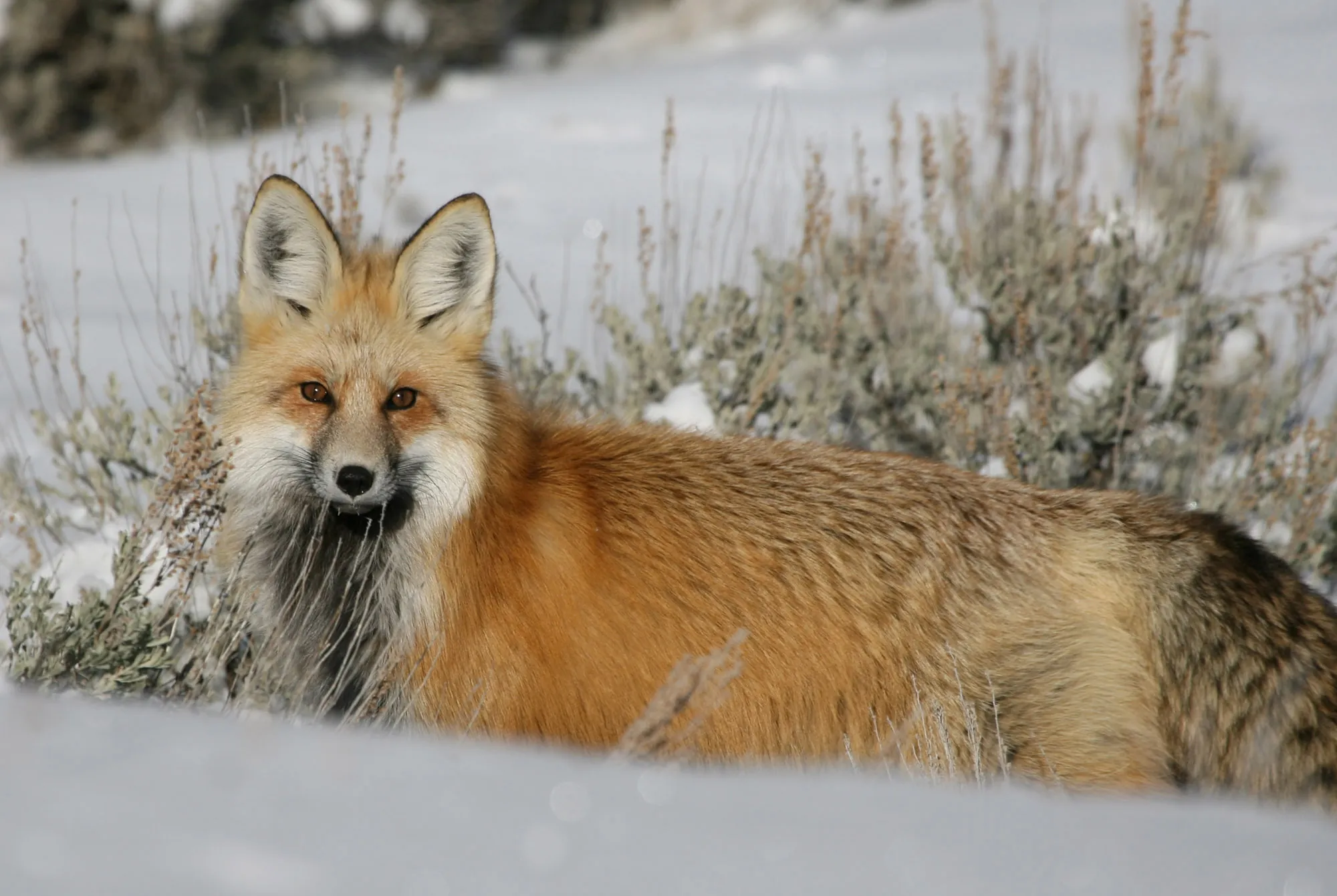
Red foxes are less common than coyotes in Yellowstone, which makes spotting one especially rewarding. Their vivid reddish-orange coat, black legs, and white-tipped tail make them unmistakable. The rare 'cross fox' variant — a red fox with dark cross-shaped markings on the shoulders — is a photographer's holy grail.
🕐 Best Time of Year
Winter and spring — easier to spot against snow and in denning season
🌅 Best Time of Day
Dawn and dusk
Best Places in Yellowstone
- › Lamar Valley — though less common than coyotes
- › Near Canyon Village
- › Mammoth area
- › Tower Junction area
Wildlife Hotspot Map
Not all locations are equal. Here are the concentrated zones where multiple species overlap — the places where an early morning can yield sightings of 5+ species in a single session.
Yellowstone Hotspots
Lamar Valley — "America's Serengeti"
Key species: Wolves, grizzlies, bison, pronghorn, coyotes, elk, bald eagles
Tip: Arrive at first light. Bring a scope. Plan to stay 2–4 hours.
Hayden Valley
Key species: Grizzlies, bison, coyotes, bald eagles, river otters, sandhill cranes
Tip: Excellent in both morning and evening. Less crowded than Lamar.
Mammoth Hot Springs Area
Key species: Elk (year-round on lawns!), bighorn sheep, pronghorn
Tip: Elk are practically guaranteed. Bighorn sheep on cliffs toward Tower.
Tower-Roosevelt
Key species: Black bears, grizzlies, bighorn sheep
Tip: The Tower-to-Lamar corridor is the park's richest single drive.
Grand Teton Hotspots
Moose-Wilson Road
Key species: Moose, black bears, great blue herons
Tip: The single best road for moose and black bears in either park. Drive slowly.
Oxbow Bend
Key species: Moose, bald eagles, trumpeter swans, otters, elk
Tip: One of the most photographed spots in the Tetons — sunrise is magical.
Schwabacher Landing
Key species: Moose, beavers, bald eagles, elk
Tip: Best at dawn when the Tetons reflect in the beaver ponds.
Antelope Flats & Mormon Row
Key species: Pronghorn, bison, elk
Tip: Wide open sagebrush with the Tetons as backdrop — iconic Americana.
Wildlife Viewing in Island Park
Many visitors assume wildlife viewing only happens inside the parks. That's not true. Island Park, Idaho — just 30 minutes from Yellowstone's West Entrance — offers its own exceptional wildlife experiences, often without the crowds or entrance fees.
What You'll See
- › Moose along Henry's Fork of the Snake River — one of the most reliable moose locations in the region
- › Bald eagles nesting along the Henry's Fork
- › Sandhill cranes in wet meadows during summer
- › Mule deer and white-tailed deer throughout forest corridors
- › Elk in forest meadows, especially at dawn
- › Occasional black bear activity near berry patches
- › Red-tailed hawks, osprey, and great blue herons
The Island Park Advantage
Wildlife is most active at dawn — often before most park visitors have even entered through the gates. Staying in Island Park means you're already positioned near forest corridors and rivers where moose, eagles, and deer are active at first light. You can enjoy a quiet sunrise wildlife experience, then drive 30 minutes to enter Yellowstone before the crowds build.
Local Secret: Float Big Springs
Floating Big Springs on a tube or kayak in the early morning is one of the most common ways to casually spot moose in Island Park. The crystal-clear spring-fed water winds through prime riparian habitat. Moose, deer, and eagles are regular sightings.
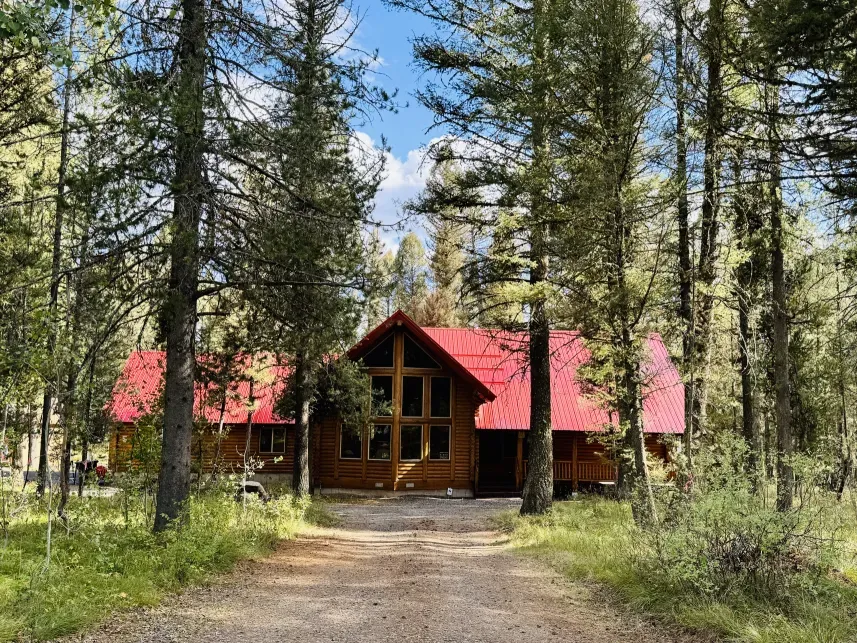
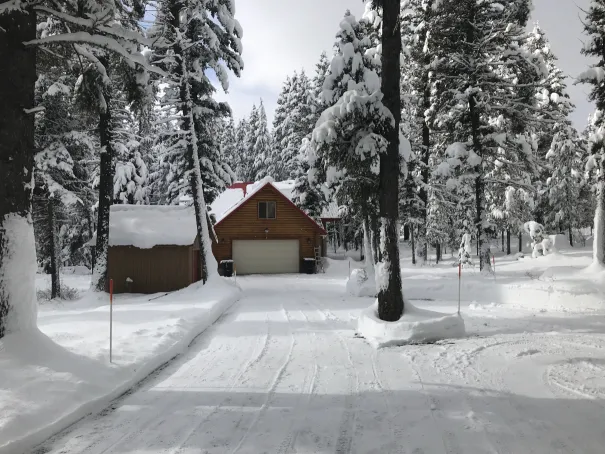
Our cabin sits among forest corridors where moose and deer are regularly spotted at dawn.
Wildlife Viewing Strategy & Pro Tips
🌅 Go Early
Wildlife activity peaks from sunrise to 9 AM, and the last two hours before sunset. Midday is quiet.
🔭 Bring Optics
Binoculars minimum. A spotting scope (20-60x) dramatically increases success for wolves and bears.
📷 Watch for Crowds
If cars are pulled off the road, something is likely there. These 'wildlife jams' are your best leads.
⏳ Be Patient
The best sightings happen when you wait. Set up in one spot for 1-2 hours — don't rush between locations.
The Golden Rule of Wildlife Photography
If the animal changes its behavior because of you — you're too close. Ethical wildlife viewing means being an invisible observer. Use long lenses and spotting scopes, not your feet.
Wildlife Safety
Yellowstone and Grand Teton are not zoos. Every animal is wild and potentially dangerous. Follow these NPS regulations — they exist because people have been seriously injured and killed by ignoring them.
Stay at least 100 yards (91 m) from bears and wolves — that's the length of a football field.
Stay at least 25 yards (23 m) from bison, elk, moose, and all other wildlife.
Never approach calves or get between a mother and her young.
Carry bear spray in all backcountry areas — and know how to use it.
Stay inside your vehicle during roadside encounters — your car is the safest hide.
If an animal changes its behavior because of you, you are too close. Back away slowly.
Wildlife photography is only ethical if the animal is undisturbed by your presence.
For complete park safety information including bear spray recommendations, see our Yellowstone Safety Guide.
Best Season for Wildlife — At a Glance
| Season | Key Species | Quality | Crowds |
|---|---|---|---|
| 🌿 Spring (Apr–May) | Bears, bison calves, wolves, birds | ⭐⭐⭐⭐⭐ | Moderate |
| ☀️ Summer (Jun–Aug) | All species present but dispersed | ⭐⭐⭐ | Peak |
| 🍂 Fall (Sep–Oct) | Elk rut, bears feeding, wolves | ⭐⭐⭐⭐⭐ | Moderate |
| ❄️ Winter (Nov–Mar) | Wolves, bison, elk, foxes | ⭐⭐⭐⭐ | Low |
Spring and fall are prime for serious wildlife watchers. For a month-by-month breakdown of the best times including weather, road conditions, and crowd levels, see our Best Time to Visit Yellowstone guide.
| If You Want… | Visit In |
|---|---|
| Best overall wildlife | May or September |
| Wolves | Winter (Dec–Feb) or Spring (Apr–May) |
| Bears | May–June or September–October |
| Elk rut (bugling) | Mid-September to early October |
| Moose | May–October in Grand Teton |
| Bison calves | Late April–May |
| Best photography | September (golden light + active wildlife) |
| Fewest crowds | Late May, October, or winter |
Guaranteed Wildlife Viewing Options
Wild encounters require patience and luck. If you want guaranteed animal sightings — especially for families with young children or visitors with limited time — two nearby facilities offer excellent alternatives:
Yellowstone Bear World
Rexburg, Idaho (about 1.5 hours south)
A drive-through wildlife park where visitors safely view black bears, grizzlies, wolves, bison, elk, and other North American species from their vehicle.
- › Ideal for families with young children
- › Great for travelers with limited time
- › Close-range viewing from your car
- › Bottle-feed bear cubs (seasonal)
Grizzly & Wolf Discovery Center
West Yellowstone, Montana
A conservation-focused facility featuring rescued grizzly bears and gray wolves that cannot be released into the wild. Educational and well-managed.
- › Rescued bears and wolves viewable year-round
- › Bear safety demonstrations
- › Birds of prey exhibits
- › Excellent on rainy or low-visibility days
These are supplements to wild encounters, not substitutes — but they're especially valuable on poor-weather days or for visitors who want guaranteed close-range viewing. For more on West Yellowstone options, see our West Yellowstone Town Guide.
Wildlife + Lodging Strategy
Wildlife is most active at dawn. Where you stay directly shapes what you see. Staying near Yellowstone's West Entrance or in Island Park's forest corridors means:
- › Entering the park before entrance lines build
- › Being in Lamar Valley or Hayden Valley by first light
- › Catching sunrise wildlife movement that late-risers miss entirely
- › Returning before evening traffic jams at the gate
- › Enjoying Island Park wildlife (moose, eagles, deer) on your doorstep — no park entrance required
For a detailed comparison of gateway towns and why Island Park offers the best wildlife-focused base camp, read our Island Park vs. Border Towns guide. Or if you're planning a multi-day trip, our 3-Day Itinerary from Island Park builds in early-morning wildlife sessions.
Wildlife Success = Early Starts + Strategic Lodging
The visitors who see the most wildlife consistently share two traits: they wake up early, and they stay close enough to be in position at dawn. Our Island Park cabin puts you 30 minutes from the West Entrance — close enough for a 6 AM Lamar Valley session with a 4:30 AM start.
Frequently Asked Questions
What is the best time to see wildlife in Yellowstone?
Spring (May–June) and fall (September–October) are the two best seasons. Spring brings bear emergence, bison calving, and wolf denning activity. Fall features the elk rut, bear hyperphagia, and thinning crowds. For a month-by-month breakdown, see our Best Time to Visit guide.
Where is the best place to see wolves in Yellowstone?
Lamar Valley is the most consistent wolf-watching location in the world. Arrive at first light with a spotting scope. The Slough Creek area and Northeast Entrance corridor are also productive. Winter offers the highest success rate with the fewest crowds.
Can you see moose near Island Park, Idaho?
Yes — moose are regularly spotted along Henry's Fork of the Snake River, near Big Springs, and in Harriman State Park. Floating Big Springs in the early morning is one of the most reliable ways to see moose outside the parks.
How far should you stay from wildlife in Yellowstone?
NPS regulations require 100 yards (91 m) from bears and wolves, and 25 yards (23 m) from bison, elk, moose, and all other wildlife. These distances are enforced and exist for your safety — bison injure more visitors than any other animal in the park.
When is the elk rut in Yellowstone?
The elk rut peaks from mid-September through early October. Mammoth Hot Springs and the Madison River area are the best locations to hear bugling. Bull elk are extremely aggressive during this period — maintain your distance.
Do I need a spotting scope for wildlife viewing?
Binoculars are the minimum. A spotting scope (20-60x magnification) dramatically increases your success for wolves and bears, which are often 500+ yards away. Many dedicated watchers in Lamar Valley will let you look through their scopes — just ask politely.