Stay Safe
Safety & Emergency Info
Essential safety guidelines for Yellowstone, Grand Teton, and the Island Park backcountry.
Wildlife Safety
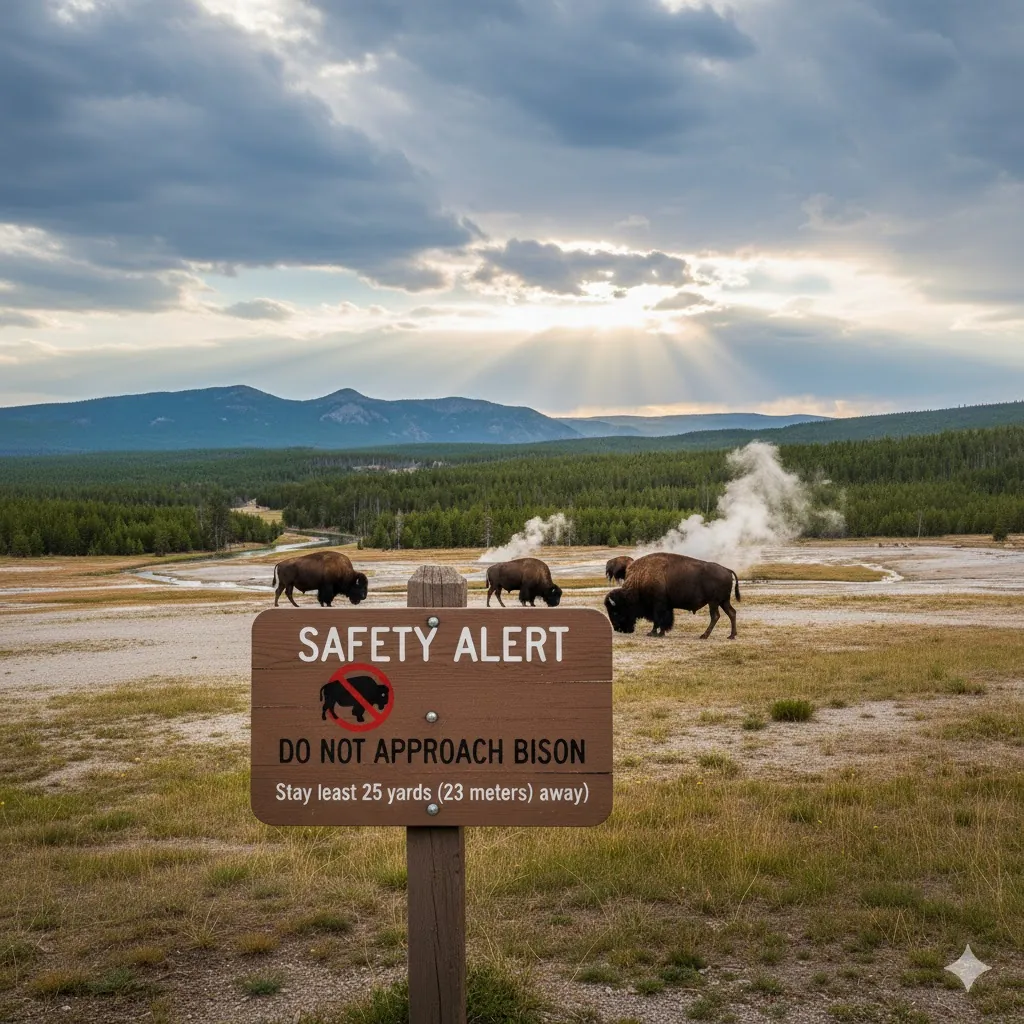
Stay 100 yards (300 ft) from bears and wolves. Stay 25 yards (75 ft) from all other wildlife including bison, elk, and moose. Use binoculars or a telephoto lens. Never approach, feed, or follow wildlife. If a bison or bear changes its behavior because of you, you're too close.
Bear Safety
Carry bear spray and know how to use it — it's effective within 30 feet. Make noise on trails to avoid surprising bears. Hike in groups. Store all food in bear-proof containers or your vehicle. If you encounter a grizzly: don't run, speak calmly, back away slowly. If attacked by a grizzly, play dead. If attacked by a black bear, fight back.
Thermal Areas
Stay on boardwalks and designated trails in all thermal areas. The ground around geysers and hot springs is thin and fragile — boiling water is just below the surface. People have died from falling into hot springs. Keep children close. Don't throw anything into thermal features.
Emergency Contacts
911 for all emergencies. Yellowstone emergency: (307) 344-7381. Fremont County Sheriff: (208) 624-6426. Eastern Idaho Regional Medical Center (Idaho Falls): (208) 529-6111. Nearest clinic: Ashton, ID (30 min from cabin).
Water Safety
Never drink untreated water from rivers or streams — Giardia is common. Bring a water filter or purification tablets for backcountry trips. Mountain rivers are cold and fast — don't underestimate currents. Wear a life jacket when boating.
Weather Hazards
Lightning is the biggest weather danger in summer. If thunderstorms approach, get off ridges and exposed areas immediately. Hypothermia is possible year-round at elevation — even in summer. Carry rain gear and warm layers always.
📖 Related Yellowstone Guides
Ready for Your Adventure?
Book your stay at Lodgepole Pines Retreat and experience everything Island Park and Yellowstone have to offer.
Book Your Stay