Before the Park — 11,000 Years of Indigenous Presence
Long before Yellowstone became a national park — or even had a name Europeans recognized — it was home.
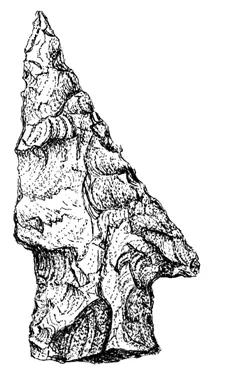
Archaeological evidence shows that Indigenous peoples lived in and traveled through the Yellowstone region for at least 11,000 years. The Shoshone, Bannock, Crow, Blackfeet, Nez Perce, and other tribes hunted bison, fished the rivers, gathered plants, and used the area's obsidian for tools and trade.
 (source: nps.gov)
A Cody knife dating to roughly 9,350 years ago
 (source: nps.gov)
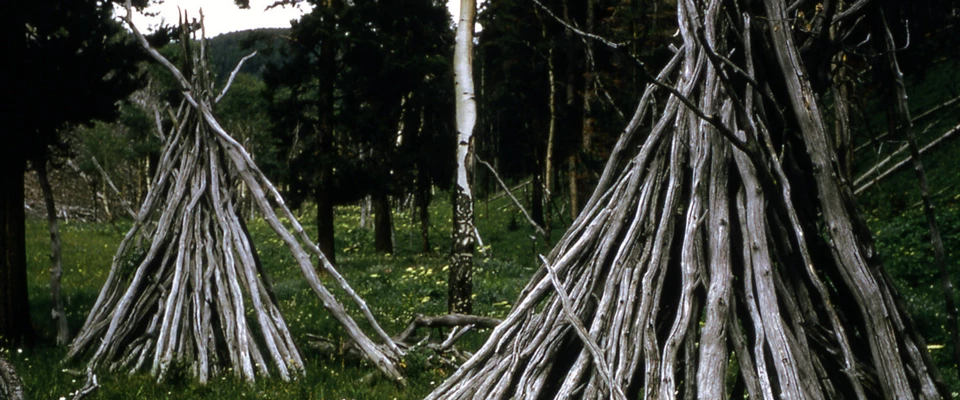
Wickiup shelters built by the Tukudika (Sheep Eaters)
They had names for the geysers, hot springs, and landmarks. They knew the wildlife patterns. They understood the land in ways the arriving Europeans never would.
This wasn't wilderness. It was home. And the creation of the national park in 1872 would eventually lead to their forced removal — a tragic irony in a story often told as purely triumphant.
Early Explorers & Tall Tales (1800s)
The first Euro-American descriptions of Yellowstone came from mountain men and trappers in the early 1800s — and almost nobody believed them.
John Colter, a member of the Lewis and Clark Expedition, is often credited as the first white explorer to see the Yellowstone region (around 1807-1808). He returned with stories of "fire and brimstone" — boiling mud pots, geysers, and sulfurous hot springs.
People laughed. They called the place "Colter's Hell."
Other trappers — Jim Bridger, Osborne Russell, Warren Ferris — returned with similar tales. Bridger spoke of petrified trees and a river so hot you could cook a fish as you reeled it in. Most dismissed these as frontier exaggeration.
But the stories persisted. And eventually, they reached people with the power to investigate.
The Washburn-Langford Expedition (1870)
In 1870, a group of Montana citizens — including surveyor Henry Washburn, banker Nathaniel Langford, and writer Cornelius Hedges — organized an expedition to finally document what was really in the Yellowstone region.
 (source: nps.gov)
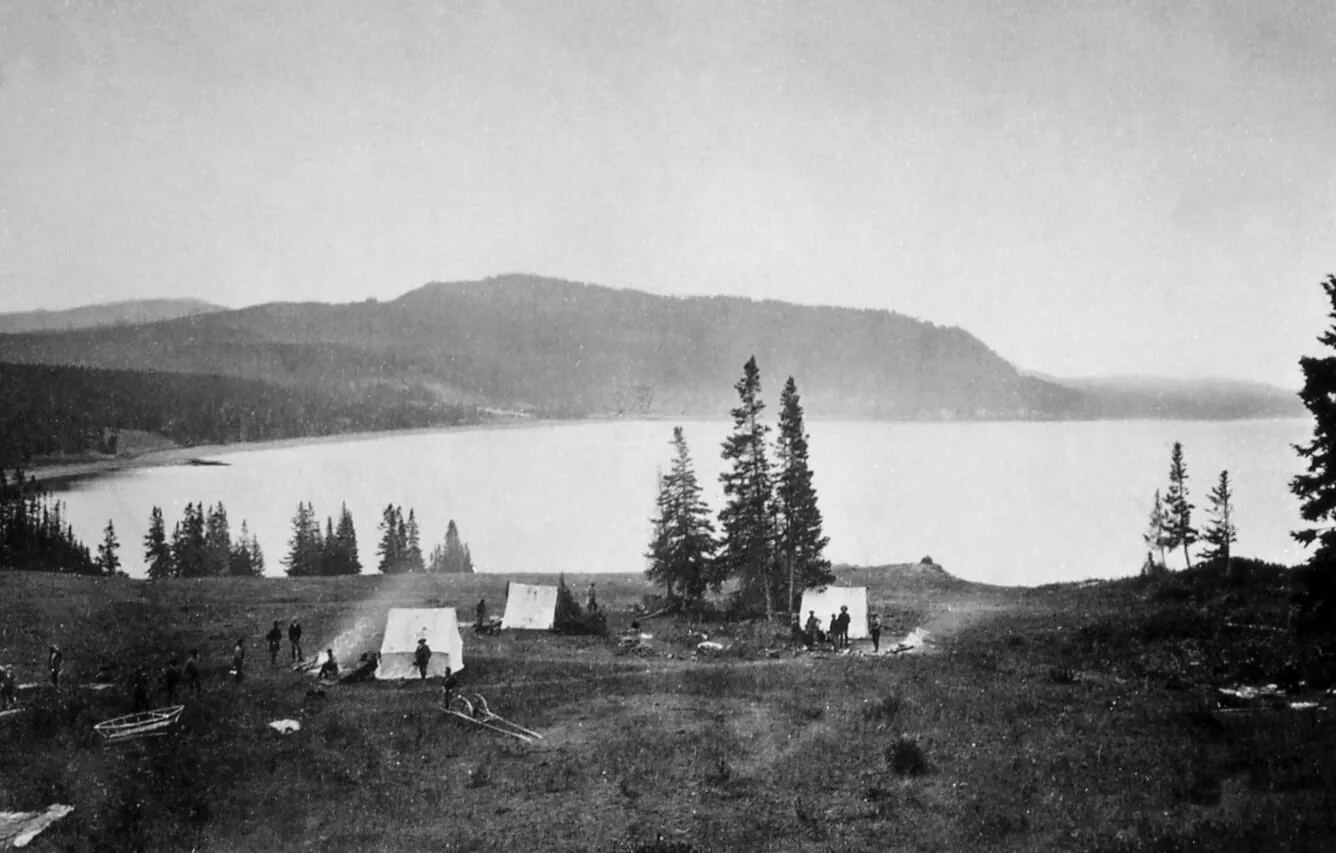
An early expedition camp on the shores of Yellowstone Lake
They spent a month exploring the area, witnessing Old Faithful, the Grand Canyon of the Yellowstone, Yellowstone Lake, and the countless geothermal features. They were awestruck.
Langford later wrote articles for Scribner's Monthly and gave public lectures describing the wonders they'd seen. The accounts were vivid, detailed, and — critically — believable.
The Campfire Myth
🔥 The Legend
According to popular lore, the idea for Yellowstone National Park was born around a campfire during the Washburn Expedition. Cornelius Hedges supposedly suggested that instead of claiming the land for private profit, it should be set aside "for the benefit and enjoyment of the people."
The truth? This story was likely invented or embellished years later. While the Washburn party certainly discussed the region's future, the idea of a national park didn't originate around a campfire.
The real credit belongs to a more complex mix of surveying science, political lobbying, and — importantly — railroad corporate interests.
The Hayden Survey (1871) — The Game Changer
 (source: nps.gov)
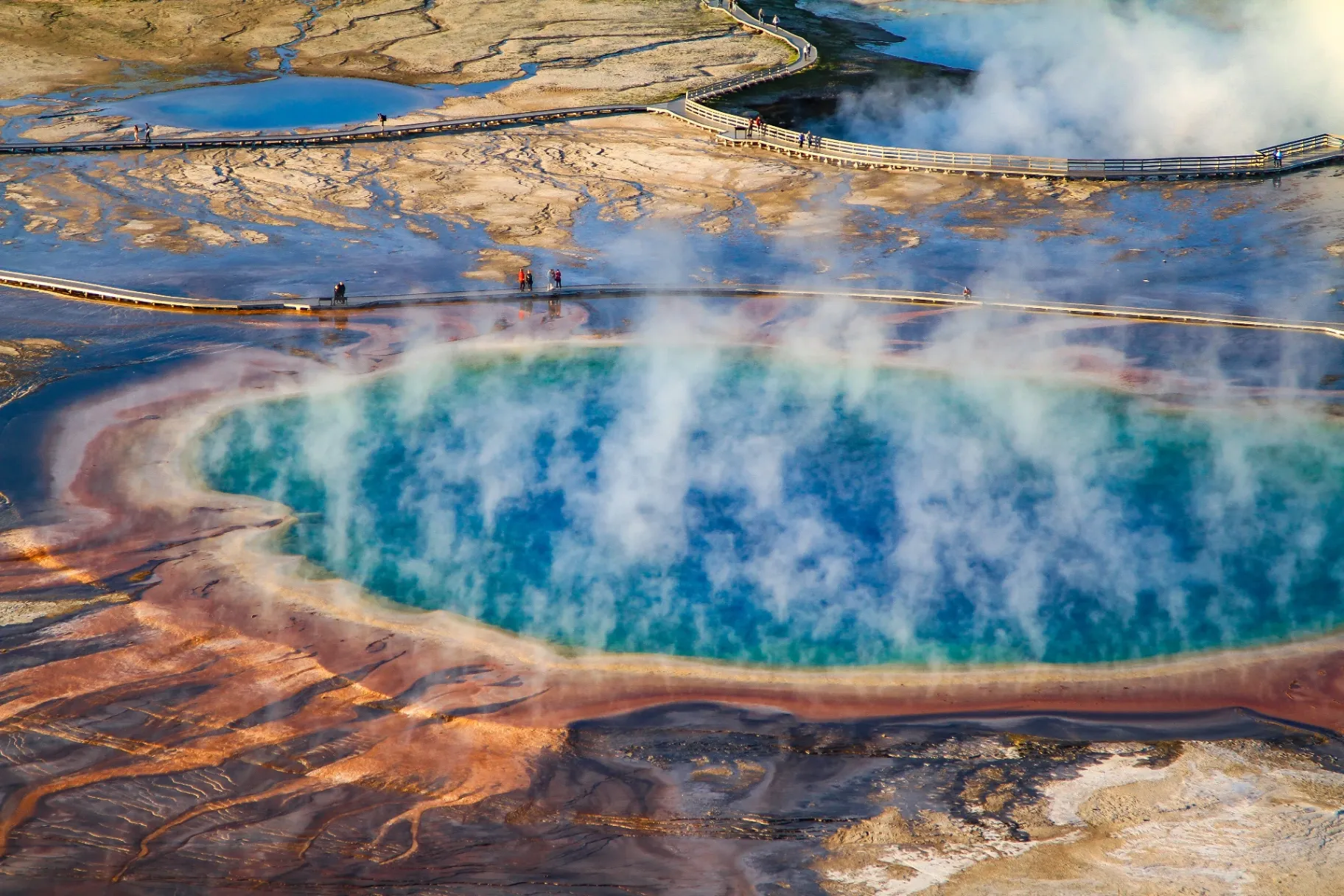
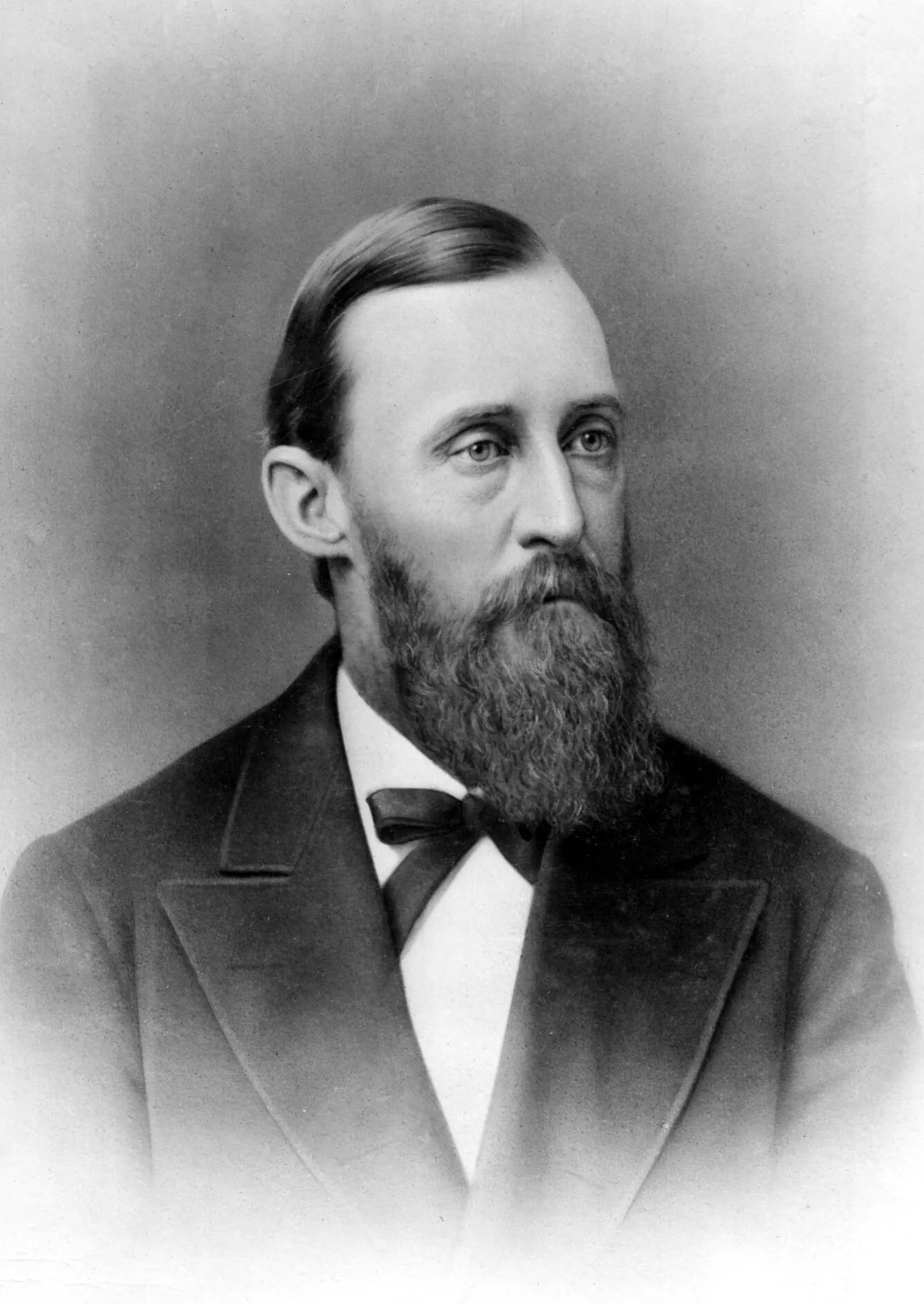
In 1871, geologist Dr. Ferdinand V. Hayden led a U.S. Geological Survey expedition to Yellowstone. This wasn't just a casual exploration — it was a full scientific survey funded by Congress.
Hayden brought a team of experts:
- William Henry Jackson — photographer (the first to capture Yellowstone on camera)
- Thomas Moran — landscape painter
- Topographers, botanists, and mineralogists
Their mission: Document everything. Measure it. Map it. Photograph it. Paint it.
And they did.
Art & Photography Change Everything
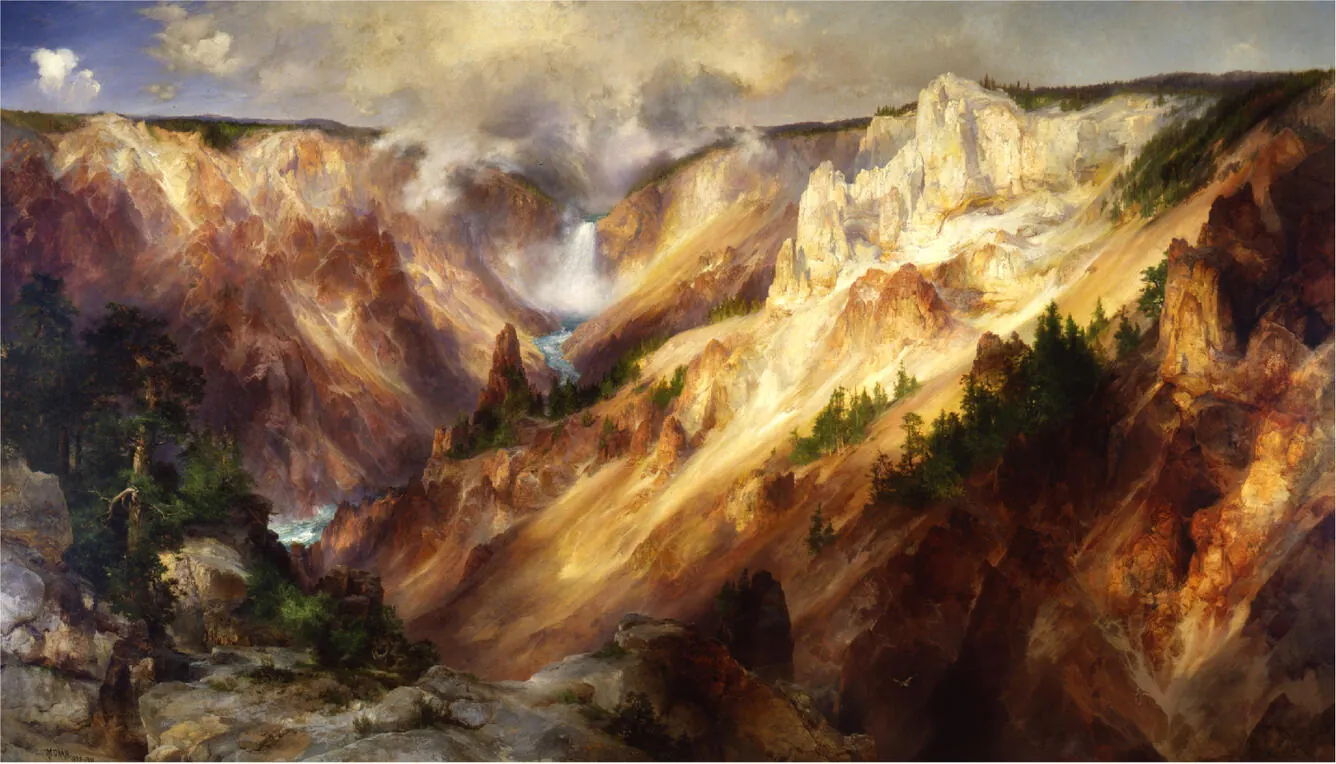
William Henry Jackson's photographs and Thomas Moran's paintings were the proof Congress needed. These weren't tall tales from trappers — these were scientific images.
 (source: nps.gov)
Thomas Moran's iconic painting of the Grand Canyon of the Yellowstone — purchased by Congress for $10,000
Moran's painting The Grand Canyon of the Yellowstone (now hanging in the U.S. Capitol) captured the grandeur in a way words never could. Jackson's photos showed geysers mid-eruption, terraced hot springs, and vast wilderness.
 (source: nps.gov)
Dr. Ferdinand V. Hayden — the geologist whose survey proved decisive
 (source: nps.gov)
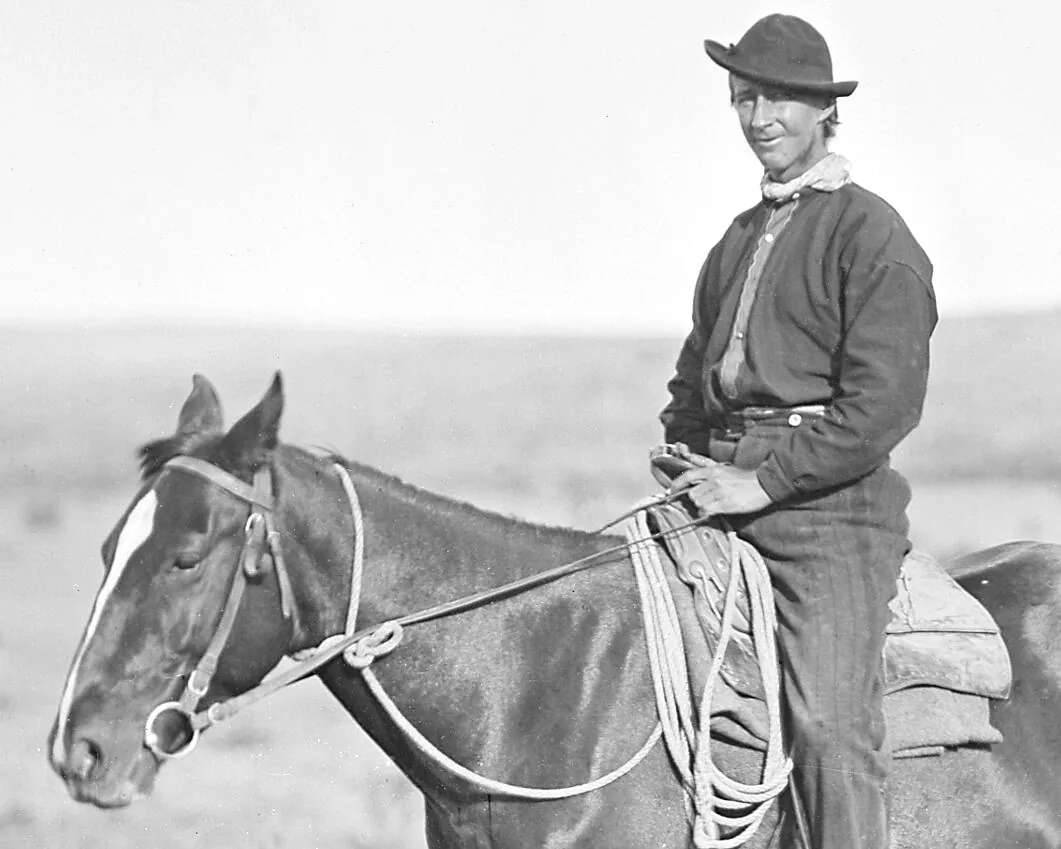
Henry Wood Elliott during a geological expedition
Together, they made Yellowstone real to lawmakers who had never seen the West.
The Northern Pacific Railroad's Role
Let's be honest: The creation of Yellowstone National Park wasn't purely altruistic.
The Northern Pacific Railroad was building a transcontinental line through Montana. A national park at Yellowstone would become a massive tourist draw — and tourists needed trains to get there.
Railroad lobbyists actively supported the park bill. They saw Yellowstone as a profit engine: luxury hotels, guided tours, and thousands of wealthy Eastern tourists paying for train tickets.
This doesn't diminish the park's importance — but it does complicate the "pure conservation" narrative. Economics and ecology were intertwined from the start.
The Yellowstone Act of 1872
On March 1, 1872, President Ulysses S. Grant signed the Yellowstone National Park Protection Act into law.
📜 The Act's Language
"…is hereby reserved and withdrawn from settlement, occupancy, or sale…and set apart as a public park or pleasuring-ground for the benefit and enjoyment of the people."
With those words, Yellowstone became:
- The world's first national park
- Over 2 million acres of protected wilderness
- A blueprint for conservation worldwide
There was just one problem: No funding. No staff. No management plan. Congress created a park but gave it no resources to actually protect it.
Early Challenges & the Army Years (1886-1918)
For the first 14 years, Yellowstone was a park in name only. Poachers hunted wildlife to near-extinction. Vandals carved names into formations. Squatters built illegal cabins.
In 1886, Congress gave up and handed control to the U.S. Army. For the next 32 years, the Army patrolled Yellowstone, built infrastructure, enforced laws, and essentially saved the park.
They built roads, bridges, and Fort Yellowstone (now Mammoth Hot Springs headquarters). They stopped poaching and protected the last wild bison in the United States.
In 1916, when the National Park Service was created, the Army finally handed over a functioning, protected park.
A Legacy for the World
 (source: nps.gov)
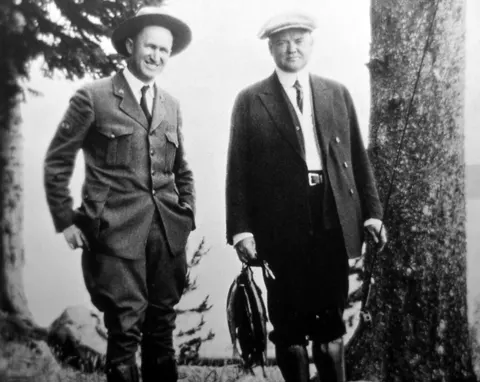
Superintendent Horace Albright with President Herbert Hoover in 1928
Yellowstone's creation inspired a global movement. Within decades, countries around the world began creating their own national parks:
- Canada (Banff, 1885)
- Australia (Royal National Park, 1879)
- New Zealand (Tongariro, 1887)
- Argentina (Nahuel Huapi, 1934)
- And hundreds more
Today, there are over 6,000 national parks worldwide — all tracing their origins to the idea born in Yellowstone.
Experience the History Today
When you visit Yellowstone, you're walking through the birthplace of the national park idea. You can:
- Stand where the Washburn Expedition camped at Madison Junction
- See the same views Thomas Moran painted
- Visit Fort Yellowstone at Mammoth Hot Springs
- Walk the same trails Indigenous peoples used for millennia
The park isn't just geology and wildlife. It's a living monument to the idea that some places are too important to own — that they belong to everyone, forever.
Stay Near the World's First National Park
Lodgepole Pines Retreat is just minutes from Yellowstone's West Entrance. Book your historic adventure today.
Check Availability
 (source: nps.gov)