Deep Roots
Area History & Culture
From ancient volcanic origins to the creation of the world's first national park — the fascinating story of this remarkable landscape.
The Yellowstone Supervolcano
Island Park sits inside one of the largest volcanic calderas on Earth — the Island Park Caldera, formed roughly 2.1 million years ago during the Huckleberry Ridge eruption, stretches 18 by 23 miles across the landscape. That eruption ejected an estimated 600 cubic miles of material, making it one of the most powerful volcanic events in Earth's history.
Beneath the surface, a massive magma chamber sits just 3 to 8 miles underground, fueling over 10,000 geothermal features — more than any other place on the planet. These include roughly 500 active geysers (more than half of the world's total), boiling mud pots, fumaroles, and brilliantly colored hot springs like Grand Prismatic.
Native American History
The Greater Yellowstone region has been home to indigenous peoples for at least 11,000 years — among the longest records of continuous human habitation in North America. Over millennia, numerous tribes maintained deep connections to this land, including the Shoshone, Crow (Apsáalooke), Blackfeet (Niitsitapi), Bannock, Flathead, and Nez Perce.
Archaeological evidence reveals extensive trade networks centered on Yellowstone's obsidian, a prized volcanic glass used for tools and weapons. Obsidian from Obsidian Cliff has been found at sites across the continent. Today, 27 tribes maintain formal affiliations with Yellowstone National Park.
Creation of Yellowstone National Park
On March 1, 1872, President Ulysses S. Grant signed the Yellowstone National Park Protection Act into law, setting aside roughly 2.2 million acres as the world's first national park. The idea emerged from the 1871 Hayden Geological Survey, which brought photographer William Henry Jackson and painter Thomas Moran into the region.
In 1886, the U.S. Army took over administration, establishing Fort Yellowstone at Mammoth Hot Springs. The National Park Service was created in 1916, with Yellowstone serving as the model for a system that now encompasses over 400 sites and has inspired national park movements in more than 100 countries.
Island Park History
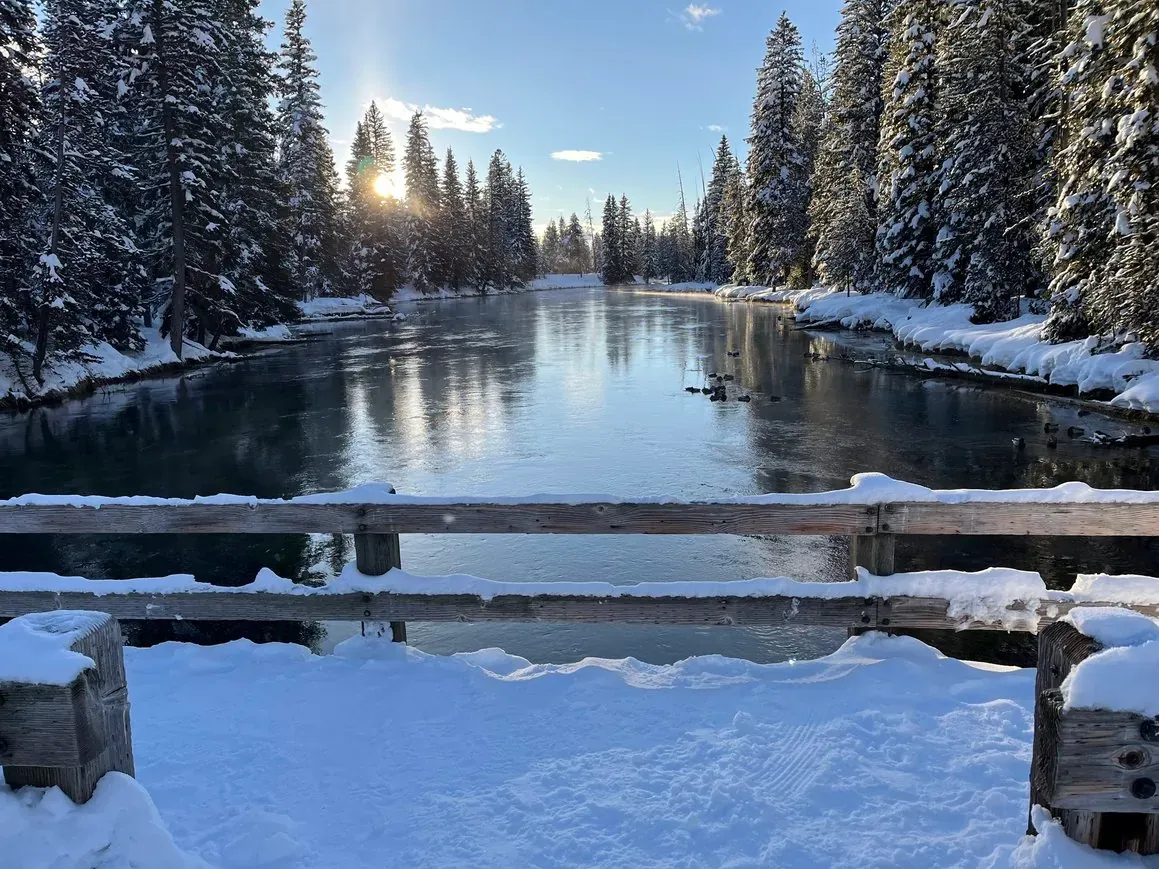
Island Park takes its name from the broad, flat 'island' of lodgepole pine timber surrounded by expansive open meadows. Island Park holds a quirky distinction: its 'Main Street' — a 33-mile stretch of US Highway 20 — is often cited as the longest main street in America.
The Henry's Fork, renowned worldwide as one of the finest dry-fly fishing rivers, draws anglers from across the globe. Today, Island Park is a four-season recreation destination with a proud Western heritage.
Harriman State Park
The 16,000-acre Harriman State Park — Idaho's largest — was donated to the state in 1977 by the family of railroad magnate E. H. Harriman. Beginning in 1902, the Harriman and Guggenheim families created the Railroad Ranch, an exclusive private retreat.
Today, the park protects critical habitat along the Henry's Fork, including nesting grounds for trumpeter swans — a species that was once nearly extinct, with fewer than 70 birds remaining in the lower 48 states by the 1930s.
Big Springs & Johnny Sack Cabin
Big Springs is one of the 40 largest natural springs in the world — producing 120 million gallons of crystal-clear, 52°F water every day. The spring is the source of the Henry's Fork of the Snake River.
Nearby sits the Johnny Sack Cabin, a remarkable hand-built log cabin constructed in the 1930s by German immigrant John 'Johnny Sack' Sackmann. The cabin is now on the National Register of Historic Places.
Earthquake Lake (Quake Lake)
On August 17, 1959, a massive 7.5-magnitude earthquake struck the Madison River Canyon. In seconds, 80 million tons of rock broke free from the canyon wall, creating a natural dam that formed Earthquake Lake. The landslide buried a campground, killing 28 people.
Today, Earthquake Lake is a haunting and fascinating geological stop about 45 minutes north of the cabin. The Earthquake Lake Visitor Center tells the story through exhibits and a dramatic overlook.
Virginia City, Montana
Virginia City — about 1.5 hours north — is one of the best-preserved gold rush ghost towns in the American West. Founded in 1863, the town exploded to 10,000 people. More than 100 original 1860s buildings still stand along the boardwalk-lined main street.
The 1988 Yellowstone Fires
The summer of 1988 brought the largest wildfire event in Yellowstone's recorded history. Approximately 793,000 acres (36% of the park) burned. Nearly 25,000 firefighters were deployed, and the total suppression cost exceeded $120 million.
Scientists discovered that Yellowstone's lodgepole pine forests depend on fire: the trees' serotinous cones require intense heat to release seeds. Within a year, millions of seedlings carpeted the burned areas. The 1988 fires revolutionized our understanding of fire ecology.
📖 Related Yellowstone Guides
Ready for Your Adventure?
Book your stay at Lodgepole Pines Retreat and experience everything Island Park and Yellowstone have to offer.
Book Your Stay