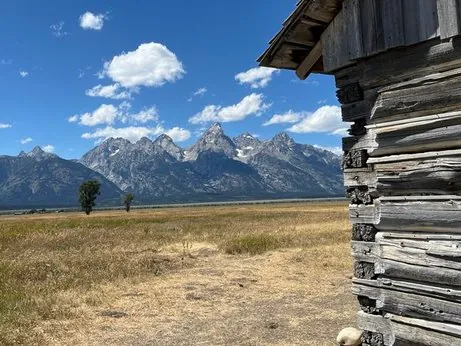
The Valley Before the Park
Before Grand Teton National Park existed, Jackson Hole was a high-altitude valley — roughly 6,000 feet above sea level — ringed by mountains on all sides and carved by glaciers over millions of years. The Teton Range, the youngest range in the Rocky Mountains at only 6–9 million years old, rises abruptly from the valley floor without foothills, creating one of the most dramatic mountain fronts on Earth.
The valley floor was sagebrush and grassland, crisscrossed by the Snake River and its tributaries. Elk, bison, grizzly bears, wolves, and pronghorn moved through the valley with the seasons.
But the story of how this landscape became a national park is anything but peaceful. It's a tale of secret land deals, political fury, armed protests, and one of the most bitter conservation fights in American history.
11,000 Years of Indigenous Presence
Archaeological evidence shows Indigenous peoples occupied Jackson Hole for at least 11,000 years. The Shoshone, Bannock, Crow, Blackfeet, Gros Ventre, and Flathead peoples all used the valley — seasonally for hunting, fishing, gathering, and as a travel corridor.
The Tukudika (Sheepeaters), a band of Eastern Shoshone, lived year-round in the high mountains, hunting bighorn sheep and crafting distinctive bows from sheep horn. Obsidian from nearby Obsidian Cliff in Yellowstone was traded across a vast Indigenous network.
Fur Trappers & the Name "Grand Teton"
The first Euro-Americans to enter Jackson Hole were fur trappers in the early 1800s. John Colter, fresh from the Lewis and Clark Expedition, likely passed through in 1807–1808.
French-Canadian trappers named the three prominent peaks "Les Trois Tétons" — "The Three Breasts." The tallest, at 13,775 feet, became the Grand Teton.
The valley was named for David Edward "Davey" Jackson, a fur trapper. His colleagues called it "Jackson's Hole" — "hole" being the trapper term for a high-altitude valley surrounded by mountains.
Homesteaders & the Settling of Jackson Hole
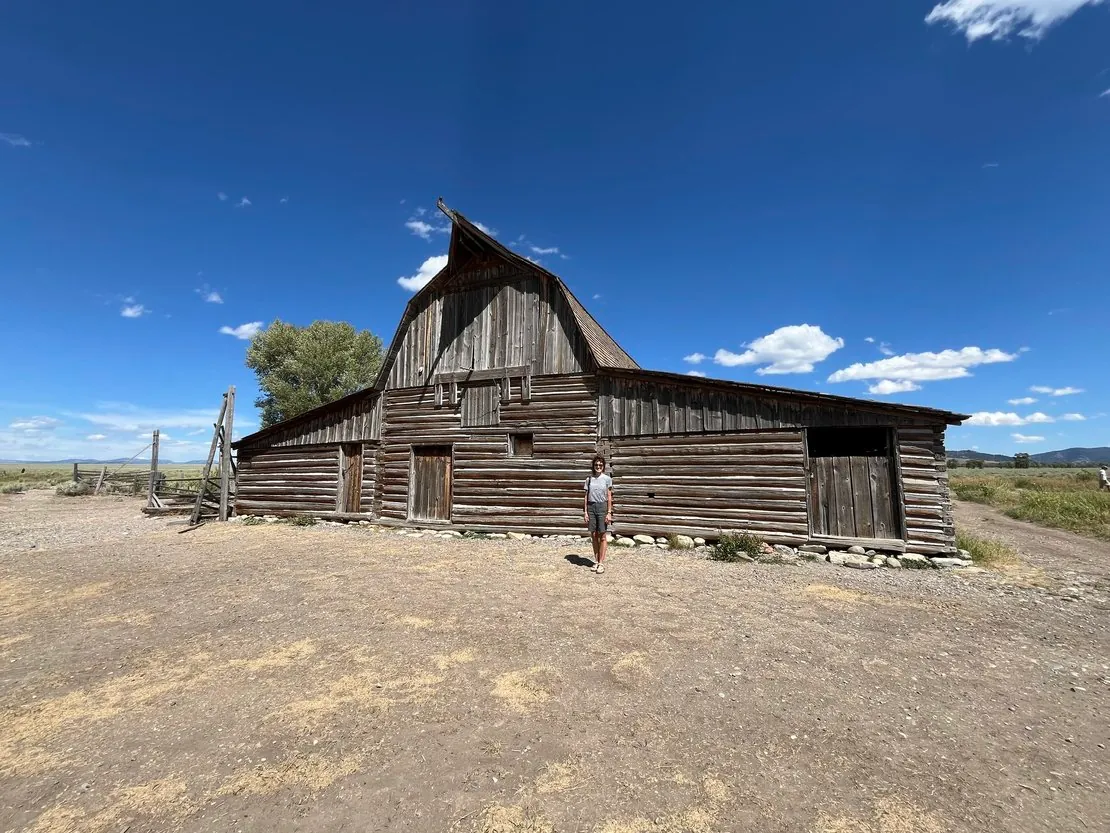
Homesteaders arrived in the 1880s–1890s, drawn by the Homestead Act. But ranching was brutally difficult — the growing season was only 60–90 days, winters dropped to -40°F, and the nearest railroad was over 60 miles away.
The most famous homesteads were on Mormon Row, established by Mormon settlers from Idaho in the 1890s. The iconic T.A. Moulton Barn and John Moulton Barn date from this era.
By the early 1900s, dude ranches — lodges introducing wealthy Easterners to the "Old West" — were emerging as a new economy. Dude rancher Struthers Burt wanted to preserve Jackson Hole as a "museum on the hoof."
Horace Albright's Vision (1915–1926)
In 1915, Horace Albright — assistant to NPS founder Stephen Mather — traveled south from Yellowstone and was awestruck by the Teton Range. He saw modest homesteads and recognized the threat of commercial development.
In 1917, Mather and Albright reported to the Secretary of the Interior that adding the Tetons to Yellowstone was "one of seven urgent needs facing the Park Service." A bill passed the House unanimously in 1919 but died in the Senate.
When Albright became Yellowstone Superintendent in 1919, he traveled to Jackson to promote his vision and was practically "run out of town." Meanwhile, gas stations, dance halls, billboards, and bootleg whiskey bars were appearing along the roads.
The Maud Noble Cabin Meeting (1923)
📍 The Meeting That Started It All
On July 26, 1923, a small group gathered at Maud Noble's cabin near Menor's Ferry. Attendees: Horace Albright, Struthers Burt, Horace Carncross, Dick Winger, Joe Jones, Jack Eynon, and Maud Noble.
Their plan: find a private buyer to purchase homesteads and preserve the valley as a "museum on the hoof." Most attendees did not want a national park — they wanted a recreation area allowing hunting, grazing, and dude ranching. They just needed someone wealthy enough to buy the threatened land.
Three years later, they found their buyer.
John D. Rockefeller Jr. Arrives (1926)
John D. Rockefeller Jr. — heir to the Standard Oil fortune — visited Yellowstone in 1926. He had already donated land for Acadia National Park in Maine and funded Colonial Williamsburg.
Despite orders from Mather not to discuss park business, Albright risked his career and invited Rockefeller to see Jackson Hole. Rockefeller was astounded by the Teton views — and dismayed by the shabby development along the roads.
💡 The Moment
Albright passionately explained the Maud Noble plan: find a buyer, purchase threatened land, preserve the valley. Rockefeller returned east thinking about Jackson Hole. Within a year, he was all in.
The Snake River Land Company (1927–1940)
In 1927, Rockefeller created the Snake River Land Company to buy private land without revealing the world's richest buyer. Leadership: Vanderbilt Webb (President), Harold Fabian (VP/attorney), Robert Miller (local field agent).
Many ranchers were struggling — beef prices collapsed after WWI, harsh winters devastated livestock. In 1925, 97 ranchers signed a petition: "The destiny of Jackson Hole is as a playground, typical of the west, for the education and enjoyment of the Nation as a whole."
Over a decade, the company purchased 35,000+ acres for ~$1.4 million — Rockefeller's intended gift to the NPS. But what seemed straightforward became 20 years of bitter debate.
The First Grand Teton National Park (1929)
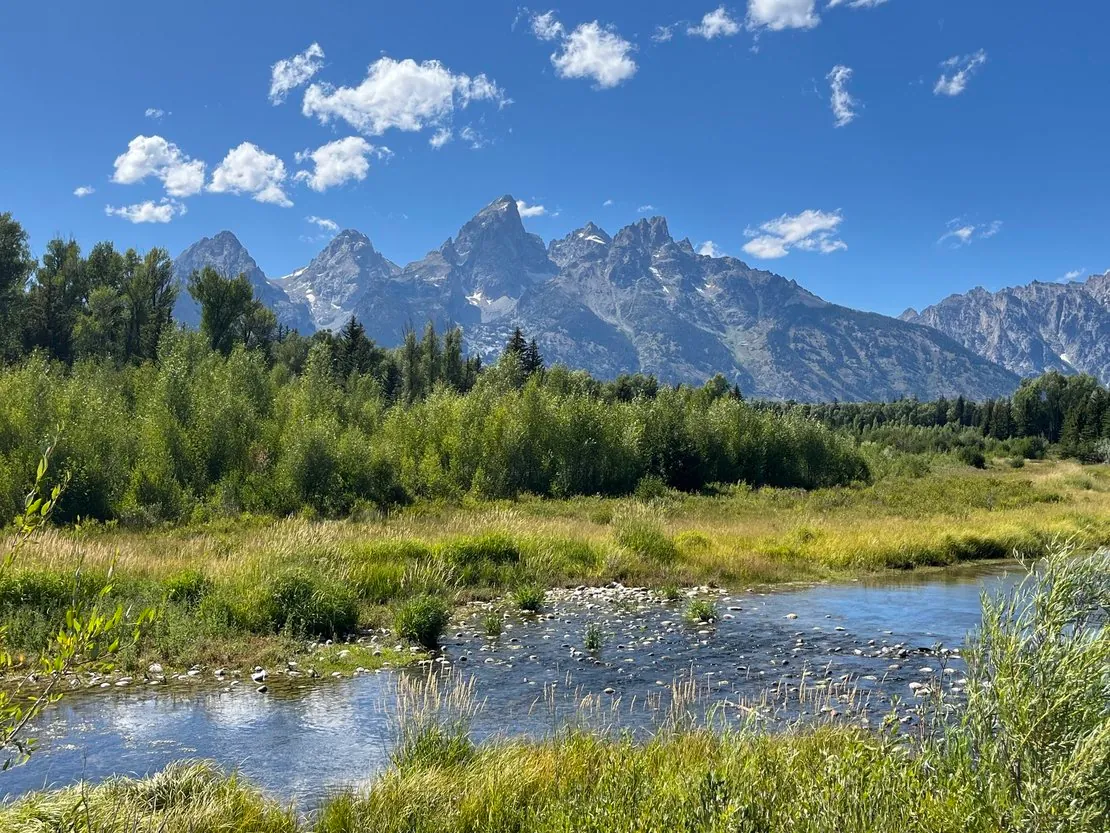
On February 26, 1929, President Calvin Coolidge signed the bill creating a 96,000-acre Grand Teton National Park. But this park included only the Teton Range and six glacial lakes — the valley floor was excluded.
Backlash & the Senate Investigation (1930–1933)
In 1930, Rockefeller's role became public. The backlash was furious. Residents felt deceived by a wealthy Eastern outsider. A newspaper, The Grand Teton, was founded to attack "the Rockefeller crowd." Senator Robert Carey demanded a Congressional investigation.
In 1933, a Senate subcommittee found all allegations groundless. But Congress refused to accept Rockefeller's land. Bills to expand the park in 1934, 1935, 1937, and 1938 all failed.
Rockefeller's Ultimatum & FDR's Bold Move (1943)
After holding 35,000 acres for 15 years, Rockefeller delivered an ultimatum to President Roosevelt:
📜 The Ultimatum (1942)
"If the federal government does not want the gift of land…it will be my thought to make some other disposition of it or to sell it in the market to any satisfactory buyers."
On March 15, 1943, Roosevelt used the Antiquities Act to create the 221,000-acre Jackson Hole National Monument — bypassing Congress entirely.
The Jackson Hole National Monument Controversy
Wyoming Senator Edward Robertson compared FDR's action to Pearl Harbor. Congressman Frank Barrett passed a bill abolishing the monument — Roosevelt vetoed it. Wyoming sued the NPS. The Forest Service gutted ranger stations before handing them to NPS.
The Armed Cattle Drive Protest
Armed ranchers trailed 500 cattle across the monument land, hoping to be arrested. Hollywood actor Wallace Beery rode along for publicity. The Park Service wisely ignored the stunt — but it drew national media attention.
Final Resolution: The 1950 Park (310,000 Acres)
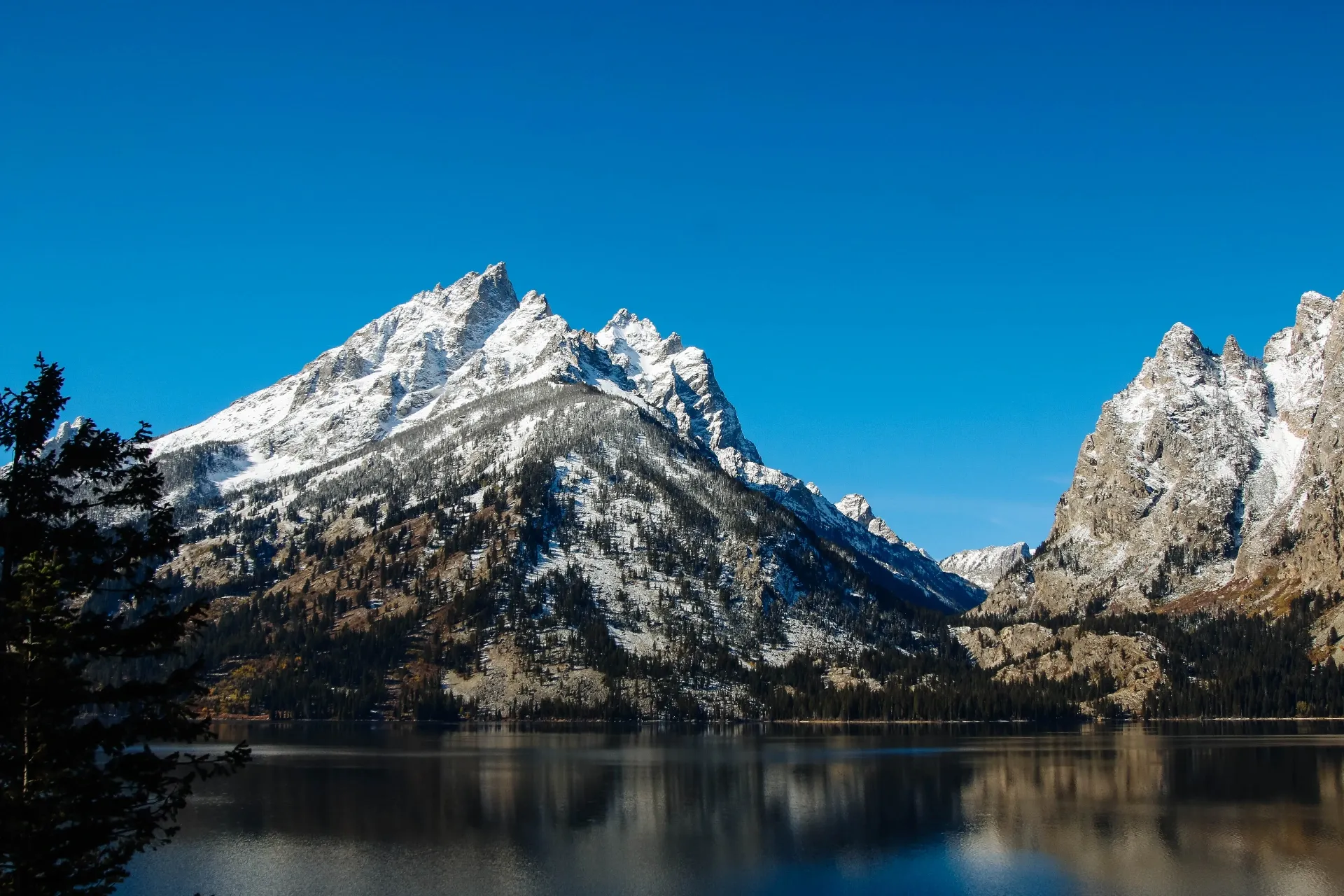
After WWII, tourism boomed and economic opposition collapsed. On September 14, 1950, President Truman signed the merger creating an enlarged 310,000-acre Grand Teton National Park. Three acts over 30 years:
- 1929 — Original 96,000-acre park (mountains/lakes only)
- 1943 — 221,000-acre Jackson Hole National Monument
- 1950 — 310,000-acre unified Grand Teton National Park
Legacy & the Wyoming Compromise
The 1950 legislation included protection of grazing rights, tax reimbursements, and the only provision in US law prohibiting future presidents from using the Antiquities Act in Wyoming.
📊 Rockefeller by the Numbers
35,000+ acres purchased • $1.4M spent (~$25M today) • 20+ years holding land • Continued donating until his death in 1960
As historian Robert Righter concluded: "Perhaps the most notable conservation victory of the twentieth century."
The John D. Rockefeller Jr. Memorial Parkway
In 1972, Congress designated the 24,000-acre Rockefeller Memorial Parkway connecting Grand Teton and Yellowstone National Parks. If you drive from our cabin through Yellowstone south toward Grand Teton, you'll pass through it.
See the History Today
Visit these sites during a day trip from Island Park:
- Mormon Row Historic District — The iconic Moulton Barns with the Tetons behind
- Menor's Ferry & Maud Noble Cabin — The exact cabin where the 1923 meeting took place
- Jenny Lake — One of the six original glacial lakes in the 1929 park
- Snake River Overlook — Where Ansel Adams captured his famous 1941 photograph
Grand Teton is ~2 hours south of our cabin. Check our best day trips guide for a complete itinerary.
Stay Near the Tetons
Lodgepole Pines Retreat is your base camp for exploring Grand Teton, Yellowstone, and the history of the Greater Yellowstone Region.
Check Availability