Yellowstone Photography Guide: Best Photo Spots by Season

15 min read Updated April 2026 Trip Planning

Complete guide to photography in Yellowstone — best locations by season, wildlife photography tips, gear recommendations, sunrise/sunset spots, and ethical practices.
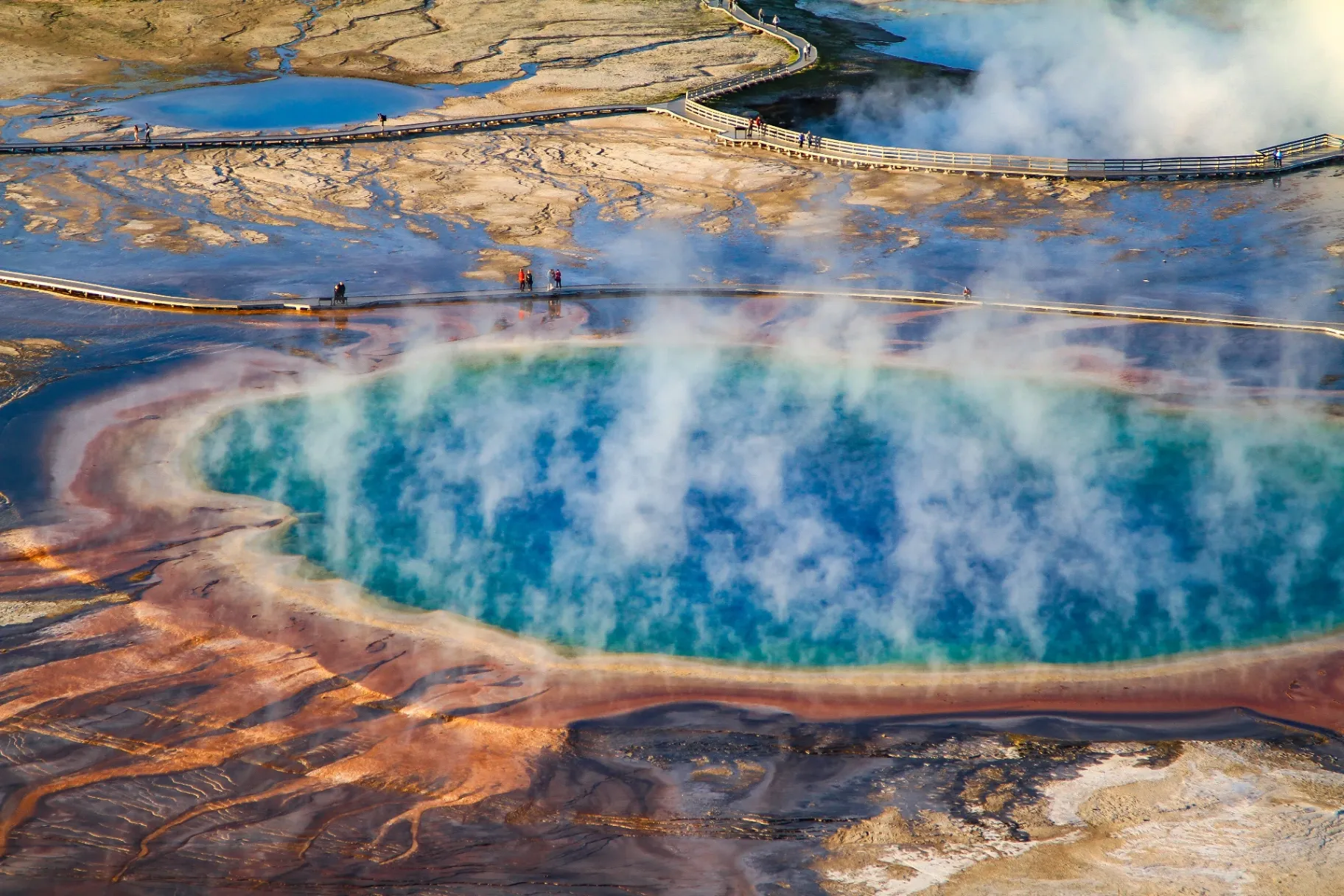
Aerial view of Grand Prismatic Spring — one of the most photographed spots in Yellowstone

Camera Gear Essentials

You don't need professional gear to get stunning Yellowstone photos, but the right equipment makes a difference.
Recommended Gear

  • Camera body — Any DSLR or mirrorless with good low-light performance
  • Wide-angle lens (16-35mm) — Essential for geysers, hot springs, vistas
  • Telephoto lens (100-400mm+) — Critical for wildlife from safe distances
  • Tripod — Mandatory for sunrise/sunset and long exposures
  • Extra batteries — Cold weather drains batteries fast; carry at least 3
  • Lens cleaning kit — Geyser mist will coat your lens
  • Polarizing filter — Cuts glare, deepens skies, enhances hot spring colors

Spring Photography (April–June)

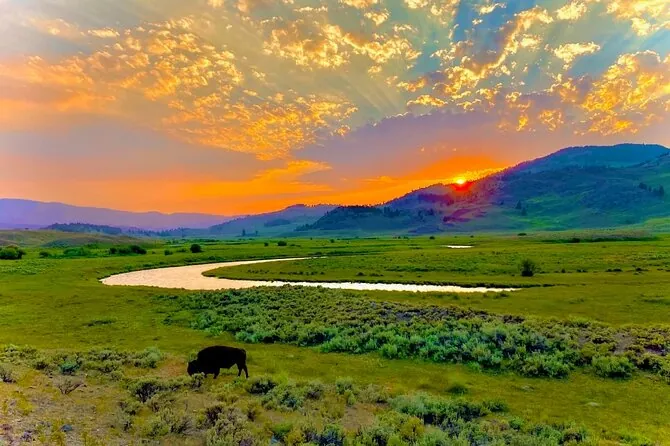
Lamar Valley at sunrise in spring

Spring is arguably the best season for wildlife photography. Grizzly bears emerge with cubs, bison calves appear by mid-May, and waterfalls peak with snowmelt.

Spring Highlights

  • Bison calving in Lamar Valley (mid-April to mid-May)
  • Grizzly bears with cubs in Hayden Valley
  • Peak waterfalls at Lower Falls, Tower Fall, Undine Falls
  • Wildflower meadows begin in late May

Summer Photography (July–August)

Long days (sunrise before 6 AM, sunset after 9 PM), wildflower carpets, and reliable geyser activity. Be at your location by 5:30 AM to beat crowds.

Summer Highlights

  • Grand Prismatic Spring — Most vivid colors in warm weather
  • Old Faithful at sunset — Time eruptions for golden light
  • Milky Way photography — New moon nights in July/August
  • Morning mist on the Madison River

Fall Photography (September–October)

Fall is the photographer's secret weapon — elk rut at Mammoth, golden aspens, morning frost on meadows with bison silhouettes, and 60-70% fewer visitors after Labor Day.

Fall Highlights

  • Bull elk bugling at Mammoth (September – early October)
  • Golden aspens along Lamar Valley and Tower-Roosevelt
  • Wolf activity increases in cooler weather
  • Morning frost + bison in Hayden Valley at sunrise

Winter Photography (November–March)

Winter transforms Yellowstone into a photographer's dream — massive steam columns, frost-covered bison, and monochrome landscapes punctuated by vivid thermal colors. Access via snowcoach only (except Mammoth-Cooke City road).
Wildlife Photography Tips

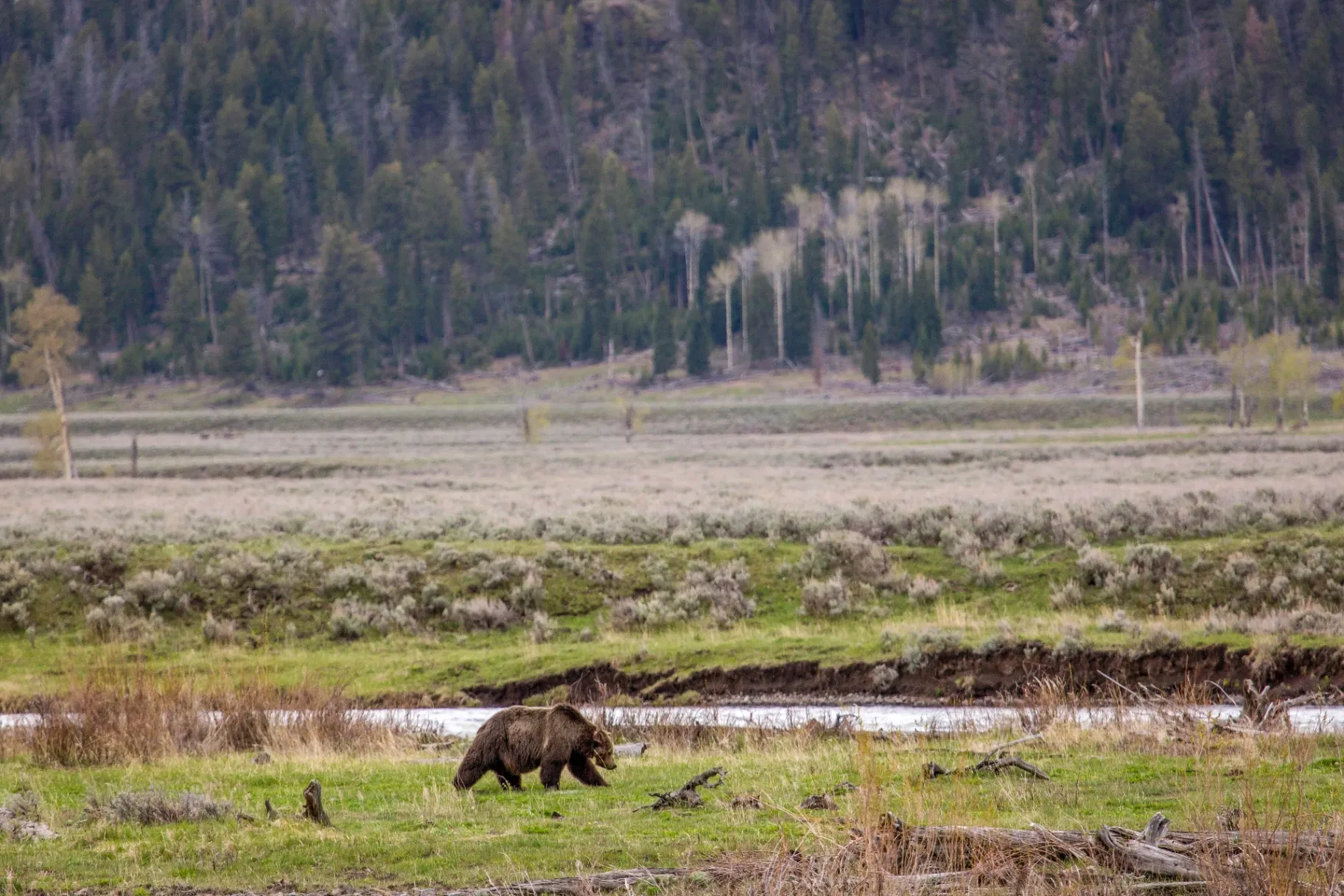
Grizzly bear in Lamar Valley
  • Dawn and dusk — Best light AND most active wildlife
  • Shoot from your car — Animals are habituated to vehicles; use a bean bag for stability
  • Focus on eyes — A tack-sharp eye makes or breaks the shot
  • Include habitat — Environmental portraits are more compelling than tight crops
  • Be patient — Set up and let the action come to you

Best Wildlife Locations

  • Lamar Valley — #1 spot: wolves, bison, grizzlies, pronghorn
  • Hayden Valley — Bison herds, grizzlies, coyotes at dawn
  • Mammoth Hot Springs — Elk rut, bighorn sheep
  • Madison River — Elk, bison, trumpeter swans, morning mist

Best Landscape Photo Spots

  • Grand Prismatic (Fairy Falls Overlook) — Iconic aerial perspective
  • Artist Point — Classic view of Lower Falls and the golden canyon
  • Mammoth Hot Springs terraces — Sweeping travertine formations
  • Norris Geyser Basin — Otherworldly turquoise pools
  • Mount Washburn summit — 360° panoramic views at 10,243 feet
  • Lamar Valley pullouts — Sweeping grasslands with Absaroka backdrop

Best Sunrise & Sunset Locations

🌅 Best Sunrise Spots

  • Lamar Valley
  • Hayden Valley
  • Oxbow Bend (Grand Teton)
  • West Thumb Geyser Basin

🌄 Best Sunset Spots

  • Artist Point
  • Yellowstone Lake (Bridge Bay)
  • Madison River
  • Grand Prismatic overlook

📺 5 Days Wildlife Photography in Yellowstone — Morten Hilmer

Photography Ethics & Safety

  • Stay 100 yards from bears and wolves
  • Stay 25 yards from all other wildlife
  • Stay on boardwalks in thermal areas
  • No drones — Prohibited in all national parks
  • Never block traffic for wildlife jams
  • Leave no trace

Planning Your Photo Trip

  • Allow 5-7 days minimum for unpredictable conditions
  • Base in Island Park — 45 min from West Entrance, less crowded
  • Check geyser predictions at visitor centers
  • Scout locations on day one, return for better light

Your Yellowstone Photography Basecamp

Lodgepole Pines Retreat is 45 minutes from Yellowstone's West Entrance — close enough for sunrise shoots, peaceful enough to review your shots at night.

Check Availability