Early Settlers of Island Park: Trappers, Homesteaders & the First Resorts
10 min read · Updated June 2026
Fur-Trade Roots (1810s–1840s)
The first Euro-American to leave a written record in what is now Island Park was Andrew Henry, a partner in the Missouri Fur Company. In the fall of 1810, fleeing Blackfeet pressure, Henry led his men over the Continental Divide and built a small post on the river that has carried his name ever since — the Henry's Fork of the Snake River. The fort was abandoned the following spring, but the name stuck.
For the next thirty years the country was worked by independent trappers and brigades from the Rocky Mountain Fur Company and the Hudson's Bay Company — see Early Mountain Men of the Tetons.
The Homestead Era (1890s–1920s)
Permanent settlement was slow. At 6,200 feet with a 60-day growing season, the Henry's Fork country was bad farming country. What it did have was grass, water, timber, and a wagon road climbing toward the new Yellowstone tourist economy.
Beginning in the late 1890s, families filed Homestead Act claims on the long river meadows. Most ran small herds of cattle, cut timber in winter, and supplemented income by hosting travelers in roadhouses, livery barns, and cabin courts.
The arrival of the Oregon Short Line at West Yellowstone in 1908 — see Railroad History of Island Park — turned tourism from a sideline into a real economy.
Cattle Ranches & First Resorts
The two most influential early operations were the working ranches that became the Harriman / Railroad Ranch and the cluster of cabin courts at Mack's Inn and Pond's Lodge. Together they set the template that defines Island Park today: working ranchland in the south, resort and lodge communities along the river.
Family Names That Still Mark the Map
Mack's Inn
A.S. "Mack" McCrea's 1922 lodge; see Mack's Inn.
Pond's Lodge
Built by the Pond family in 1935 on US-20 as a stagecoach-era roadhouse turned auto-tourist lodge; still operating today.
Last Chance
Named for the last roadhouse and supply point on the wagon road before the long climb to Montana.
Coffee Pot Rapids
Named by early trappers for the way the constricted river boiled like a percolator.
Tracing Early Settlers Today
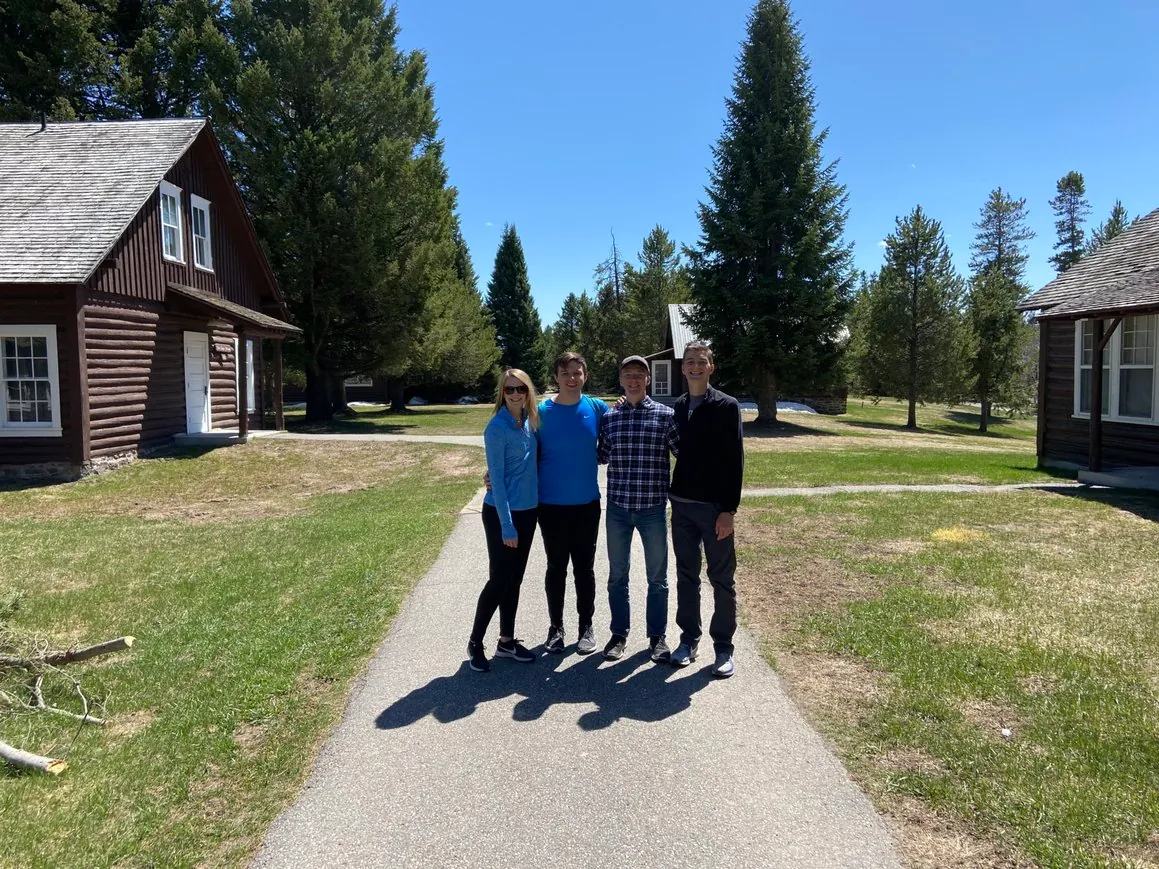
The best surviving look at the homestead era is the cluster of preserved ranch buildings at Harriman State Park — listed on the National Register of Historic Places. Pond's Lodge, Mack's Inn, and Last Chance are still working businesses with original architecture intact. For pioneer cabin craftsmanship at its most refined, walk the short trail to Johnny Sack Cabin at Big Springs.
Pair a homestead-era driving tour with our Island Park maps and Top Things to Do in Island Park.
Names, dates, and family histories are drawn from Fremont County historical society records, Island Park / Henry's Fork heritage publications, and National Register nominations; details vary between sources.
Related Articles
Stay in the Heart of Homestead Country
Lodgepole Pines Retreat sits in the middle of the original Henry's Fork settler corridor — Harriman, Mack's Inn, and Last Chance are all within minutes. Sleeps 12 — book direct.
Book Your Stay — Save 10%