Architecture of Wonderland
Yellowstone's lodges are more than places to sleep — they are architectural monuments that tell the story of America's evolving relationship with its wild places. From the golden age of railroad tourism through the automobile era and into the modern age of sustainable travel, these buildings have sheltered millions of visitors while becoming iconic landmarks in their own right.
The earliest park hotels were built by railroad concessionaires who saw grand architecture as essential to luring wealthy tourists westward. The Northern Pacific Railroad and later the Union Pacific Railroad funded massive construction projects deep in the wilderness, hauling materials by wagon and later by rail spur to create destinations that rivaled the finest resorts in Europe.
What made Yellowstone's lodges unique was a design philosophy we now call "parkitecture" — the deliberate use of native materials like lodgepole pine logs, local stone, and shingle to create buildings that seemed to grow from the landscape rather than impose upon it. This philosophy, pioneered in Yellowstone, would eventually influence lodge design across every national park in the system.
Old Faithful Inn: The World's Largest Log Structure
 (source: nps.gov)
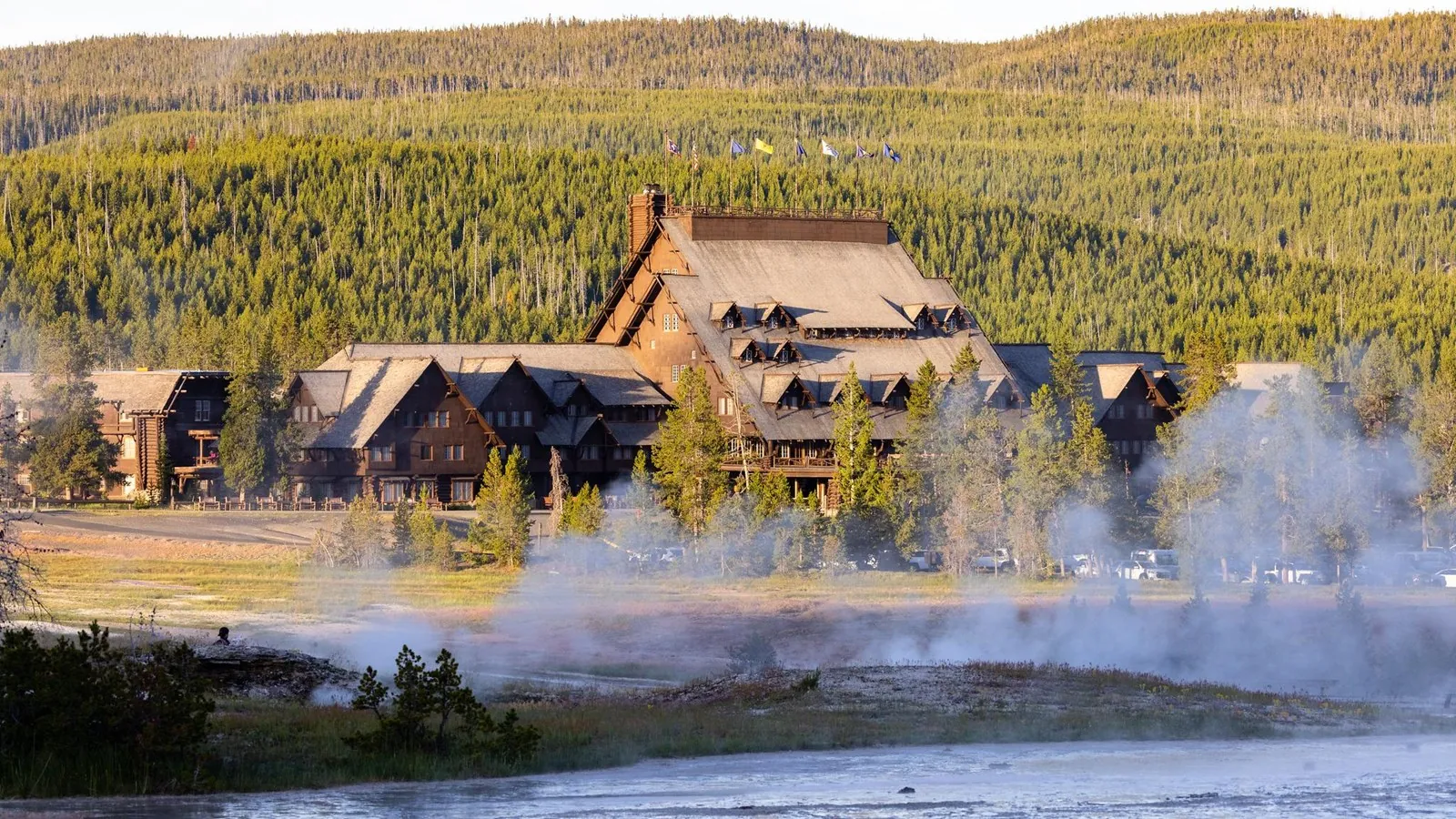
Old Faithful Inn — built 1903–1904, a National Historic Landmark and the crown jewel of Yellowstone's parkitecture
No building in the national park system is more iconic than the Old Faithful Inn. Designed by 29-year-old architect Robert Reamer and built over the winter of 1903–1904, the Inn was commissioned by the Yellowstone Park Association (backed by the Northern Pacific Railroad) to create a destination worthy of the world's most famous geyser.
Reamer's vision was revolutionary: rather than imposing a European-style grand hotel on the wilderness, he designed a building that celebrated its setting. The Inn's massive lobby rises 76 feet to a hand-hewn log ceiling, supported by a forest of twisted lodgepole pine columns. A volcanic rhyolite fireplace anchors the space, rising the full height of the atrium.
The Inn was strategically positioned so that guests on the front veranda had a direct view of Old Faithful's eruptions — a marketing masterstroke that made the building inseparable from the geyser itself.
Old Faithful Inn by the Numbers
- • Built: 1903–1904 (original), expanded 1913–1914 and 1927–1928
- • Architect: Robert C. Reamer
- • Rooms: 327
- • Lobby height: 76 feet (about 7 stories)
- • Designation: National Historic Landmark (1987)
- • Season: Early May through mid-October
Wings were added in 1913–1914 and 1927–1928, but the original "Old House" remains largely unchanged. The Inn survived the devastating 1988 fires and a major renovation in the 2000s that stabilized its foundation. Today it remains the world's largest log structure and one of the most sought-after reservations in the national park system.
Lake Yellowstone Hotel: Elegance on the Frontier
 (source: nps.gov)
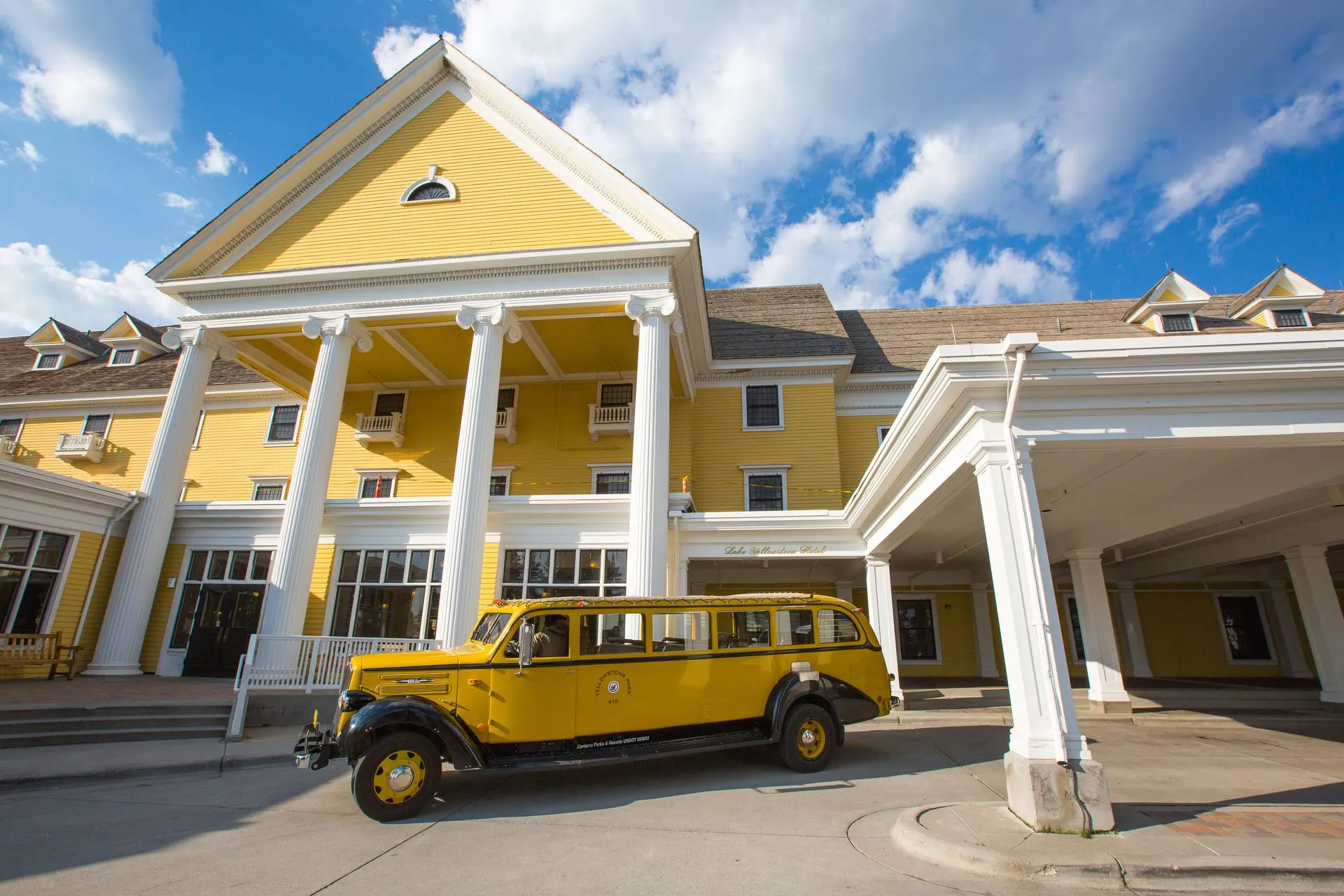
Lake Yellowstone Hotel — Yellowstone's oldest surviving hotel, overlooking the largest high-altitude lake in North America
The Lake Yellowstone Hotel is the oldest operating hotel in any national park, first opening its doors in 1891. It was dramatically transformed in 1903–1904 by Robert Reamer into the Colonial Revival masterpiece we see today, with distinctive Ionic columns, a porte-cochère entrance, and the famous Sun Room with sweeping views over Yellowstone Lake.
The hotel sits on the northwest shore of Yellowstone Lake — at 7,733 feet elevation, the largest high-altitude lake in North America. Its location made it a key stop on the Grand Loop stagecoach tours that defined early park tourism.
Mammoth Hot Springs Hotel: Gateway to the Park
 (source: nps.gov)
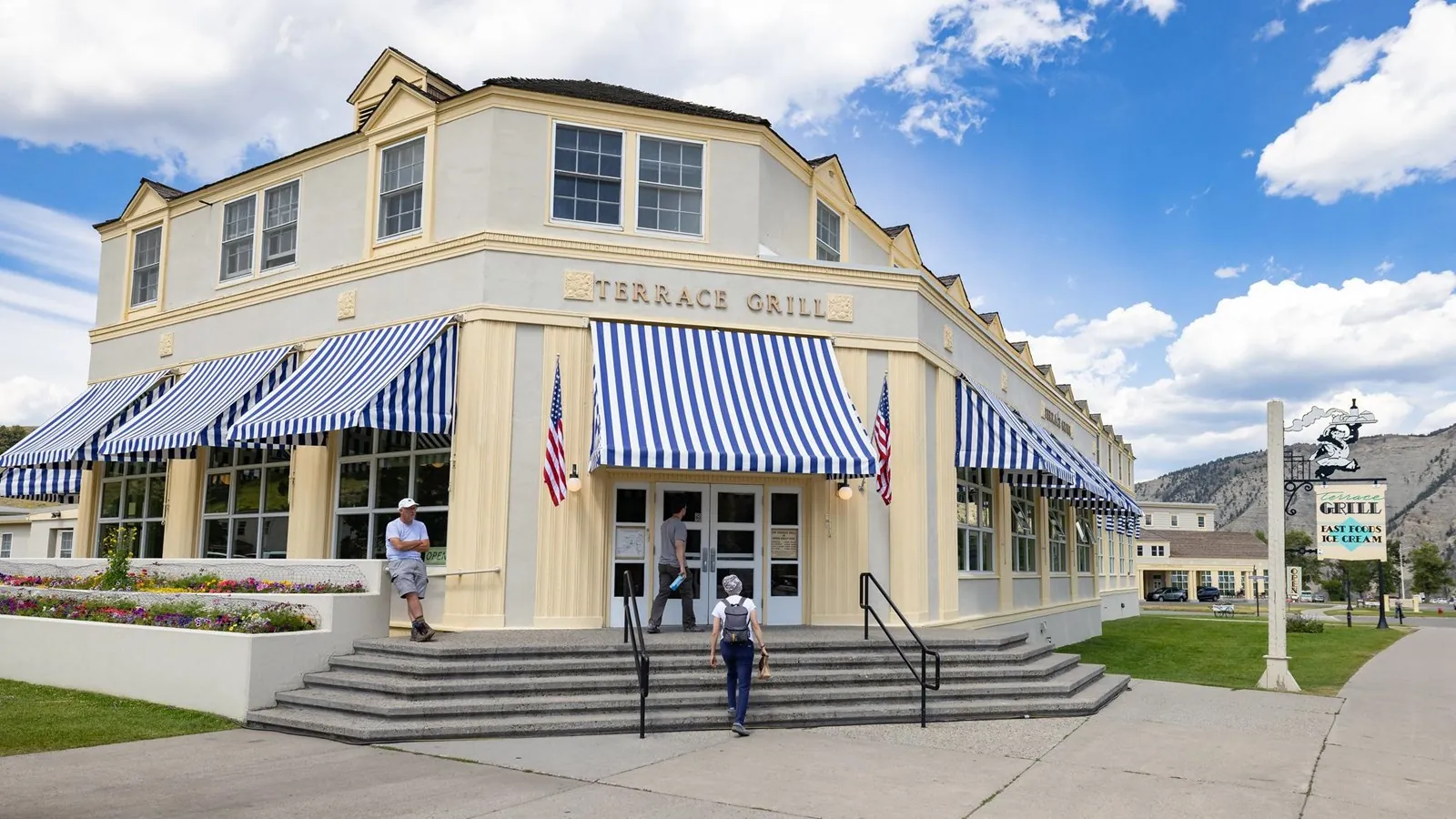
Mammoth Hot Springs Hotel — built on the site of the original Fort Yellowstone headquarters
Mammoth Hot Springs has been the administrative heart of Yellowstone since the U.S. Army arrived in 1886. The current hotel, built in 1936 with an Art Deco–influenced design, sits directly adjacent to the terraced hot springs and the historic Fort Yellowstone buildings.
Mammoth is Yellowstone's only year-round lodging inside the park, making it the base for winter visitors. The surrounding area is renowned for its resident elk herd and for wolf-watching opportunities in the nearby Lamar Valley.
Canyon Lodge & Village: Modern Comfort at the Grand Canyon
 (source: nps.gov)
Canyon Lodge — Yellowstone's largest lodging complex, recently rebuilt with sustainable design
Canyon Village occupies one of Yellowstone's most dramatic locations — near the Grand Canyon of the Yellowstone. The original Canyon Hotel (1911) was another Robert Reamer creation that was demolished in 1960 — a loss that galvanized the preservation movement for Yellowstone's remaining historic structures.
The current Canyon Lodge, rebuilt between 2014 and 2018, is the largest lodging complex in the park with over 500 rooms, serving as the primary base for exploring the Grand Canyon area, hiking trails, and Hayden Valley wildlife viewing.
Old Faithful Lodge Cabins: Rustic Charm
 (source: nps.gov)
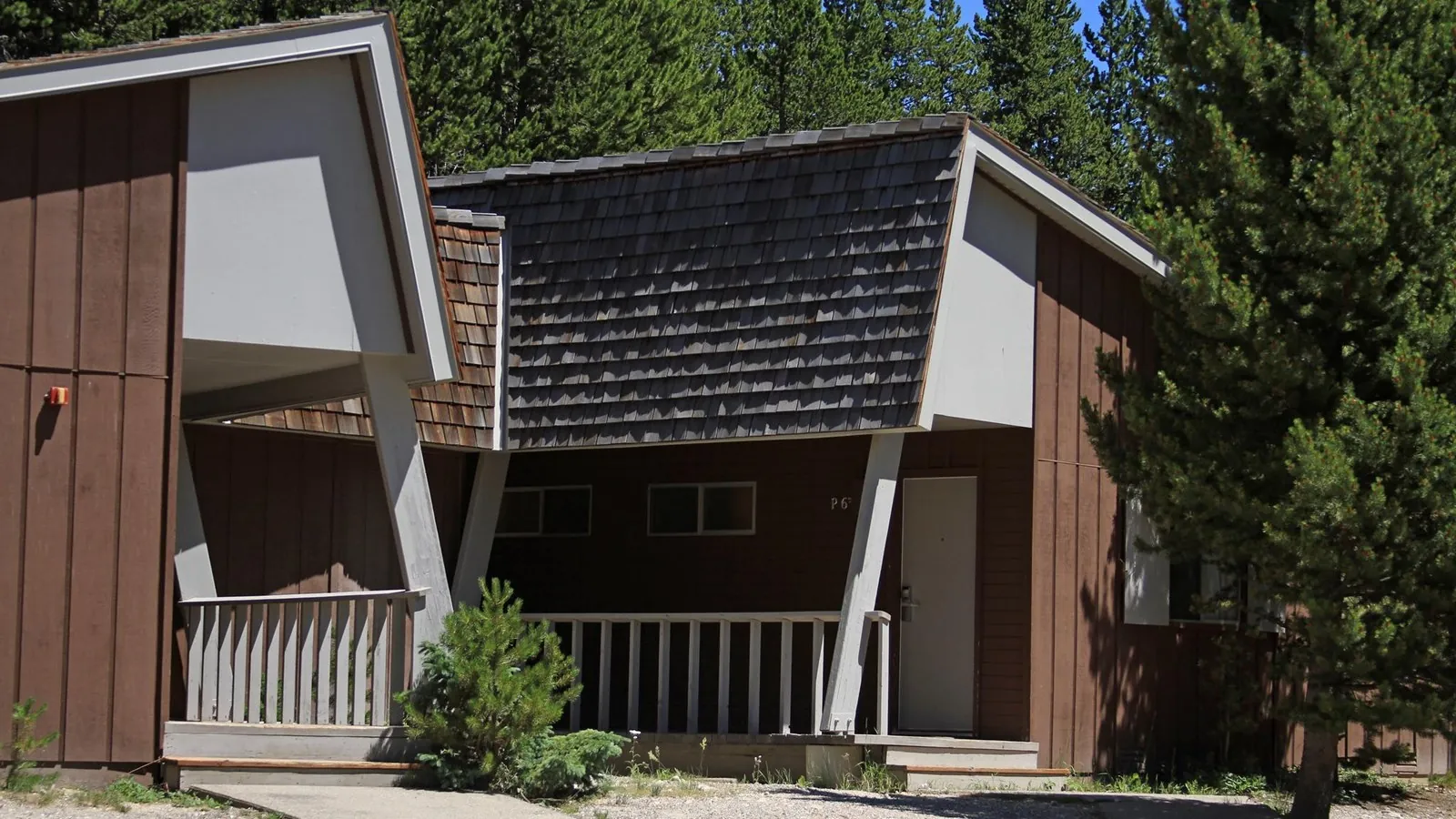
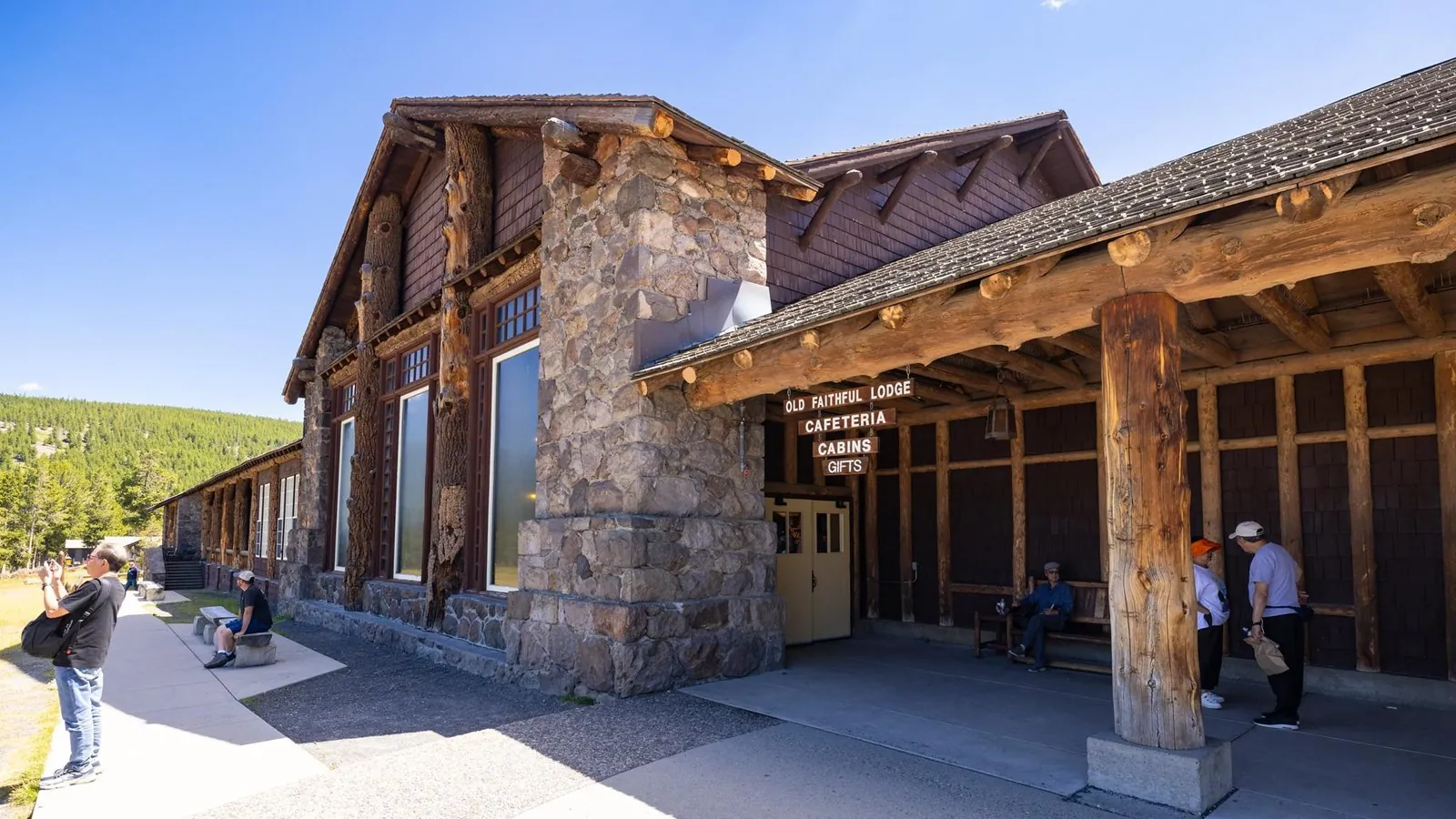
Old Faithful Lodge Cabins — the affordable, family-friendly alternative to the Inn
Built in the 1920s as a more affordable option for the growing number of automobile tourists, the Old Faithful Lodge represents an important shift in Yellowstone's lodging philosophy. While the Inn catered to wealthy railroad tourists, the Lodge was built for middle-class families who drove their own automobiles — the vanguard of the mass tourism era.
Roosevelt Lodge: Where Teddy Camped
Roosevelt Lodge, opened in 1920, sits near Tower Junction in the park's quieter northeast corner — deliberately located near the spot where President Theodore Roosevelt camped during his famous 1903 visit. The Lodge is intentionally the most rustic of Yellowstone's accommodations, offering horseback rides, Old West cookouts, and simple frontier cabins.
Its location near the Lamar Valley — the "Serengeti of North America" — makes it a favorite for wildlife enthusiasts hoping to spot wolves, bears, bison, and pronghorn.
Lake Lodge Cabins: Quiet Lakeside Retreat
 (source: nps.gov)
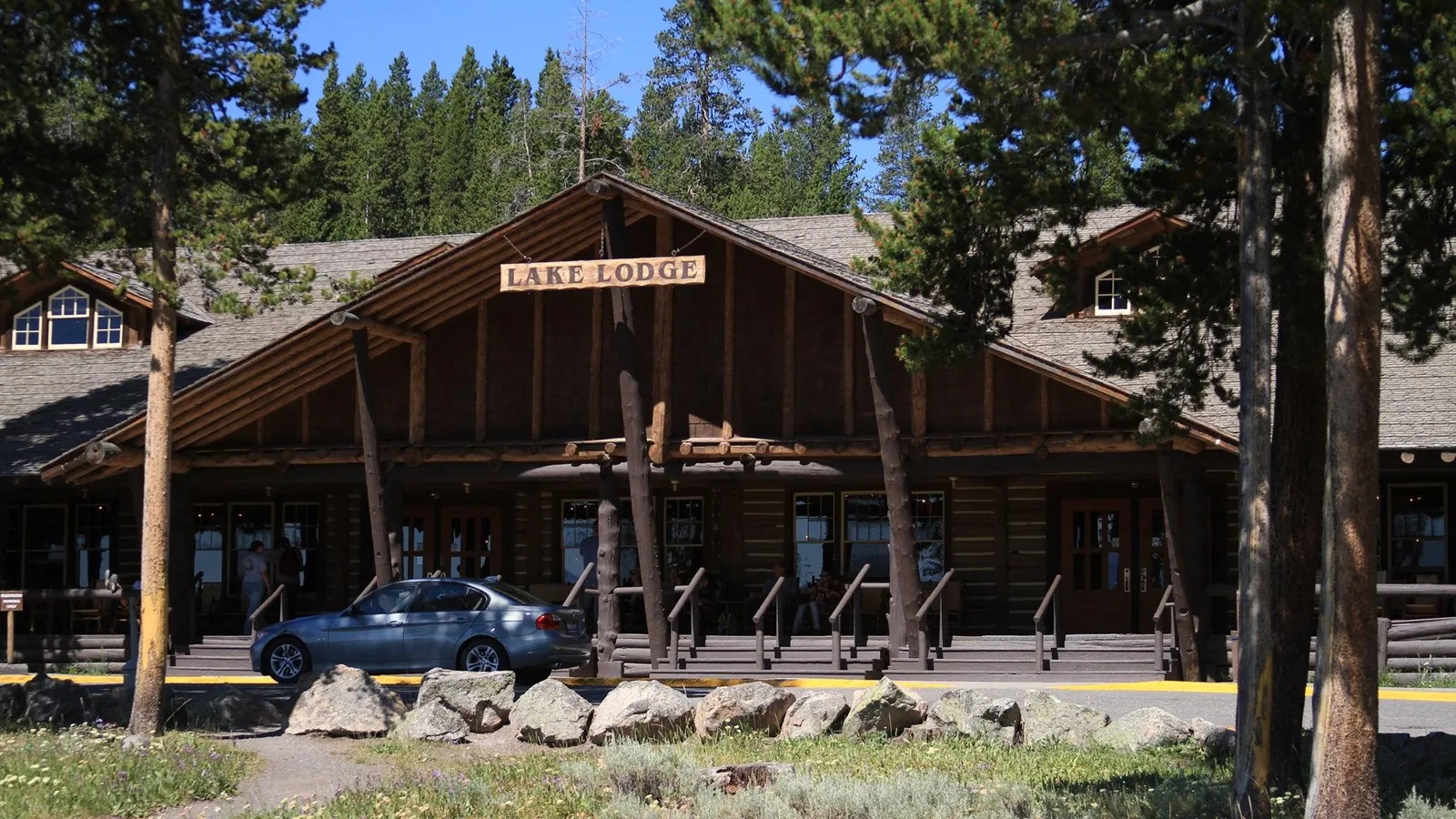
Lake Lodge Cabins — a peaceful retreat nestled among lodgepole pines near Yellowstone Lake
Lake Lodge offers a quieter and more affordable alternative on the shores of Yellowstone Lake. Built in the 1920s, its main lodge features a large porch with rocking chairs overlooking the lake. The area is also a prime spot for sunrise photography over the lake.
Grant Village: The South Entrance Base
Grant Village, built in the 1980s on the southwestern shore of Yellowstone Lake, is the park's most modern lodging development. It's the closest lodging to the South Entrance and the primary gateway for visitors arriving from Grand Teton National Park and Jackson Hole. The West Thumb Geyser Basin, one of the park's most photogenic thermal areas, is just a short drive away.
Preservation Challenges
Maintaining century-old wooden structures in one of the most geologically active regions on Earth presents extraordinary challenges. Yellowstone's lodges face threats from harsh winters, heavy snow loads, seismic activity from the underlying Yellowstone supervolcano, and wildfire risk.
The 1988 Yellowstone fires threatened several historic structures. Old Faithful Inn survived only because firefighters positioned themselves on the roof to extinguish wind-blown embers. Since then, the National Park Service has invested hundreds of millions of dollars in stabilization, seismic retrofitting, and fire protection.
Staying in the Lodges Today
Yellowstone's historic lodges remain among the most popular accommodations in the national park system, with peak-season rooms often selling out within minutes. Reservations typically open 13 months in advance.
Planning Tips for Lodge Stays
- • Book early: Reservations open 13 months before arrival.
- • Be flexible: Midweek stays and shoulder season are easier to book.
- • Consider alternatives: Lodge Cabins offer the same locations at lower prices.
- • Stay outside the park: Gateway communities offer excellent lodging with easier availability.
For visitors who prefer more space and privacy, cabin rentals near the park offer a compelling alternative. Our Lodgepole Pines Retreat in Island Park, Idaho — just 30 minutes from Yellowstone's West Entrance — provides a full log cabin experience with modern amenities.
Whether you stay in a historic lodge or use a gateway community as your base, the lodges themselves are worth visiting even if you don't sleep there.
Related Reading
- • Railroad Tourism in Yellowstone — How the railroads built the hotels
- • Old Faithful & Famous Geysers — The geothermal wonders near the lodges
- • The Army Years — Fort Yellowstone at Mammoth
- • Creation of Yellowstone — How the park began
- • Best Time to Visit — Plan around seasons and crowds
- • Where to Stay Near Yellowstone — Compare lodging options
- • Yellowstone Activities Guide — Plan your visit